
Share This Post
You have invested in a clinical treatment designed for long-term reduction, not a quick cosmetic fix – and what you do in the first few days matters. This guide to laser hair removal aftercare is here to help you protect your skin, reduce unnecessary irritation, and support the best possible response between sessions.
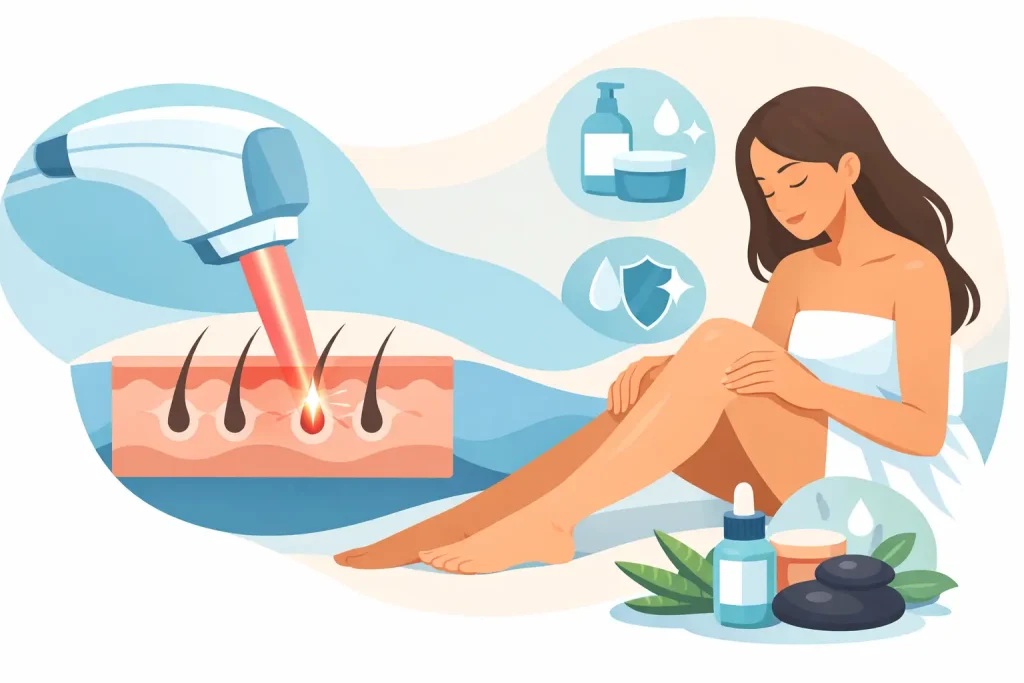
Laser hair removal works by targeting pigment in the hair follicle with controlled heat. That means the skin can feel warm, look pink, or seem slightly raised immediately afterwards, particularly in more sensitive areas such as the bikini line, underarms, or face. In most cases, that reaction is expected. Aftercare is not about panic. It is about giving the skin the right environment to settle.
Why laser hair removal aftercare matters
A well-performed treatment does not end when the device is switched off. The energy delivered into the follicle continues to influence the shedding phase over the following days and weeks, while the skin barrier begins to recover almost immediately. If you overload the area with heat, friction, active skincare, or sun exposure, you increase the likelihood of irritation and make the healing window less comfortable than it needs to be.
This is particularly relevant for clients prone to pigmentation, sensitivity, folliculitis, or post-inflammatory marking. The goal of proper aftercare is simple – keep the skin cool, clean, protected, and unprovoked.
The first 24 to 48 hours
The first two days are when clients can undo a good treatment by assuming the skin is already back to normal. It may look calm within hours, but it is still more reactive than usual.
Keep the area cool. If it feels hot or tight, a clean cool compress can help. Avoid anything icy or extreme, because aggressive cooling can be just as uncomfortable as the original heat. Gentle is the standard here.
Skip hot baths, saunas, steam rooms, and intense exercise for at least 24 hours, and sometimes longer if the skin is still flushed. Heat encourages more redness and can make the area sting. A lukewarm shower is a better choice.
Clothing matters more than most people expect. Tight waistbands, synthetic gym wear, and rough fabrics can create friction in treated areas, especially on the legs, bikini line, or underarms. Choose loose, breathable clothing where possible.
You should also keep your hands off the area. Rubbing, scratching, or testing the skin repeatedly usually leads to more irritation, not reassurance.
A practical guide to laser hair removal aftercare for skincare users
If you already use active skincare, this is where you need to be disciplined. Many clients who are committed to results-driven skin treatments are used to acids, retinoids, benzoyl peroxide, vitamin C, and exfoliating cleansers. Those products have a place, but not immediately after laser.
For the first few days, use a bland, fragrance-free moisturiser and a gentle cleanser. Avoid exfoliating acids, retinol, prescription-strength actives, scrubs, and perfumed body products on the treated area until the skin is fully settled. For some people that is 48 hours. For others, especially after stronger reactions or treatment on delicate areas, it may be several days.
If your face has been treated, be cautious with makeup too. Mineral-based products are often better tolerated than heavier formulas, but even then, it depends on how reactive your skin is on the day. Clean brushes and a light hand matter.
What to avoid after laser hair removal
The short version is this – avoid heat, friction, and unnecessary stimulation. That includes sunbeds, direct sun exposure, vigorous exfoliation, heavily fragranced products, and hair removal methods that disturb the follicle.
Waxing, threading, and plucking should be avoided between sessions because the laser needs the follicle present to target it effectively. Shaving is usually the acceptable option if you need to manage visible regrowth. Do it gently and only when the skin no longer feels tender.
Swimming can be a grey area. A brief swim is not always a problem for everyone, but chlorinated pools, heated pools, and salt water can sting freshly treated skin. If the area is still pink or sensitive, give it more time.
Shedding is normal – and it is not the same as regrowth
One of the most common misunderstandings after treatment is the appearance of hair in the days following a session. Clients sometimes assume the treatment has failed because they can still see dark dots or short hairs. In reality, those treated hairs often begin to shed over one to three weeks.
This process can look like regrowth, but it is usually the body expelling damaged hairs from the follicle. Resist the urge to tweeze them out. Gentle washing and light exfoliation later on, once the skin is no longer sensitive, may help the shedding process, but timing matters. If you exfoliate too early, you can inflame the area.
When the treated area is itchy, bumpy, or dry
Mild itching, a slightly prickly feeling, and temporary bumps around follicles can all be part of a normal post-treatment response. It does not automatically mean something has gone wrong. The skin is reacting to heat in a controlled way.
A simple moisturiser and patience are often enough. If the area feels particularly reactive, avoid adding multiple soothing products at once. More product does not always mean better recovery. A stripped-back routine is usually the safest route.
However, there is a difference between a normal short-lived response and something that needs professional review. If you experience significant swelling, blistering, persistent pain, or unexpected pigment changes, contact your practitioner promptly. Good aftercare includes knowing when not to self-manage.
Sun protection is not optional
If there is one area where clients are sometimes too relaxed, it is UV exposure. Laser-treated skin is more vulnerable to irritation and pigment disruption, particularly if you are treating the face, neck, chest, arms, or any area likely to catch incidental sun.
Use a broad-spectrum SPF daily on exposed treated areas, even in the UK, where people often underestimate cumulative UV. This is especially important for anyone with a history of pigmentation, melasma, or post-inflammatory darkening. Tanning before or after a course of laser treatment complicates both safety and results.
It is worth being honest here – if your lifestyle involves regular sun exposure, fake tan use, or frequent heat-based exercise immediately after treatment, your aftercare plan may need more structure. Results depend on consistency, not just the machine used.
Different body areas can behave differently
Not every treatment zone responds in the same way. Facial laser hair removal can leave the skin feeling drier and more reactive because the area is exposed to skincare, makeup, weather, and frequent washing. Underarms may become irritated by deodorant. The bikini line can be affected by friction, heat, shaving habits, and underwear choice.
This is why personalised advice matters. A generic aftercare sheet is useful, but it cannot replace treatment-specific guidance based on your skin behaviour, hair type, medical history, and the settings used during your session.
How aftercare affects your long-term results
Aftercare does not make the laser stronger, but it does support the treatment environment. Skin that is repeatedly irritated, over-exfoliated, or exposed to unnecessary UV is harder to manage consistently over a full course. And laser hair removal is a course-based treatment.
You are working with hair cycles, not a one-off fix. Some hairs respond quickly. Others are more stubborn because of hormonal influence, density, or growth phase timing. That means your best results come from combining the right treatment intervals with sensible home care and realistic expectations.
At a specialist clinic such as GRB Skin Clinic, aftercare is part of the treatment plan, not an afterthought. That clinical approach matters because safe progress is built session by session.
When to ask for advice
A good rule is this – if you are unsure whether what you are seeing is normal, ask. It is far better to check early than to continue with products or habits that may aggravate the skin.
This is especially true if you are using prescription skincare, managing acne, treating pigmented skin, or balancing other in-clinic treatments alongside laser hair removal. The more advanced your routine, the more carefully each part needs to be timed.
The best aftercare is not complicated. It is calm, consistent, and guided by skin behaviour rather than guesswork. Give the skin a few quiet days, protect it from heat and UV, and let the treatment do its work.