
Share This Post
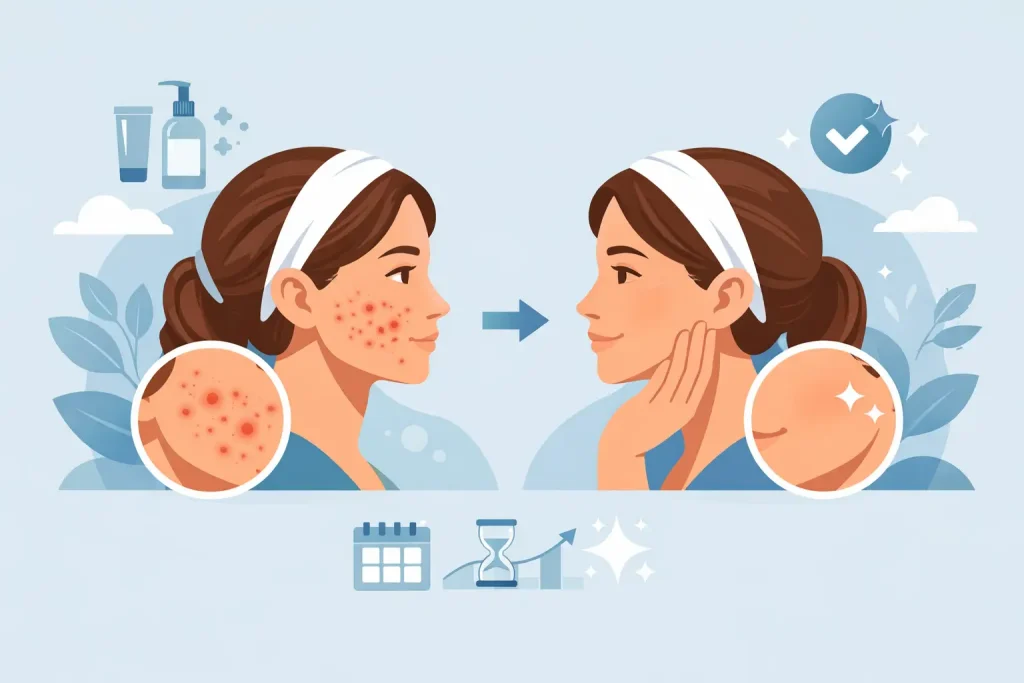
If you are staring at your skin in the mirror at week four and wondering whether anything is really changing, that is usually the point where structure matters most. Acne programme results after twelve weeks are rarely about one dramatic overnight shift. More often, they show up as fewer active breakouts, calmer inflammation, reduced congestion, and skin that is finally behaving in a more predictable way.
That timeline matters because acne is not just a surface issue. It is influenced by oil flow, follicular blockage, inflammation, bacteria, barrier function, hormones, and the products you are using at home. A proper programme needs enough time to work through those layers without pushing the skin into further irritation. Twelve weeks is often where you can judge whether the treatment strategy is genuinely moving the skin forward.
What acne programme results after twelve weeks usually look like
For many clients, the first visible change is not perfectly clear skin. It is quieter skin. Spots may heal faster. The angry, swollen lesions that once sat under the skin for days or weeks may become less frequent. Blackheads and closed comedones often begin to reduce more gradually, particularly around the chin, jawline, forehead, and nose.
Redness can still be present at twelve weeks, and post-inflammatory marks may remain even when breakouts are improving. That is where realistic expectation-setting is essential. Acne and acne marks are not the same concern, and they do not resolve at the same speed. You can be getting excellent acne programme results after twelve weeks while still seeing evidence of previous breakouts.
Texture is another area where progress often becomes clearer at this stage. The skin can feel smoother, less bumpy, and easier to manage with make-up. Clients often tell us they stop feeling the need to constantly check or cover their skin because it is no longer changing for the worse every few days. That consistency is a result in itself.
Why twelve weeks is a meaningful checkpoint
Skin does not respond well to panic. When people jump between products, over-cleanse, pick at lesions, or chase social media fixes, they interrupt the healing process repeatedly. A twelve-week checkpoint gives enough time for a professional plan to settle the skin, test tolerance to active ingredients, and build momentum.
This is especially important if your programme includes corrective homecare alongside therapist-led treatments. Professional acne care works best when clinic protocols and home routines are aligned. If one part is aggressive and the other is inconsistent, progress stalls.
Twelve weeks also helps separate short-term suppression from real improvement. Some products can dry the surface quickly and make acne look better for a fortnight, only for rebound congestion and sensitivity to follow. A clinically led programme aims for a healthier skin function, not just a temporary drop in visible oil.
What changes first and what takes longer
In the early phase, inflammation often improves before congestion fully clears. That means the painful, obvious spots may reduce first, while the tiny trapped bumps and stubborn blackheads take longer. This can be frustrating if your skin feels rough even though the breakouts are less severe. It does not mean the programme is failing.
Oiliness may also shift in stages. Some clients notice a more balanced complexion within a few weeks, while others go through a period where the skin feels drier because actives are being introduced carefully. The goal is not to strip the skin. It is to reduce excess oil without damaging the barrier.
Pigmentation, lingering redness, and shallow acne scarring usually need more than twelve weeks. By this point, your practitioner may be seeing the right conditions to begin addressing those secondary concerns more directly. That is very different from trying to treat scars while the skin is still actively breaking out.
What affects your results
The biggest factor is whether the plan matches the type of acne you actually have. Hormonal breakouts along the jawline, inflamed papules across the cheeks, congestion from occlusive products, and acne worsened by barrier damage do not all respond the same way. A generic routine cannot account for that.
Consistency matters just as much. If your prescribed homecare is used three nights one week, then abandoned the next, it becomes difficult to build progress. The same applies to professional treatments. A course works because it is structured. One facial every now and then may feel helpful, but it is rarely enough to shift chronic acne.
Lifestyle plays a role too, although it should not be oversimplified. Stress, poor sleep, gym sweat left on the skin, cosmetic product build-up, inconsistent cleansing, and even hair products can affect the picture. That said, acne is not caused by a lack of effort. Many adults with persistent breakouts are doing far too much, not too little.
The difference between purging, irritation, and a poor plan
This is where expert guidance becomes invaluable. Some clients see an increase in small breakouts when active ingredients are introduced. That can happen when cell turnover is accelerating. But true purging should be limited, manageable, and temporary.
If your skin is becoming hot, flaky, sore, tight, and increasingly inflamed, that is less likely to be useful adjustment and more likely to be irritation. Irritated skin can produce more breakouts, not fewer. A strong programme should be progressive, not punishing.
A poor plan often reveals itself in other ways. Breakouts spread to new areas, sensitivity continues to worsen, and there is no clear logic behind the products or treatment intervals. Clinical acne care should feel measured. You should know what each step is for, why it has been chosen, and what signs indicate progress.
Why therapist-led acne care tends to perform better
Acne responds best when treatment decisions are made from skin analysis, not guesswork. This is where a clinic-led model becomes more effective than piecing together random products online. Your practitioner can assess lesion type, inflammation level, dehydration, barrier strength, pigmentation risk, and whether your skin can tolerate more active correction or needs stabilising first.
That is also why high-potency ingredients and device-led support can be valuable when used properly. Professional exfoliation, LED light therapy, and carefully selected prescriptions can help reduce congestion and inflammation without creating the cycle of over-treatment that many acne sufferers know too well.
At GRB Skin Clinic, the focus is on building a programme around the skin in front of us, not forcing every client into the same routine. That means taking into account your history, your triggers, your tolerance, and how your skin responds between appointments.
When twelve weeks is not enough
Sometimes twelve weeks delivers very good progress, but not the finish line. That is normal, particularly with adult acne, hormonal patterns, or skin carrying years of congestion and post-acne marks. If the skin is clearly improving, the answer is often not to change everything. It is to continue with a refined version of what is already working.
Some clients also need a phased approach. First, calm active breakouts. Then address pigmentation. Then work on textural irregularity or superficial scarring. Trying to solve every concern at once usually leads to irritation, disappointment, or both.
This is where expectation-setting protects trust. Real skin transformation is built over months, not marketing promises. Twelve weeks is an excellent checkpoint for visible change, but the best results often come from staying with the process long enough for the skin to strengthen and stabilise.
How to judge your own progress properly
Do not rely on memory alone. Compare photos taken in the same lighting, without make-up, at regular intervals. Many clients underestimate their progress because they are looking at their skin every day. The camera is often more honest.
Pay attention to patterns, not just isolated spots. Are breakouts healing faster? Is the skin less painful? Are you getting fewer large inflamed lesions before your period? Is your complexion less greasy by midday? Are blemishes leaving less severe marks behind? These are meaningful clinical indicators.
Also ask whether your skin feels easier to live with. That may sound simple, but it matters. Better skin is not only about fewer lesions. It is about less unpredictability, less inflammation, and more confidence in what your skin is going to do next.
If you are at the twelve-week mark and seeing steady improvement, you are likely on the right path. If you are still stuck in the same cycle, that is usually a sign your skin needs a more intelligent plan, not more random products. The right acne programme should leave you with more than clearer skin. It should give you a clear way forward.