
Share This Post
When a client asks about the best LED mask for acne, the real question is usually not which mask looks the most impressive. It is whether the device can calm active breakouts without irritating an already inflamed skin barrier, and whether it fits into a treatment plan that delivers visible change over time. That is where many at-home devices fall short. The technology can be useful, but only when the specification, consistency and diagnosis are right.
LED light therapy has earned its place in clinical acne treatment because it is non-invasive, comfortable and compatible with a wider skin programme. Used properly, it can help reduce inflammation, support healing and improve the skin environment that allows persistent congestion to thrive. But not every mask marketed for acne is built to the same standard, and not every acne case should be managed in the same way.
How to judge the best LED mask for acne
The best LED mask for acne is not simply the strongest or the most expensive. It is the one that uses the correct wavelengths, delivers them consistently across the face, meets appropriate safety standards and suits the severity of your acne.
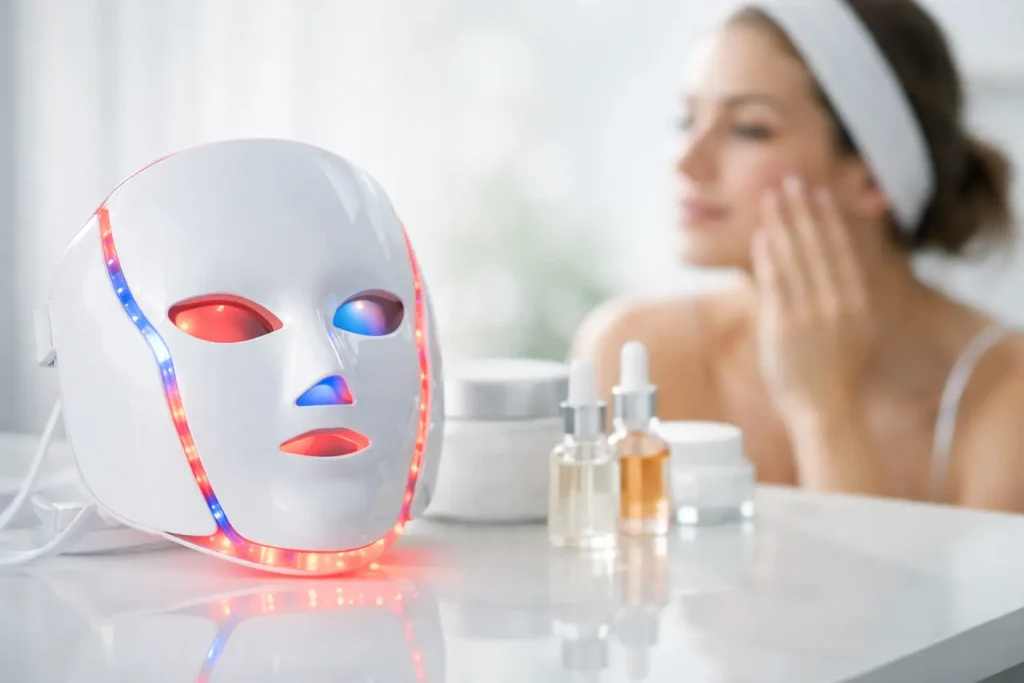
For acne-prone skin, blue light is commonly used because it targets acne-causing bacteria on the skin. Red light is often included because it helps calm inflammation and supports skin recovery. That combination can be valuable, particularly for clients dealing with inflamed lesions, post-breakout redness and slow healing. A mask that offers both wavelengths is usually more useful than one that focuses on blue light alone.
Even so, wavelength claims on packaging do not tell the full story. Two devices may both advertise blue and red light, yet perform very differently in practice. The quality of the LEDs, the fit of the mask, the distance from the skin and the total energy delivered during each session all affect results. If light is not reaching the skin evenly, treatment becomes less predictable.
This is why clinical guidance matters. Acne is not one condition. Some clients are dealing with inflammatory acne, others with comedonal congestion, hormonal breakouts, skin barrier impairment or acne accompanied by pigmentation and scarring. LED can help, but it works best when matched to the right skin picture.
What features actually make a difference
If you are comparing options, start with treatment purpose rather than brand hype. A good acne LED mask should sit close enough to the skin for even exposure without causing pressure or discomfort. If the fit is poor, areas such as the jawline, sides of the face or chin may receive inconsistent treatment – and those are often the areas where adult acne is most stubborn.
Session length also matters. Extremely short treatment times can sound convenient, but they are not automatically more effective. Equally, longer is not always better. The device should be designed around a dose that is both tolerable and clinically sensible. You want a protocol you can follow regularly, because acne responds to consistency more than occasional bursts of enthusiasm.
Safety is another area where people often assume too much. Eye protection guidance, material hygiene, manufacturer testing and clear contraindications are all part of a trustworthy device. If instructions are vague, if treatment frequencies seem excessive, or if every skin concern is promised to improve at once, take that as a warning sign.
A well-designed mask should also be realistic about outcomes. LED can help reduce active breakouts and support calmer skin, but it is not a cure-all. It will not compensate for the wrong skincare, unaddressed triggers or an impaired barrier caused by overuse of harsh actives.
Why the best LED mask for acne depends on your skin
The best LED mask for acne for one person may be the wrong choice for another. That is particularly true in adult acne, where breakouts are often linked to stress, hormones, cosmetic congestion, inflammation or a cycle of over-treatment.
For mild, occasional acne, a home LED mask may be a useful supporting tool. For moderate to persistent acne, it is usually more effective as part of a structured plan that includes skincare prescription, ingredient review and regular reassessment. For severe, cystic or scarring acne, relying on a mask alone is rarely enough.
Skin tone and skin sensitivity also deserve attention. While LED is generally well tolerated across skin types, the surrounding routine still matters. If the skin is dehydrated, reactive or stripped by aggressive products, even a gentle technology can feel like one more thing the skin has to cope with. In those cases, restoring barrier function often improves treatment response.
This is the difference between buying a device and following a skin strategy. The device may play a role, but the real progress comes from understanding what is driving the acne in the first place.
At-home LED masks vs professional LED treatment
At-home masks and in-clinic LED are not direct equivalents. Home devices are designed with lower output and broader consumer safety in mind. That can make them more convenient, but usually less intensive than professional treatment.
There is nothing wrong with a lower-powered approach if expectations are sensible. A home mask can be useful for maintenance, for supporting recovery between appointments, or for clients who are already on a professionally guided acne programme. It may help prolong progress and reduce flare-up frequency when used regularly.
Professional LED treatment, however, offers more control. The skin is assessed properly, protocols can be adjusted, treatment can be combined with extractions or advanced facials where appropriate, and contraindications are screened carefully. You are also less likely to waste months on a device that is technically functional but poorly matched to your skin needs.
For many acne clients, the most effective route is not choosing one or the other. It is using home care to support a clinically led plan.
What not to expect from an LED mask
One of the biggest mistakes people make is expecting LED to behave like a quick fix. Acne rarely works that way. If you have had repeated breakouts for months or years, there is usually more than one factor involved.
An LED mask may help reduce inflammation, shorten the lifespan of active spots and support healing. What it will not do is replace proper cleansing, suitable actives, barrier support or a treatment plan tailored to your acne type. It also will not erase pitted acne scarring. That may require a very different treatment pathway.
There is also the issue of compliance. Some masks are purchased with good intentions and then used three times in the first week, once the next, and forgotten after that. Acne treatment rewards routine. If a device feels cumbersome, uncomfortable or unrealistic to maintain, it is probably not the right choice for you, however impressive the claims may seem.
Signs a mask may be worth considering
A device is more likely to earn its place in your routine if it has clearly stated wavelengths, transparent treatment guidance, practical hygiene standards and sensible usage instructions. It should feel like a supportive addition to your skin plan, not a stand-in for one.
It is also a good sign when the recommendation starts with consultation rather than sales language. If your acne is persistent, painful, leaving marks, or affecting your confidence, a proper skin assessment is far more valuable than guesswork. In clinic, we often see clients who have used multiple products and devices without understanding whether their acne is bacterial, inflammatory, hormonal or barrier-related. Once that is clarified, decisions become much easier.
For clients in Sale and across South Manchester, this is often where progress starts – not with buying more, but with simplifying, assessing and treating the skin according to what it is actually doing.
A better way to choose
If you are trying to decide on the best LED mask for acne, do not ask which one is most popular. Ask whether it fits your acne severity, your skin sensitivity, your ability to use it consistently and your wider treatment plan.
The right device should support calmer, healthier skin over time. It should not push you into overpromising, over-treating or ignoring the bigger picture. Acne responds best when treatment is structured, progressive and based on skin biology rather than trends.
If your breakouts keep returning, the most valuable next step may not be another product at all. It may be a proper consultation, a clear plan and the confidence that every part of your routine is working in the same direction.