
Share This Post
If your routine looks impressive on paper but your skin feels tight, flaky or suddenly reactive, the issue is often not the products themselves. It is the order, frequency and strength. Knowing how to layer active skincare ingredients matters because even excellent formulas can underperform – or irritate – when they are combined without a plan.
At a clinical level, layering is not about using the most products. It is about giving each ingredient the right job, at the right time, in the right dose for your skin condition. For acne, pigmentation, photodamage and premature ageing, this approach can make the difference between steady progress and a cycle of inflammation.
How to layer active skincare ingredients without overwhelming the skin
The first principle is simple: respect skin function. Active ingredients such as vitamin A, exfoliating acids, vitamin C and pigment suppressors can all be highly effective, but they also place demands on the skin. If you stack too many at once, the barrier can become compromised. When that happens, clients often mistake irritation for purging or assume they need even stronger products. Usually, they need better sequencing.
Start by thinking in categories rather than trends. Most active routines include four roles: treatment, hydration, barrier support and protection. Treatment ingredients target a concern. Hydrating and barrier-supporting products help the skin tolerate that treatment. Protection, especially SPF in the morning, is what preserves your progress.
Texture matters, but function matters more. In most cases, apply from thinnest to richest, with water-based serums before creams. However, this rule should never override product instructions or your skin professional’s guidance. Some formulas are designed to buffer stronger ingredients or reduce the risk of irritation, so the ideal order may be more personalised than the usual internet advice suggests.
The core rule: separate the heavy hitters
The most common mistake is using too many strong actives in the same routine. This is where restraint gives better results.
Retinoids or vitamin A products are best treated as the lead active in an evening routine. They support cell turnover, help with breakouts, refine texture and improve visible signs of ageing. But they are not always comfortable when paired directly with exfoliating acids, especially in skin that is already sensitised, inflamed or new to active skincare.
Exfoliating acids, including AHAs and BHAs, also deserve their own space. They can smooth rough texture, lift surface build-up, help unblock pores and support brightness. Used strategically, they are useful. Used too often, they can trigger redness, dehydration and persistent sensitivity.
That is why many skins do better with an alternating structure. One evening might focus on vitamin A, while another is reserved for an exfoliating acid, and another for recovery only. This is a more biologically intelligent approach than forcing every active into one routine and hoping for the best.
Morning layering
In the morning, the routine should be protective and supportive. A gentle cleanser, antioxidant serum, moisturiser if needed, and broad-spectrum SPF is usually a sound framework. Vitamin C often fits well here because it supports antioxidant defence and can help brighten the complexion. It also pairs logically with sunscreen, particularly for clients managing pigmentation and environmental stress.
If you are also using niacinamide, this can usually sit comfortably in the same morning routine. It supports barrier strength, helps regulate excess oil and can reduce the look of redness. For many clients with acne or post-inflammatory marks, this is a useful bridge ingredient because it is effective without being unnecessarily aggressive.
Evening layering
Evening routines are where treatment usually becomes more active. After cleansing, apply the chosen lead active for that night, then follow with hydration and barrier support. If your skin is reactive, you may need a moisturiser before and after vitamin A – often called buffering or sandwiching – to improve tolerance. This does not mean the product has stopped working. It means the skin is being guided progressively rather than pushed.
How to layer active skincare ingredients for specific concerns
Different conditions need different rhythms. The best routine for acne is not always the best routine for pigmentation, and neither should be copied from a friend with completely different skin behaviour.
For acne and congestion
Acne-prone skin often benefits from fewer products than expected. Over-cleansing, over-exfoliating and using multiple spot treatments can keep the skin in a constant state of irritation.
A balanced routine may include a salicylic acid product on selected evenings, vitamin A on alternate nights, and niacinamide for daily support. If active breakouts are inflamed, barrier repair becomes even more important. Skin that is stripped and irritated is less predictable, not more treatable.
Clients managing acne marks often want to attack both spots and pigmentation at once. The temptation is understandable, but this is where structured progression matters. Clear the inflammation first, then increase focus on residual marking if needed.
For pigmentation and uneven tone
Pigmentation responds best to consistency rather than aggression. Morning antioxidant protection, daily SPF and targeted evening treatment are usually more effective than frequent exfoliation.
Vitamin C, niacinamide, azelaic acid and vitamin A can all play a role, depending on the type of pigmentation and the skin’s tolerance. But if the barrier is unstable, pigment often becomes harder to manage. Inflamed skin is more likely to hold onto discolouration, especially after breakouts or excessive friction.
For ageing and photodamage
For clients focused on lines, dullness and sun damage, vitamin A is often foundational. It supports healthier skin function over time, but patience is required. Results are not built by making the skin peel constantly. They come from steady use, good hydration and rigorous UV protection.
Acids can be useful here too, but not every night. A measured routine that improves skin quality is generally more successful than one that produces repeated irritation.
Ingredient combinations: what works and what needs caution
Some pairings are well tolerated. Niacinamide and hyaluronic acid sit easily with most routines. Vitamin C and SPF make sense in the morning. Vitamin A and a barrier-supportive moisturiser are a strong combination for many clients.
Other combinations depend on skin resilience. Vitamin A with AHAs or BHAs in the same routine can be too much for many people, particularly if they are treating acne, redness or dehydration. Benzoyl peroxide and retinoids may also need careful timing depending on the formulas used. Strong pigment inhibitors, exfoliating acids and vitamin A together can quickly tip sensitive skin into inflammation.
This is why a professional prescription matters. The question is not simply whether ingredients can be mixed chemically. It is whether your skin should be asked to tolerate them together.
Signs your layering order is wrong
Skin usually tells you when the routine is poorly structured. Persistent stinging, new roughness, redness that lingers, increased oiliness from dehydration, flaky patches and sudden sensitivity are common signs. So is a routine that seems to stop working after an enthusiastic start.
When this happens, reducing the number of actives often helps more than adding another soothing product on top. Strip the routine back to cleanser, moisturiser, SPF and one lead active. Once the skin feels stable again, the next step is not to rush. Reintroduce strategically.
A clinical way to build tolerance
If you are new to actives, begin with one treatment product and use it two to three times a week. Give the skin time to respond before increasing frequency. This is particularly important with vitamin A, exfoliating acids and high-strength pigment products.
There is no prize for moving too fast. Stronger is not always better, and more frequent is not always more effective. In clinic, we often see better outcomes when routines are built progressively around skin behaviour rather than product marketing.
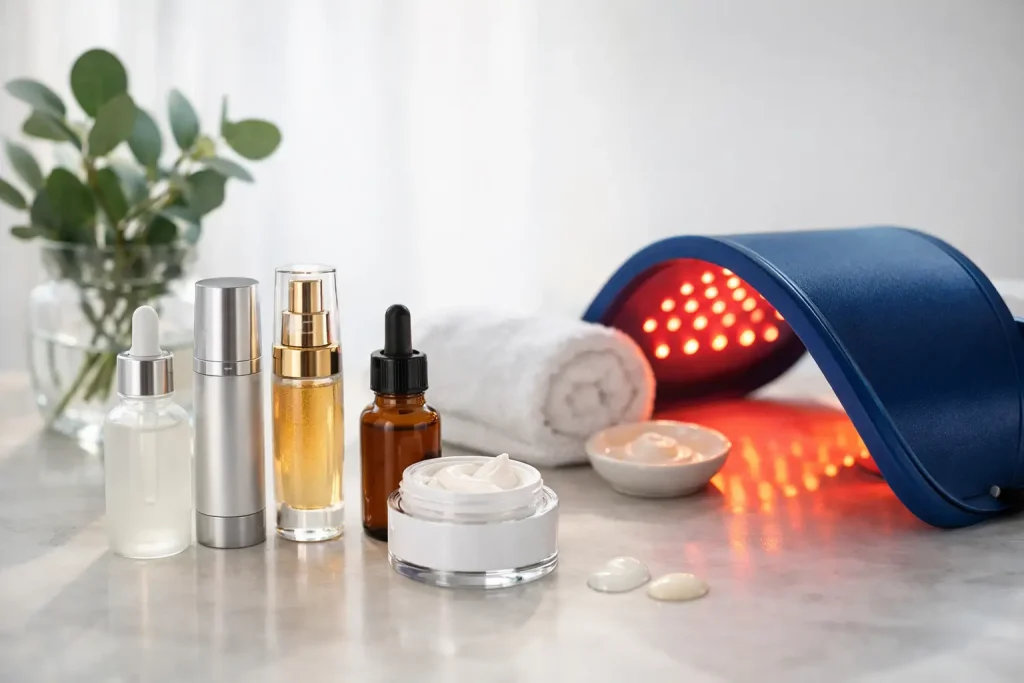
For clients in Sale and across South Manchester who are investing in facials, LED or acne programmes, homecare layering should support those results, not interfere with them. A well-prescribed routine makes in-clinic treatment more efficient because the skin is calmer, more receptive and less likely to swing between over-treatment and neglect.
The most effective routine is the one your skin can follow consistently. If you are unsure how to layer active skincare ingredients, treat that as a sign to simplify, not experiment more. Healthy progress usually looks surprisingly measured: one or two targeted actives, supportive hydration, daily SPF, and a plan that can be adjusted as your skin changes. That is how real skin transformation is built.