
Share This Post
A breakout that appears just before a big meeting, exam, wedding or difficult week at work rarely feels like a coincidence. If you have been wondering, can acne be caused by stress, the short answer is yes – but not in the simplistic way social media often suggests.
Stress does not create every spot from nowhere, and it is not always the sole reason your skin flares. What it can do is push acne-prone skin into a more reactive, inflamed state. For many adults and teenagers, that is enough to turn mild congestion into angry breakouts, or make existing acne slower to heal.
Can acne be caused by stress, or is that a myth?
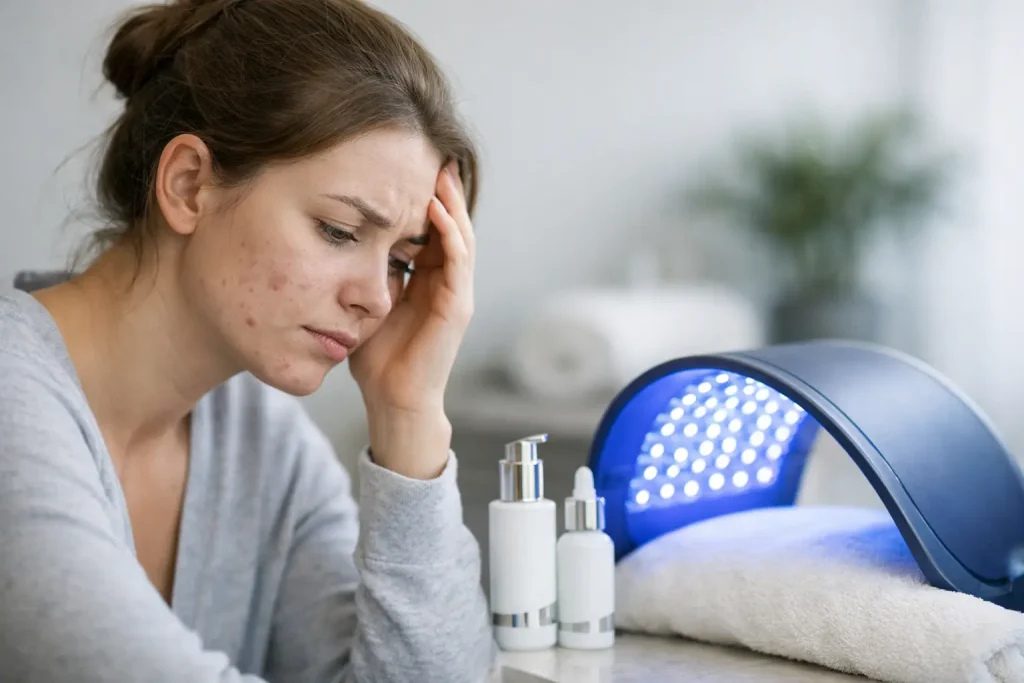
It is not a myth. Stress can contribute to acne by influencing several systems in the body at once. When you are under pressure, your body produces stress hormones such as cortisol. These hormonal shifts can increase oil production, intensify inflammation and affect the skin barrier. If your pores are already prone to blockage, that combination can create ideal conditions for spots to develop.
This matters because acne is not just an oil problem. It is a complex skin condition involving excess sebum, dead skin cell build-up, inflammation, bacteria and sometimes hormonal activity. Stress can feed into several of those pathways at the same time.
That said, the answer is rarely as neat as blaming one stressful week for every breakout. Some people experience stress-related flares very clearly. Others have acne that is driven more by hormones, cosmetics, medication, friction, diet patterns or unsuitable skincare. In clinic, we often see that stress is one piece of a wider picture rather than the whole story.
How stress affects acne-prone skin
The connection between the brain and the skin is real. Skin is highly responsive to internal changes, and stress can alter its behaviour quickly.
Stress hormones can increase oil production
When cortisol rises, sebaceous glands can become more active. More oil does not automatically mean acne, but in acne-prone skin it can make pore blockage more likely. If the follicle is already congested, extra sebum gives the breakout more opportunity to develop.
Inflammation becomes harder to control
Acne is an inflammatory condition. Stress can amplify the body’s inflammatory response, which may leave spots looking redder, deeper and more persistent. This is often why stress breakouts can feel more sore and dramatic than the occasional isolated blemish.
Healing tends to slow down
Under prolonged stress, skin repair can become less efficient. That means breakouts may linger for longer, marks may remain visible for more time, and the overall recovery process can feel frustratingly slow. If you are prone to post-inflammatory pigmentation or scarring, delayed healing is especially relevant.
Skin habits often change during stressful periods
This is the part many people overlook. During high-stress periods, routines tend to slip. Sleep quality worsens, food choices change, hydration can drop, and people often touch or pick their skin more. Some start over-cleansing in an attempt to fix the problem quickly, which can lead to irritation and a more compromised barrier.
So yes, stress can influence acne biologically, but it also affects behaviour – and both matter.
What stress acne usually looks like
There is no single pattern that proves a breakout is stress-related. However, many people notice flares during intense periods, especially when they already have a history of congestion or hormonal acne.
Stress-related acne often appears as inflamed papules and pustules rather than just a few blackheads. It may show up on the face, particularly around the jawline, cheeks or forehead, though body acne can worsen too. Some clients describe a cycle where their skin becomes rougher, oilier and more reactive at the same time.
If your breakouts repeatedly worsen around deadlines, emotional strain, poor sleep or major life events, stress may be acting as a trigger. The key word is trigger. It usually aggravates an existing tendency rather than acting alone.
Why adult acne and stress often overlap
Adults are especially likely to notice this connection because adult life rarely runs on a stable hormonal or emotional baseline. Work pressure, disrupted sleep, commuting, parenting, relationship strain and perimenopausal changes can all influence the skin.
Women in particular may notice a strong overlap between stress, monthly hormonal shifts and breakouts along the lower face. Men can experience stress-related flares too, particularly when stress affects sleep, gym recovery, shaving irritation or inflammation levels.
This is one reason a generic acne product approach often disappoints. If the skin is being pushed by stress, hormones and inflammation all at once, a one-size-fits-all routine rarely gets to the root of the issue.
Can acne be caused by stress alone?
Sometimes stress is the main aggravating factor, but often it works alongside other triggers. You may be more vulnerable to stress breakouts if you also have naturally oily skin, a family history of acne, hormonal imbalance, congestion from occlusive products, or a damaged skin barrier.
This is where proper skin analysis matters. Two people can both say, “My acne gets worse when I am stressed,” yet require very different treatment plans. One may need barrier repair and anti-inflammatory support. Another may need a more structured programme to manage follicular congestion, active breakouts and post-acne marks.
The mistake is assuming that because stress is involved, the solution is simply to relax. That is neither realistic nor clinically useful.
What to do if stress is making your acne worse
The goal is not perfection. The goal is reducing the number of factors pushing the skin in the wrong direction.
Start with consistency. Acne-prone skin responds best to a structured routine that supports the barrier, regulates congestion and avoids unnecessary irritation. When people are stressed, they often jump between products, strip the skin, or stop using active ingredients too abruptly. That tends to prolong the cycle.
It is also worth looking at friction and habits. Picking, squeezing and constant face touching can turn a manageable breakout into a more inflamed one with a higher risk of marking. If you are wearing makeup, gym headwear or anything that sits closely against the skin, cleanliness and product suitability matter.
Sleep and stress management have a place here, but they should be framed realistically. Better sleep, movement and nervous system regulation can support skin health, yet they are not replacements for proper acne treatment. Think of them as part of a broader plan rather than the whole plan.
When professional treatment makes sense
If your skin repeatedly flares under stress, if spots are painful, or if you are starting to mark or scar, it is time to stop guessing. Acne behaves differently from occasional blemishes, and delayed treatment often means more inflammation and a longer road back to clear skin.
A clinic-led approach can assess whether stress is aggravating true acne, rosacea-like inflammation, folliculitis or a barrier issue that is mimicking acne. That distinction matters. Treating the wrong condition with harsh products can make the skin far worse.
At GRB Skin Clinic, the focus is on structured consultations, ingredient education and progressive treatment planning rather than quick fixes. For stress-aggravated acne, that may involve a review of your current products, a prescription-style homecare plan, and in-clinic support such as advanced facials or LED light therapy where appropriate. The right plan depends on lesion type, sensitivity, inflammation level and how long the problem has been going on.
The bigger picture: skin is responsive, not disobedient
One of the most damaging ideas in acne care is that breakouts mean you have done something wrong. Stress acne can feel personal because it often appears when you are already stretched. But skin is a responsive organ. It reflects internal pressure, external irritation and biological predisposition.
That is why a calm, clinical approach works better than panic. If stress is part of your acne pattern, your skin does not need punishment. It needs a treatment strategy that respects inflammation, supports repair and deals with congestion in a controlled way.
The most useful question is not whether stress is bad for your skin. It is whether your current routine and treatment plan are strong enough to support your skin when life becomes demanding. When that answer is yes, breakouts become far more manageable – and that is often where real progress begins.