
Share This Post
Fine lines are rarely the first sign that skin needs support. Often, the earlier changes are dullness, uneven tone, slower recovery after a breakout, dehydration that returns by lunchtime, or pigmentation that becomes more noticeable year on year. A guide to anti-ageing skin programmes should begin here: not with a promise to erase every line, but with a clinical plan to improve how skin functions, repairs and protects itself.
At GRB Skin Clinic, anti-ageing support is approached as skin health. The goal is to restore youthful vitality through progressive treatment, intelligent ingredients and a home prescription that gives your skin the consistency it needs to change.
What an anti-ageing skin programme should address
Ageing is not one concern. Collagen and elastin production naturally slow over time, while years of daylight exposure can create visible changes in pigment, texture and firmness. Hormonal shifts, stress, inflammation, poor barrier function and previous acne can add further complexity. That is why a single facial or a shelf full of unselected products rarely delivers lasting improvement.
A well-designed programme assesses the whole picture. It considers your skin’s current strength, sensitivity, hydration levels, congestion, pigmentation, fine lines and degree of photodamage. It also considers what you can realistically maintain. The most effective programme is not the most aggressive one. It is the one that your skin can tolerate and respond to consistently.
For some clients, the priority is brightening sun-related pigmentation and restoring luminosity. For others, it is softening the appearance of lines, improving crepey texture or rebuilding a compromised barrier before more active treatment begins. If acne and ageing are both concerns, treatment must be especially measured. Excessive stimulation can aggravate active breakouts, while leaving inflammation unmanaged can affect marks and texture later.
Start with a proper consultation and skin analysis
An anti-ageing programme should never be selected from a menu alone. A structured consultation is where the real work starts. Your therapist needs to understand your skin history, current routine, medication where relevant, lifestyle pressures and the treatments you have had previously. Skin analysis then guides what is appropriate now, rather than what sounded appealing several months ago.
This consultation-first approach prevents a common mistake: treating visible lines while ignoring the conditions that make them look more pronounced. Dehydration, poor surface renewal, inflammation and uneven pigment can all make skin appear older than it is. When these are addressed, the face can look fresher and more rested even before deeper corrective work has had time to develop.
Expect clear expectations around timing. Skin remodelling is gradual. Surface radiance may improve relatively quickly, but meaningful improvements in firmness, texture and pigmentation normally require a course of treatment and committed home care. Your therapist should explain the recommended sequence, likely response and when your programme will be reviewed.
Build strength before intensity
High-potency active ingredients and device-led treatments can be transformative when they are introduced at the right pace. They are not a race. Skin that is irritated, flaky or persistently reactive is not necessarily receiving better treatment; it may be signalling that its barrier needs support.
A progressive programme may begin by improving hydration, vitamin support and barrier resilience. Once skin is functioning more comfortably, active ingredients and professional treatments can be advanced. This approach gives the skin a stronger foundation for visible correction and reduces the likelihood of unnecessary inflammation.
The three parts of an effective programme
The best results come from treatments and products working together, not competing for attention. Think of an anti-ageing programme as three connected parts: correction in clinic, prescription at home and daily protection from further damage.
1. Professional treatment for controlled stimulation
In-clinic treatments provide the level of precision that home care cannot. Bespoke facials using professional Environ skincare can support hydration, vitamin delivery and healthier-looking texture, while being adapted as your skin progresses. These treatments are not simply a moment of relaxation, although clients often enjoy that benefit. They are selected to support a clinical outcome.
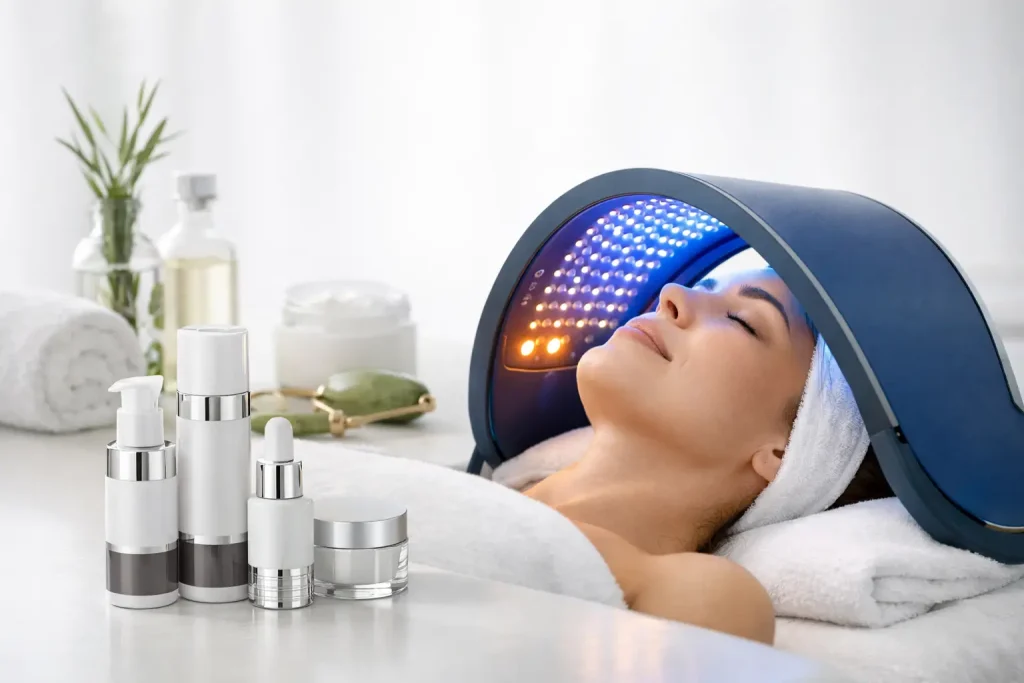
LED light therapy can be incorporated where appropriate to support the skin’s natural repair processes and calm visible signs of inflammation. It is particularly valuable in programmes where the skin needs recovery alongside rejuvenation, or where acne, redness and sensitivity need considered management.
Your treatment course may also focus on targeted pigment support and progressive renewal. The exact protocol depends on your assessment, your tolerance and your goals. A responsible practitioner will not promise an identical outcome for every client, because a history of sun exposure, hormones, skin tone, acne scarring and consistency with home care all influence the result.
2. A prescriptive home routine
The time between appointments is where a programme either gathers momentum or loses it. A professional skincare prescription gives your skin a coherent routine rather than a collection of products with overlapping or conflicting purposes.
For anti-ageing concerns, this often includes carefully selected vitamin-based care, ingredients that support hydration and skin barrier function, and products designed to improve the appearance of uneven tone and texture. The right format, concentration and frequency matter as much as the ingredient itself. More is not always better, particularly if skin is sensitive or has been overtreated in the past.
Your therapist should explain what each product is for, how to introduce it and what changes to report. This education matters. When you understand why an ingredient has been prescribed, you are far more likely to use it correctly and continue long enough to see progress.
3. Protection that preserves your progress
No corrective programme can work at its best if ongoing exposure continues to drive pigmentation, collagen breakdown and uneven texture. Daily broad-spectrum sun protection is a non-negotiable part of skin ageing management, even on overcast Greater Manchester days and even when you are mainly indoors near windows.
Protection is not only for holidays. It is the daily discipline that helps preserve the results of your facials, LED sessions and active homecare. It also supports more even-looking skin over time, which is often one of the most visible signs of a successful programme.
How long does it take to see a difference?
There is no honest one-size-fits-all answer, but there are useful milestones. Many clients notice that skin feels more hydrated, smoother or brighter after the first stages of a programme. These early changes are encouraging, but they are not the final measure of progress.
Pigmentation, fine lines, loss of firmness and post-acne texture usually need longer-term consistency. A course may run across several appointments, followed by maintenance sessions planned around the skin’s needs and the seasons. Photographs and periodic skin reviews are valuable because gradual improvement can be hard to judge when you see your own face every day.
If your skin is preparing for a wedding, a milestone birthday or another event, start earlier than you think. Last-minute intensity is not a substitute for a properly paced programme. Skin responds better when it has time to adapt, strengthen and renew.
When maintenance becomes the smart choice
Anti-ageing care is not a short project with a finish line. Once you have improved hydration, tone and texture, maintenance protects that investment. This may mean a regular facial schedule, occasional LED support, seasonal adjustments to your product prescription and reviews when your skin changes.
Maintenance should not be static. Skin can behave differently during periods of stress, hormonal change, increased outdoor exposure or colder weather. A therapist-led programme is designed to respond to those changes before they become setbacks.
Choose a programme, not a quick fix
The strongest anti-ageing results are built through clinical knowledge, realistic timelines and treatments chosen for your individual skin biology. A quick boost can make skin look polished for a few days, but a structured programme is what gives you the opportunity to improve its quality over months and years.
If you are ready to address lines, pigmentation, texture or loss of radiance with a plan that makes sense for your skin, book a consultation at GRB Skin Clinic. The right starting point is not guessing what your skin needs. It is having it properly assessed, then giving it the consistent support to become healthier, stronger and visibly more luminous.