
Share This Post
A stubborn area of fullness around the abdomen, thighs or hips can be frustrating when your weight is stable and you are already making sensible lifestyle choices. Understanding how cavitation body treatment works helps you assess whether it is a suitable non-surgical option for refining body contours – rather than expecting it to replace weight loss or create an overnight transformation.
Cavitation is a device-led treatment designed to support the reduction of localised fat deposits. At GRB Skin Clinic, it is approached as part of a structured body plan: your starting point, treatment area, health history and realistic goals all shape the course recommended for you.
How cavitation body treatment works beneath the skin
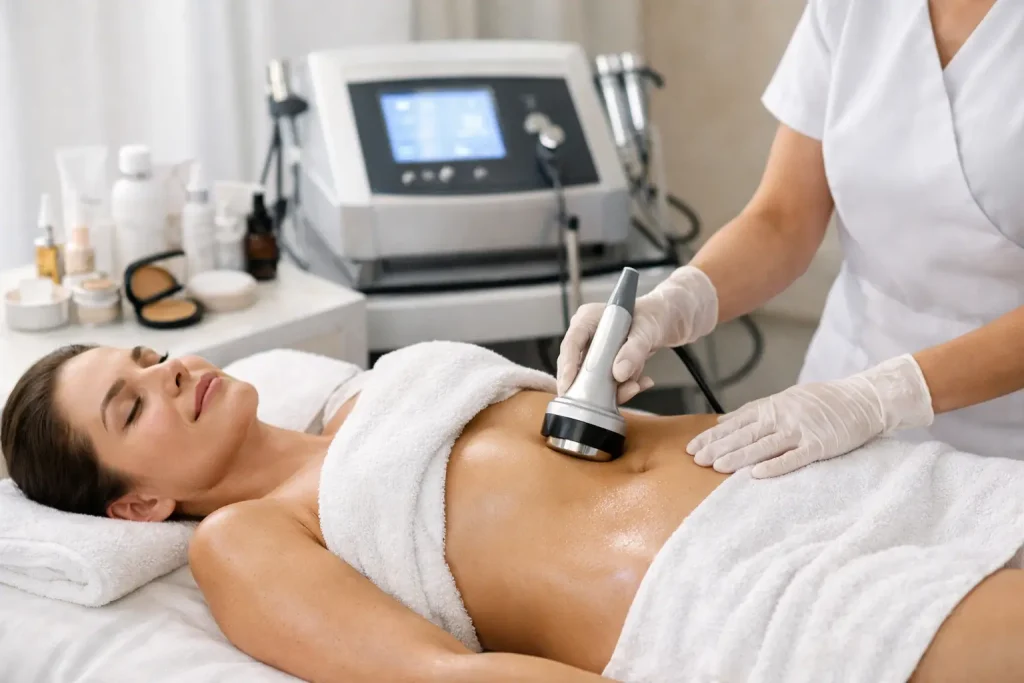
Cavitation uses low-frequency ultrasound energy, delivered through a handpiece over the chosen area. Ultrasound is sound energy at a frequency beyond human hearing. In this setting, it is used to create rapid pressure changes within the fluid around fat cells in the subcutaneous layer – the layer beneath the skin where body fat is stored.
These pressure changes form tiny microscopic bubbles. As the bubbles expand and contract, they place mechanical stress on the membranes of nearby fat cells. The intention is to disrupt the stored fatty material within those cells, allowing it to be released into the surrounding tissue.
Your body then deals with that released material through its normal metabolic and lymphatic processes. Some components are transported through the lymphatic system and processed by the body, including the liver, in the same broad way dietary fats are handled. This is why hydration, regular movement and a stable, supportive lifestyle matter around a course of treatment. They do not make cavitation work by magic, but they support the systems involved in clearing metabolic by-products.
The treatment is aimed at body shaping, not dramatic scale changes. You may notice a reduction in centimetres or a smoother look through a treated area, while your overall body weight changes very little. A set of scales cannot show the difference between a gradual contour improvement and whole-body fat loss.
What cavitation can and cannot treat
Cavitation can be a useful choice for people close to a comfortable, sustainable weight who want support with small, resistant pockets of fat. Common areas include the abdomen, flanks, thighs, buttocks, upper arms and the area around the knees. The right areas depend on the thickness and distribution of the tissue, as well as the quality of the skin over it.
It is not a substitute for medical weight-management care, liposuction or a healthy routine. It cannot target visceral fat, which sits deeper around internal organs, and it is not a treatment for obesity. Nor should it be presented as a cure for cellulite. Some clients feel that a smoother contour makes the appearance of cellulite less noticeable, but cellulite has several causes, including fibrous bands and skin structure, so results vary.
Skin laxity is another important consideration. If the principal concern is loose or crepey skin rather than localised fullness, a different or combined approach may be more appropriate. A clinical consultation protects you from spending time and money on a treatment that does not match the concern you are trying to correct.
What happens during a cavitation appointment?
A professional appointment begins before the device is switched on. Your therapist should review your medical history, establish the area you would like to improve and discuss what is realistically achievable. Measurements and, where appropriate, progress photographs provide a meaningful baseline. Looking in the mirror every day can make gradual progress difficult to spot; consistent measurements are more useful.
During treatment, a conductive gel is applied to the skin. The handpiece is moved continuously over the selected area in controlled motions. This is important both for comfort and for even energy delivery. Most people find the treatment comfortable and describe a gentle warmth, vibration or tingling sensation.
Some clients hear a faint high-pitched ringing while the device is operating. This is a recognised effect of the ultrasound frequency and usually stops as soon as the handpiece is removed. Tell your therapist immediately if you feel pain, excessive heat or any unexpected discomfort. A treatment should be adapted to your response, never pushed through.
The length of an appointment depends on the size and number of areas being treated. Your practitioner will also explain spacing between sessions. The body needs time to respond, and more treatment is not automatically better. A planned course is generally more appropriate than a one-off appointment, with regular reviews to assess visible and measurable changes.
When should you expect results?
Cavitation is progressive. Some people feel their clothing sits differently or notice a change in measurements after the first few sessions, while others need longer before changes become apparent. Individual response depends on the area treated, starting body composition, fluid retention, circulation, activity levels and consistency across the course.
It is sensible to judge results after several weeks rather than a few days. The body’s processing of released material is not immediate, and short-term fluctuations in hydration or bloating can obscure changes. Your treatment plan should include a review point, so the next step is based on evidence rather than guesswork.
Maintaining results also depends on what happens after the course. Fat cells can store fat again when there is a sustained energy surplus. Cavitation may reduce the volume of localised tissue, but it does not remove the need for long-term habits that support your health and shape goals.
Supporting your treatment course
Follow the aftercare provided by your therapist. In many cases, this will include drinking adequate water, keeping gently active and avoiding habits that leave you consistently dehydrated. A walk, regular exercise appropriate to your ability and a balanced eating pattern are practical ways to support circulation and overall metabolic health.
Avoid treating an appointment as permission to abandon your routine. The strongest outcomes tend to come from clients who see their course as one part of a wider commitment to their wellbeing. This is not about perfection. It is about giving a clinically planned treatment the right conditions to deliver its best possible result.
Is cavitation body treatment safe for everyone?
When it is performed by a trained practitioner, with suitable equipment and proper screening, cavitation is generally well tolerated by appropriate clients. However, it is not suitable for everybody. A credible clinic will be clear about this.
You may be advised against treatment if you are pregnant or breastfeeding, have a pacemaker or other electronic implanted device, significant liver or kidney concerns, a history of certain cancers, active infection in the treatment area, blood-clotting issues, epilepsy, or a metal implant near the area being treated. Some medications and medical conditions may also affect suitability.
This is why an honest consultation matters. Do not minimise a health condition because you want to proceed. Your safety comes before a body-contouring appointment, and a responsible therapist may ask for medical clearance or recommend an alternative route.
Temporary effects can include redness, warmth, tenderness or increased thirst. These are usually mild and short-lived, but you should receive clear aftercare guidance and know who to contact if anything concerns you. Hygiene, equipment maintenance and therapist training are not optional details – they are part of safe clinical practice.
Why a personalised plan produces better decisions
The internet often reduces body treatments to before-and-after promises. In reality, good treatment planning asks more useful questions: Is this fat, fluid retention or loose skin? Is the concern localised? What does success look like in centimetres, clothing fit or confidence? Is cavitation the right choice, or would another treatment be more aligned with your body and goals?
At GRB Skin Clinic, this consultation-led approach helps ensure that body treatments are selected for a reason, not simply because they are popular. You should understand the mechanism, likely session commitment, aftercare and limitations before beginning.
If you are considering cavitation in Sale or the wider South Manchester area, start with a professional consultation and bring your questions. The most valuable result is not a rushed promise – it is a plan that respects your health, measures progress properly and helps you feel more confident in your body over time.