
Share This Post
A change in your skin can seem to arrive all at once: a patch of uneven tone that makeup no longer disguises, fine lines that stay visible after you have rested, or a complexion that feels less firm and reflective than it used to. In reality, photodamage develops gradually through repeated ultraviolet exposure, often years before it becomes obvious. Learning how to treat photodamage without harsh peels starts with treating the skin as living tissue that needs guided repair, not as a surface that needs stripping.
A strong result rarely comes from one aggressive appointment. It comes from a professional assessment, targeted active ingredients, progressive treatments and daily protection that prevents fresh damage while the skin rebuilds.
What photodamage actually does to the skin
Photodamage is the cumulative effect of sun exposure on the skin. It can show up as uneven pigmentation, rougher texture, fine lines, loss of elasticity, dullness, visible capillaries and a slower recovery response. Some people notice freckles becoming more pronounced, while others see patches of brown or grey-toned discolouration, particularly across the cheeks, forehead, chest and hands.
Beneath the visible changes, ultraviolet exposure contributes to oxidative stress and affects the collagen, elastin and supportive structures that give skin its bounce. This is why a photodamaged complexion can look both lined and uneven at the same time. Treating only the surface may create a short-lived glow, but it does not necessarily support the biological processes needed for lasting improvement.
It is also worth separating photodamage from other causes of pigmentation. Hormonal changes, inflammation following blemishes, certain medications and skin conditions can all alter skin tone. That distinction matters because the most effective plan depends on what is driving the concern. A detailed consultation and skin analysis should always come before a treatment course.
How to treat photodamage without harsh peels
Harsh peels can sometimes be appropriate in carefully selected cases, but they are not the only route to clearer, smoother-looking skin. For many clients, especially those with sensitivity, active congestion, a compromised barrier or a history of uneven pigment response, a progressive approach is the more intelligent choice.
The aim is to improve skin function while gradually encouraging renewal. Rather than forcing a dramatic shedding response, the skin is supported with ingredients and treatments chosen for its current tolerance. This reduces unnecessary inflammation, which is particularly relevant when pigmentation is a concern.
Begin with barrier health and daily protection
A damaged or dehydrated barrier is more reactive and less able to tolerate performance ingredients. Before introducing stronger actives, your therapist may focus on cleansing correctly, replenishing hydration and calming visible sensitivity. This is not a delay in results. It creates the conditions in which the skin can respond well to its programme.
Daily broad-spectrum sun protection is non-negotiable when managing photodamage. Without it, newly developing pigmentation and collagen breakdown can continue to undermine your progress. Protection should be applied generously every morning and reapplied when exposure, heat, travel or outdoor activity makes that necessary. Hats, shade and sensible exposure habits all make a meaningful difference too.
Use vitamin A progressively
Vitamin A is one of the most valuable ingredients in a professional photodamage plan. It helps normalise skin cell behaviour and supports a smoother, more refined appearance over time. It can also improve the look of fine lines, roughness and uneven tone when introduced carefully.
The key word is carefully. Starting too high or using a product too frequently can leave skin dry, tight, flaky or inflamed. A professional prescription should account for your skin’s sensitivity, current routine, lifestyle and previous use of active ingredients. The right level can then be built up as the skin adapts, rather than treating irritation as proof that a product is working.
At GRB Skin Clinic, this type of progression is central to a results-driven plan. High-potency, professional skincare is powerful when it is matched accurately to the individual, monitored and adjusted at the right time.
Add antioxidants that address daily oxidative stress
Antioxidants are an essential partner to vitamin A because they help defend the skin against oxidative stress created by ultraviolet exposure and environmental factors. Vitamin C, vitamin E and other clinically selected antioxidant ingredients can support brightness and help the complexion look more even and resilient.
Not every antioxidant formula suits every skin type. A client with congestion may need a different texture and delivery system from someone whose skin is dry, mature or easily reactive. This is why a prescribed routine is more useful than collecting several highly active products and hoping they work together. Your homecare should have a clear purpose, with every product supporting the next.
Support repair with LED light therapy
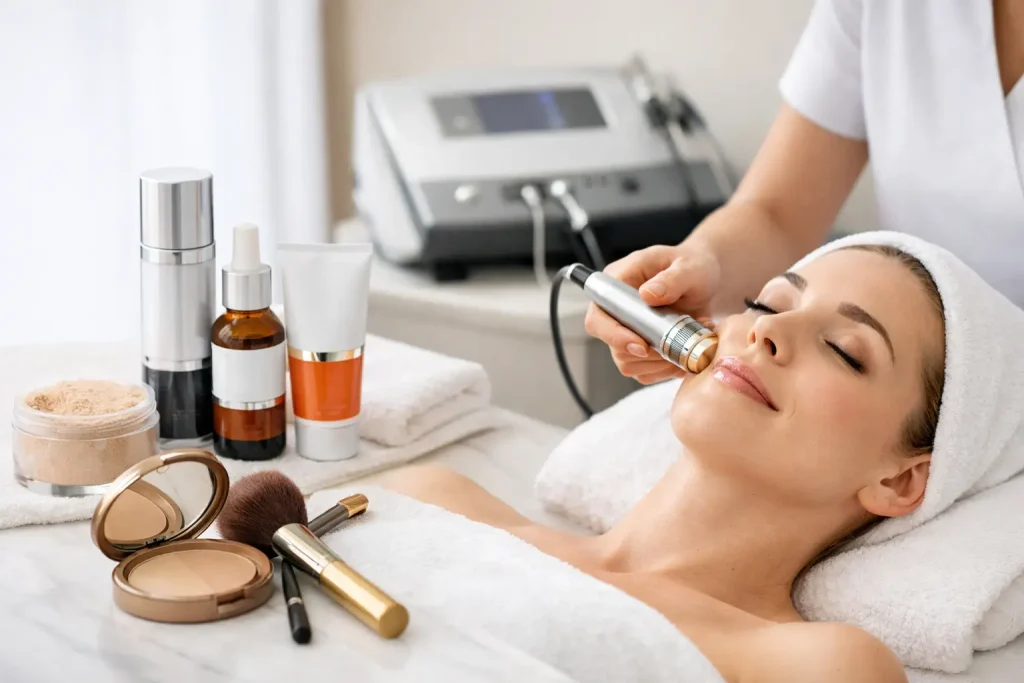
LED light therapy is a comfortable, non-invasive way to complement a photodamage programme. Specific wavelengths of light can support the skin’s natural repair processes and help create the healthier, calmer environment needed for progressive improvement. It is often well tolerated and requires no downtime, making it practical for busy professionals who want consistent care without disrupting work or social plans.
LED is not a stand-alone answer to long-standing sun damage. Its value lies in how it works within a structured programme: preparing the skin, supporting recovery and helping maintain momentum between more targeted facial treatments. Results are cumulative, so a course is usually more beneficial than an occasional session.
Choose treatments that work with your skin, not against it
A bespoke facial can be far more strategic than a relaxing surface treatment. When designed around photodamage, it may focus on controlled exfoliation, deep hydration, antioxidant delivery and ingredients that support healthier cell function. The intensity should reflect what your skin can handle now, not what promises the most dramatic immediate reaction.
This approach is especially valuable when you have several concerns at once. Mature skin may also be dry and reactive. Pigmentation may sit alongside breakouts or post-inflammatory marks. Someone who has overused active products may have dullness caused partly by dehydration. A therapist-led treatment plan can prioritise the right issue first, then progress as the skin becomes stronger.
What results should you expect?
Photodamage cannot be erased overnight, and anyone promising an instant transformation should be approached with caution. Most clients first notice improved hydration, a fresher appearance and smoother texture. Over the following weeks and months, consistency can improve the appearance of uneven tone, fine lines and overall radiance.
The timeline depends on the extent of damage, your skin type, hormonal influences, your adherence to homecare and how reliably you protect your skin from further exposure. More established pigmentation and textural changes need patience. A structured review process allows your therapist to assess visible changes, check tolerance and refine the plan rather than continuing with a routine that has stopped serving your skin.
Common mistakes that slow progress
The most common error is changing too many products at once. If irritation develops, it becomes difficult to identify the cause, and skin can quickly become overwhelmed. Another is treating the skin intensely for a few weeks, then dropping the routine once it looks better. Photodamage management is a long-term commitment to healthier skin function.
Over-exfoliation is another frequent problem. Scrubs, acids and strong cleansing habits can make the complexion feel temporarily smooth while quietly weakening the barrier. If your skin stings when applying ordinary products, looks persistently red or feels tight after cleansing, it may need recovery rather than another exfoliating step.
Finally, do not judge progress only by whether pigmentation has disappeared. A stronger barrier, more even texture, improved hydration and reduced reactivity are significant markers that the skin is moving in the right direction.
A plan that fits your skin and your life
The most effective photodamage programmes are realistic. They account for your work schedule, time outdoors, upcoming events, budget and willingness to follow a routine consistently. They also give you a clear understanding of why each recommendation has been made, how to use it and when to expect a review.
If your skin looks tired, uneven or less firm than it once did, the answer does not have to be an aggressive reset. With a careful assessment and progressive professional guidance, skin can be encouraged to repair, strengthen and regain a clearer, more youthful vitality – steadily, safely and with results you can maintain.