
Share This Post
A breakout on the chin, stubborn brown marks across the cheeks or a complexion that suddenly feels dry and reactive can look like separate problems. Often, they are connected. Skin analysis is the point at which guesswork ends and a clear, personalised treatment direction begins.
At GRB Skin Clinic, we do not treat skin concerns as surface-level inconveniences. We look at the condition of the skin, the patterns behind it and the factors that may be preventing it from functioning at its best. This is how a plan becomes more than a facial or a product recommendation. It becomes a structured movement towards clearer, stronger and more youthful-looking skin.
What skin analysis really assesses
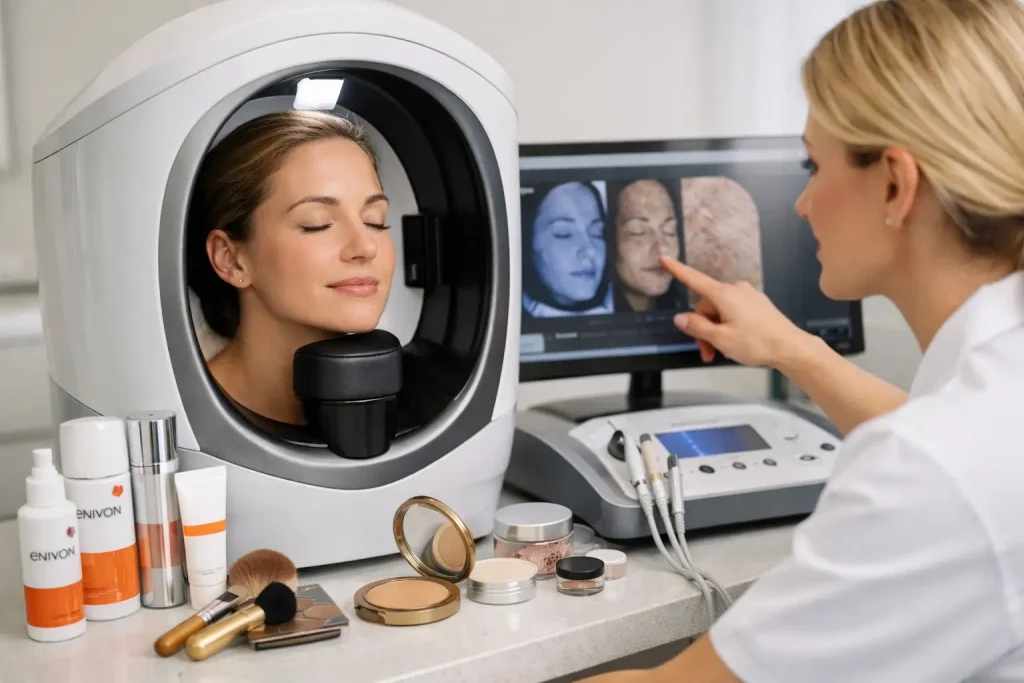
A professional skin analysis is not simply a quick look in the mirror followed by a list of products. It is a detailed assessment of what is visible now, what may be happening beneath the surface and how your skin is likely to respond to treatment.
Your therapist considers concerns such as congestion, active acne, dehydration, sensitivity, uneven texture, fine lines, pigmentation and signs of photodamage. They also assess the skin’s overall balance. Oily skin can be dehydrated. Dry-feeling skin can still be congested. A client who believes they have sensitive skin may instead be experiencing a compromised barrier caused by unsuitable active ingredients or over-treatment.
This distinction matters. Treating every spot as an oil problem, for example, can leave the skin stripped, inflamed and more vulnerable to further breakouts. Treating pigmentation without first understanding sensitivity, lifestyle exposure and skin health can lead to disappointing progress. Good treatment planning starts with the reason, not just the symptom.
The skin is not static
Your skin changes with stress, hormones, medication, sleep, travel, climate, work routines and the products you use consistently. Acne in a teenager may require a very different approach from adult breakouts around the jawline. Likewise, lines and dullness in mature skin are not always simply a question of age. Dehydration, reduced vitamin A support, inconsistent homecare and cumulative sun exposure can all influence what you see.
That is why a consultation should feel like a conversation as well as an assessment. Your therapist needs to understand your history, your previous treatments, your current routine and what you realistically want to achieve. The best plan is not the most aggressive one. It is the one your skin can tolerate, and that you can follow consistently.
Why a diagnosis-led approach gets better results
Many clients arrive after trying several products with little change, or after seeing a short-term improvement followed by a flare-up. This can happen when skincare is selected by skin type alone rather than skin condition.
Skin type is useful, but it is only one part of the picture. You may naturally produce more oil, yet currently be dehydrated and sensitised. You may have dry skin but also experience congestion around the nose, chin or forehead. You may be concerned with ageing, but your most immediate priority could be restoring barrier function before introducing higher-potency ingredients.
A diagnosis-led approach allows treatment to be sequenced properly. First, the skin may need calming and hydration. Then the focus may move to clearing congestion, improving cell turnover, supporting collagen, softening uneven texture or managing pigmentation. This progressive approach protects the skin while still moving it forward.
For acne clients, this is particularly valuable. Acne is rarely solved through one appointment or one hero product. It benefits from a plan that considers the type and severity of breakouts, inflammation, congestion, marks left behind and the condition of the surrounding skin. Regular review makes it possible to adjust the programme as the skin changes rather than continuing with a routine that is no longer appropriate.
What happens during a professional consultation
A thorough consultation begins with your concerns, but it does not end there. Your therapist will ask questions that help build a more complete clinical picture. This may include your skincare history, known sensitivities, health information relevant to treatment, lifestyle factors and previous reactions to professional or over-the-counter products.
The skin is then examined closely in good light. Areas of congestion, dehydration, redness, sensitivity, pigmentation and uneven tone are assessed alongside pore appearance, texture and visible signs of ageing. Hygiene and safety are central throughout. A specialist clinic should make you feel informed, respected and confident in each recommendation.
From there, your therapist can explain what they are seeing in clear terms. You should understand which concerns are the priority, why they may be occurring and what improvement is likely to involve. This is also the time to set realistic expectations. Skin renewal takes time. Some clients notice improved hydration, brightness or calmness early on, while acne, pigmentation and textural changes usually need a committed course of treatment and consistent homecare.
Your plan should have a purpose
A personalised plan may combine in-clinic treatments with a prescribed homecare regimen. Bespoke Environ facials can support skin health through professional-grade ingredients selected for your condition. LED light therapy may be included where it is appropriate for calming, healing support and overall skin function. For some concerns, device-led protocols or progressive treatment courses may be recommended.
The exact combination depends on your skin, your priorities and your available commitment. There is no benefit in prescribing an ambitious routine that will not fit into your morning and evening. Equally, a minimal routine may not deliver enough support for a complex concern. Your therapist’s role is to find the effective middle ground and explain how each step earns its place.
The value of ingredient education
Results are easier to maintain when you understand what your prescribed products are designed to do. Clinical skincare should not feel mysterious or overwhelming. You do not need to memorise every ingredient, but you should know why certain formulations have been chosen and how to introduce them safely.
For example, skin-supporting vitamins, antioxidants and carefully selected active ingredients can help improve the appearance of texture, dullness and visible ageing when used correctly. However, stronger is not automatically better. Frequency, concentration, layering and the condition of your skin all affect whether a product helps or irritates.
This is where professional guidance becomes particularly useful. Rather than changing multiple products at once, a structured regimen introduces the right support in the right order. If your skin reacts or progresses more quickly than expected, the plan can be reviewed. That responsiveness is difficult to achieve when skincare is chosen without a complete assessment.
When to book a skin analysis
You do not need to wait for a major flare-up to seek professional advice. A consultation is worthwhile if your skin has stopped responding to your usual routine, if you are experiencing recurring congestion, if pigmentation is becoming more noticeable or if you want a more informed anti-ageing strategy.
It is also a sensible first step before beginning a course of advanced treatments. A proper assessment helps ensure that treatment selection is appropriate, timings are realistic and your homecare is supporting rather than undermining your progress.
For clients in Sale and across Greater Manchester, a skin analysis offers the reassurance of a plan built around your individual skin rather than a passing trend. With more than 30 years of beauty experience and over 18 years focused on skin health, GRB Skin Clinic approaches every concern with the care, knowledge and consistency that lasting change requires.
Your skin gives useful information long before it needs a quick fix. Listening to it properly, then following a considered plan, is one of the most effective ways to create visible progress that continues beyond the treatment room.