
Share This Post
You can usually tell when someone has had a proper LED light therapy facial because their skin looks calmer, not coated. Less heat, less reactivity, a more even tone – the kind of improvement that reads as “healthy” rather than “done”. If you are in Sale and you are considering LED, the smartest move is to treat it like any other clinical intervention: match the light to the biology, commit to a course, and judge it by changes in skin behaviour over time.
What an LED light therapy facial actually does
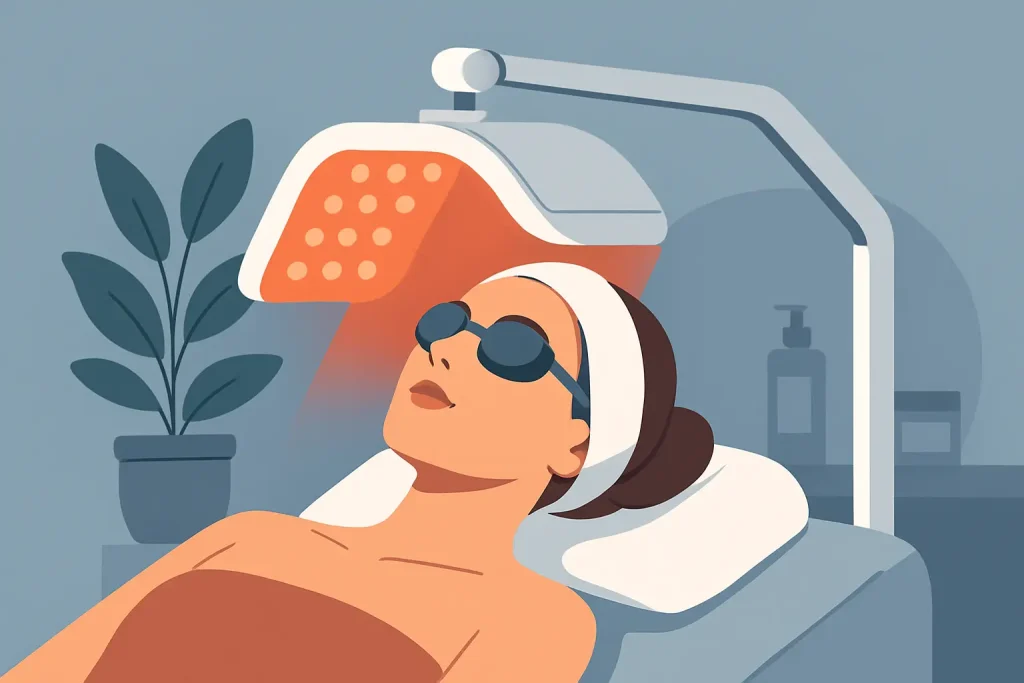
LED (light-emitting diode) therapy uses specific wavelengths of visible light to influence skin function. It is not a peel, it is not a laser, and it is not a tanning bed. There is no thermal injury and no deliberate wounding. Instead, the light is absorbed by chromophores in the skin – and that absorption can nudge cellular activity in a direction we want, such as reduced inflammation, improved healing response, and more stable barrier function.
That is why LED has become a backbone treatment in progressive skin health clinics. It is supportive, repeatable, and compatible with long-term plans for acne, pigmentation management, sensitised skin, or ageing support. But it is not magic. Your results depend on the wavelength used, the dose, the consistency of sessions, and what else you are doing to your skin between appointments.
LED light therapy facial Sale: what most clients are really trying to fix
When someone searches for an “LED light therapy facial Sale”, they are usually not shopping for a pamper facial. They are trying to solve a recurring problem that affects confidence and behaviour: breakouts that keep returning, redness that flares at the worst times, post-acne marks that linger, or skin that looks dull and tired even when lifestyle is “good”.
LED is often the right tool for these concerns because it targets skin signalling rather than surface texture alone. If your skin is reactive, congested, inflamed or slow to recover, LED can be a stabiliser in the plan. If your main issue is heavy sun damage, deeper pigmentation or etched lines, LED can still be useful – but it will usually sit alongside other modalities and a stricter homecare strategy.
Red light: collagen support and recovery
Red light is the wavelength most associated with rejuvenation and skin resilience. In clinical protocols it is often used to support collagen-building pathways, calm inflammation, and speed up recovery after more active treatments. Clients tend to notice that the skin feels less irritable and looks more “rested” after a course.
Red LED is not a substitute for injectable work, and it will not erase deep folds in a fortnight. What it can do, done consistently, is improve the quality of the skin – tone, texture refinement, and a more robust barrier. That matters because resilient skin tolerates active ingredients better, and tolerating actives is what drives long-term change.
Blue light: breakouts and bacterial load
Blue light is commonly used in acne protocols because it targets acne-associated bacteria and can help reduce inflammatory lesions. It is often most useful for clients with active breakouts and persistent congestion, especially when breakouts are fuelled by inflammation and poor barrier function rather than a one-off hormonal flare.
However, blue light can be drying for some skins, particularly if your barrier is already compromised from over-exfoliation, harsh cleansers or a history of “scrubbing it clean”. If you are prone to dehydration, eczema, or tightness, the LED plan needs to be adjusted and supported properly, not pushed aggressively.
Near-infrared: deeper calming and repair
Near-infrared light sits just outside the visible spectrum and is frequently paired with red light in more advanced systems. It is often used to support healing and comfort, particularly for reactive, post-procedure, or chronically inflamed skin patterns. The benefit is less about a “glow” and more about the skin behaving better: fewer flare-ups, less lingering redness, and faster recovery when you do have a breakout.
Why results vary so much (and how to set expectations properly)
LED is a course-based treatment. It works by cumulative signalling, not by a single dramatic event. That is why you will see mixed reviews online: someone does one session before a wedding and calls it “subtle”, while someone else commits to a structured programme and sees their acne cycle change.
For acne, many clients need a series of sessions close together at the start, then a step-down phase for maintenance. For redness and sensitivity, the timing depends on what is driving the inflammation – barrier damage, rosacea tendencies, post-inflammatory erythema, or a combination. For ageing support, the most meaningful improvements are typically seen when LED is paired with a progressive topical plan and consistent sunscreen use.
It also depends on what you stop doing. If you keep picking, keep layering random acids, or keep switching routines every two weeks, LED cannot out-perform inconsistent habits.
What a therapist-led LED facial should include
An LED session is simple in feel – cleanse, light exposure, finish – but high-quality results come from the thinking around it. A therapist-led clinic should be able to explain why they are choosing a certain wavelength and how it fits into your wider skin objectives.
A proper appointment should include skin assessment and clear contraindication screening. LED is gentle, but there are still reasons to delay or modify treatment, such as certain medications that increase photosensitivity, recent aggressive peels, or unmanaged skin infections. You should also be guided on what to use after the treatment, because the immediate post-LED window is a chance to support the barrier with the right actives, not overwhelm it.
If your LED “facial” is being offered as a quick add-on with no analysis and no plan, it is likely to feel pleasant but deliver less.
Clinic LED vs at-home LED masks: the honest trade-off
At-home LED devices have improved. For maintenance, they can be valuable – especially for clients who are already on a stable routine and want extra support between clinical sessions. But there are limitations.
Clinic systems typically deliver more consistent irradiance and better coverage, and they are used within protocols where dose and frequency are planned. At home, people often under-dose (too short, too infrequent) or overcomplicate the process (switching colours daily without a goal). Hygiene is also an issue with masks if they are not cleaned properly.
If you are dealing with persistent acne, scarring risk, pigmentation patterns or chronic sensitivity, it is usually smarter to start in clinic. Once the skin is stable and your routine is working, at-home LED can become a helpful maintenance tool rather than a desperate fix.
How to choose the right LED light therapy facial in Sale
Sale has no shortage of places offering “LED add-ons”, but the words on the menu do not tell you whether the treatment is being used intelligently. Choose based on clinical approach.
Look for a provider who talks about courses and outcomes, not one-off miracles. Ask what wavelengths they use and why. Ask how they decide between blue, red, or combined protocols. Ask what they expect you to do at home, because LED is supportive – it does not replace a skincare system.
Also pay attention to hygiene cues and professional boundaries. If you are being offered LED while your skin is actively infected, severely sunburnt, or clearly compromised without any caution, that is not progressive skincare – it is poor clinical judgement.
If you want a therapist-led approach built around skin analysis, structured courses and prescriptive homecare, GRB Skin Clinic offers LED light therapy as part of results-driven programmes rather than a standalone beauty add-on.
Who should be cautious with LED
LED is low risk, but “low risk” is not “no risk”. If you are pregnant, taking medication that increases photosensitivity, managing epilepsy triggered by light, or have a history of light-reactive conditions, you need a proper consultation before booking. If you are using strong retinoids or prescription acne medication, LED may still be suitable, but the plan should be timed and supported to protect the barrier.
It also depends on expectations. If you want LED to erase deep pigmentation without addressing sun exposure, heat triggers or melasma-prone behaviour, you will be disappointed. If you want LED to clear acne while continuing to use pore-clogging products, you will end up blaming the light for a routine problem.
Making LED work harder: what to do between sessions
The biggest accelerator of LED results is not “more colours”, it is consistency. Keep your routine stable, prioritise barrier support, and avoid random active stacking. Most clients do best with a simple cleanse, targeted treatment (appropriate to the plan), moisturiser, and daily SPF. If your main concern is acne, do not confuse “dry” with “clear”. If your concern is ageing, do not rely on LED while skipping sunscreen and wondering why pigmentation is persisting.
Sleep, stress and diet can influence inflammation too, but you do not need perfection to see progress. You need repeatable habits, and a plan that is designed around your skin’s current capacity.
What to ask before you book
Before committing to an LED light therapy facial in Sale, ask for clarity on three points. First, what is the treatment goal for the next four to six weeks – calmer breakouts, reduced redness, better recovery, or collagen support. Second, what does the course look like in terms of frequency. Third, what homecare changes are required so the light is reinforcing the plan rather than fighting it.
If you are given vague answers, you are likely being sold a pleasant experience. If you are given a structured pathway and realistic timeframes, you are in the right territory.
A helpful way to think about LED is this: it is not a quick fix, but it is one of the most biologically intelligent ways to persuade skin back into balance without traumatising it. When you commit to the process, the payoff is not just better-looking skin – it is skin that behaves better, which is the difference between constantly managing problems and finally moving forward.