
Share This Post
When facial hair growth is driven by PCOS, it rarely behaves like a simple cosmetic issue. It can feel relentless – daily shaving, skin irritation, ingrown hairs, dark shadowing and the constant sense that you are managing symptoms rather than making progress. This is exactly why laser hair removal for PCOS facial hair needs to be approached clinically, with clear expectations and a proper treatment plan.
Is laser hair removal for PCOS facial hair worth it?
For many women, yes – but only when the treatment is selected for the right reason. PCOS is hormonally driven, which means the body may continue stimulating new hair growth over time. Laser does not switch off the hormonal trigger. What it can do is target active hair follicles, reduce the amount of coarse visible hair, slow regrowth dramatically and help break the cycle of shaving-related irritation.
That distinction matters. If you go into treatment expecting a one-off permanent cure, you will be disappointed. If you understand that laser is a hair reduction treatment that often becomes part of a longer-term management strategy, it can be a very effective one.
For facial areas such as the upper lip, chin, jawline and neck, the goal is usually to reduce density, thickness and speed of regrowth. Clients often tell us that even when some hair remains, it becomes finer, less obvious and far easier to manage. That can make a significant difference to confidence and skin quality.
Why PCOS facial hair responds differently
PCOS-related hair growth is influenced by androgens, which can increase terminal hair in areas where women would not usually expect dense growth. Because hormones are still active in the background, facial hair can be more stubborn than underarm or leg hair, and it may need more sessions.
This is one reason a consultation-led approach matters. We assess the pattern of growth, the colour and coarseness of the hair, your skin tone, any sensitivity from tweezing or shaving, and whether there are signs of pigmentation or inflammation. Facial skin is not an area to treat casually. It needs precision, suitable device settings and realistic planning.
There is also the issue of timing. Hormonal hair growth can cycle unpredictably, so consistency is important. Missed appointments and irregular spacing tend to slow progress.
How laser works on hormonally stimulated hair
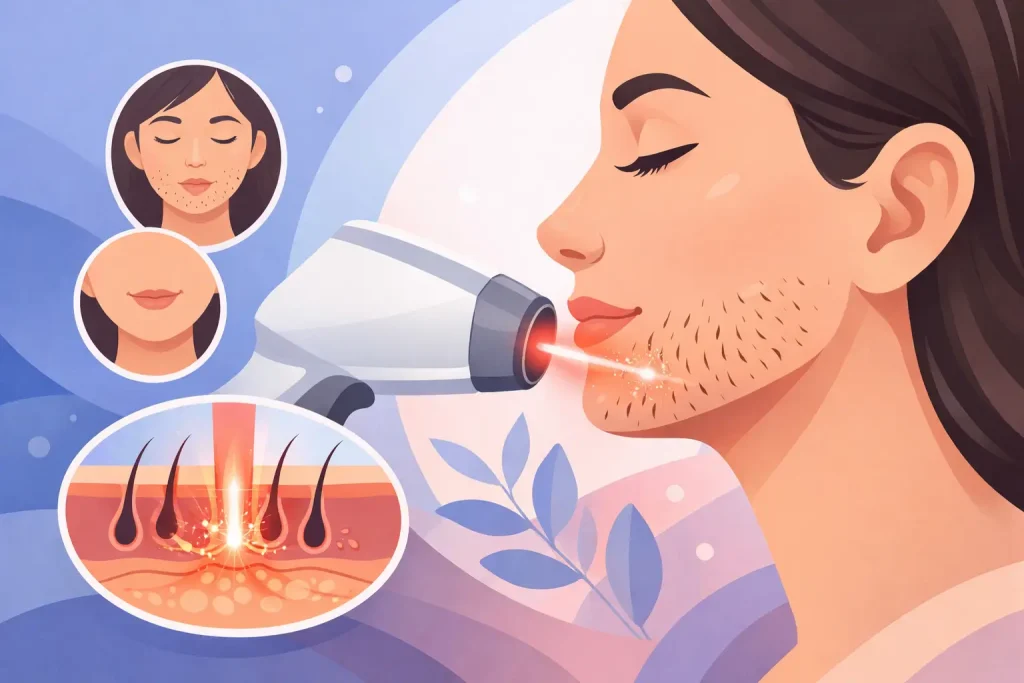
Laser energy is attracted to pigment in the hair shaft and travels down to damage the follicle. The best response is usually seen in darker, coarser hair because there is more pigment for the laser to target. White, grey, red and very blonde hairs are usually poor candidates because the laser cannot identify them reliably.
Facial hair linked to PCOS is often dark and coarse enough to respond well, particularly on the chin and jawline. That said, not every hair on the face will be in the same growth phase at the same time. This is why a course of treatment is needed rather than a single session.
Most clients require a series of appointments, followed by maintenance when necessary. With PCOS, maintenance is not a sign that treatment has failed. It is often simply part of managing an ongoing hormonal condition in a practical, controlled way.
What results can you realistically expect?
The most honest answer is this: it depends on your hormones, your hair type, your consistency and the quality of the treatment plan.
Many clients notice that regrowth starts to slow after the first few sessions. Hair may become softer, patchier and less dense. Areas that once needed daily shaving may only need occasional maintenance. Skin can also look clearer because there is less friction, less picking and fewer ingrown hairs.
However, PCOS facial hair is rarely a quick fix. Some clients achieve excellent long-term reduction. Others still need top-up appointments because new follicles are recruited by hormonal change. Weight fluctuations, coming off hormonal contraception, stress and changes in medication can all influence regrowth.
This is why we prefer to talk about improvement you can measure rather than promises that sound good in a sales conversation. Better skin comfort, reduced visible hair, fewer ingrown hairs and more time between hair removal are meaningful outcomes.
Who is a good candidate?
The strongest candidates for laser hair removal for PCOS facial hair are usually those with darker hair and skin that has been properly assessed for safe treatment settings. A detailed consultation is essential, particularly if you have a history of pigmentation, melasma, reactive skin or previous poor experiences elsewhere.
You also need to be prepared to stop methods that disturb the follicle, such as waxing, threading and tweezing, before and during your course. Shaving is generally preferred because the follicle remains intact, allowing the laser to target it. For some clients this feels frustrating at first, especially if they are used to plucking individual hairs, but it is necessary if you want the treatment to work as effectively as possible.
If much of the hair is pale, fluffy or hormonal but not yet truly coarse, laser may not be the best first option for every area. This is where experienced assessment makes a difference. Treating unsuitable hair can waste time, waste money and in some cases stimulate finer facial hair to become more noticeable.
Why practitioner judgement matters on the face
Facial laser treatment is not just about using a machine. It is about recognising the difference between hair that is likely to respond and hair that may not, choosing parameters that respect the skin barrier and adjusting the plan if the skin becomes sensitised.
For PCOS clients, we often also consider the broader skin picture. Are there post-inflammatory marks from plucking? Is there active acne on the jawline? Has frequent shaving compromised the skin barrier? Is there underlying redness that needs careful management? These details affect how treatment is delivered.
A specialist clinic should guide you through the process rather than simply booking a package and hoping for the best. At GRB Skin Clinic, that consultation-first approach is central to how long-term skin and hair concerns should be managed.
Preparing properly for treatment
The skin should be clean, product-free and protected from unnecessary irritation before treatment. Retinoids, exfoliating acids and strong active ingredients may need to be paused for a period around your appointment, depending on your routine and skin sensitivity. Sun exposure also matters. Recently tanned skin is not ideal for laser and can increase risk.
If you are prone to pigmentation, this should be discussed from the start. Facial skin is exposed every day, and aftercare needs to be taken seriously. Good sun protection is not optional.
It is also worth speaking openly about any medication or hormonal treatment you are on. This does not automatically rule laser out, but it helps shape a safer and more accurate treatment plan.
What the treatment course usually looks like
Most facial laser courses involve multiple sessions spaced several weeks apart. The exact number varies, but PCOS clients often need more than someone treating non-hormonal hair growth. You may also need maintenance appointments after the main course to keep results stable.
That should not be viewed negatively. Ongoing management is common with hormonal conditions. The key question is whether the treatment is making life easier, reducing the burden of daily hair removal and improving the condition of the skin. For many women, the answer is clearly yes.
Progress photographs can be useful because day-to-day changes are easy to miss when you look at your face every morning. Clinical tracking gives a more honest view of whether density, thickness and frequency of regrowth are shifting over time.
Common concerns clients raise
Pain is usually described as brief and manageable, especially on small facial areas, though sensitivity varies. The upper lip can feel sharper than the chin. Temporary redness is common straight after treatment.
A more important concern is whether laser can make facial hair worse. In some cases, poorly selected treatment on fine facial hair can lead to paradoxical stimulation. This is another reason not to treat every type of hair indiscriminately. Correct client selection matters.
Clients also ask whether they should sort out their hormones first. If you are under medical care for PCOS, that support is valuable and can complement laser treatment well. But you do not always need perfect hormonal control before starting. Often, the best approach is coordinated management – addressing the visible symptom while also supporting the underlying condition where possible.
If facial hair is affecting your confidence, your skin and your day-to-day comfort, you do not need to wait for it to become unbearable before seeking expert advice. A proper consultation can tell you whether laser is a sensible option, what kind of response is realistic for your skin and hair, and how to build a plan that respects the fact that PCOS is ongoing. Sometimes the most empowering step is not trying another temporary fix, but choosing a structured treatment pathway that finally starts working with your biology rather than against it.