
Share This Post
Pigmentation rarely has one simple cause. The brown marks that appeared after a holiday may behave very differently from lingering post-blemish marks, patches of melasma or uneven tone caused by years of sun exposure. That is why the best clinic treatments for pigmentation are not chosen from a menu. They are selected after understanding what has triggered the discolouration, how deeply it sits and how your skin responds to inflammation.
A good treatment plan is not about making the skin look temporarily brighter for a week. It is about improving skin health, reducing the processes that keep signalling excess pigment and protecting the progress you make. For many people, this means a considered course of in-clinic treatments alongside a professionally prescribed home routine.
Why pigmentation needs a clinical assessment
Pigment is produced by melanocytes, the cells responsible for melanin. Melanin is protective, but it can become unevenly distributed when skin is exposed to ultraviolet light, visible light, heat, hormonal change, inflammation or injury. Acne, harsh treatments and even an unsuitable procedure can leave a mark long after the original problem has settled.
During a consultation, a skin therapist should look beyond the surface colour. Is the pigmentation sharply defined or diffuse? Did it develop after inflammation? Does it worsen in summer, with heat or around hormonal changes? Is the skin also dehydrated, sensitised, congested or ageing? These details influence both the treatment choice and the pace of treatment.
This matters especially for melasma and for skin that is prone to post-inflammatory hyperpigmentation. An overly aggressive approach can trigger more inflammation and, in turn, more pigment. The fastest-looking option is not always the wisest option for long-term clarity.
The best clinic treatments for pigmentation depend on the cause
Professional chemical skin peels
A professionally selected skin peel can be highly effective where dullness, superficial sun damage, uneven tone and post-blemish marking are present. By encouraging controlled exfoliation and cell renewal, peels can help disperse surface pigment while improving texture and radiance.
The key word is selected. The strength, formulation and timing should reflect your skin’s barrier condition and pigment pattern. A progressive series of treatments is often preferable to one intense procedure, particularly if your skin is reactive or your pigmentation follows acne. Between appointments, active ingredients may be introduced gradually to support the same pathways without overloading the skin.
Peels are not a universal answer for deep or hormonally driven pigmentation. They can be part of an excellent plan, but results depend on preparation, aftercare and consistent protection from further exposure.
Microneedling for pigment with texture concerns
When pigmentation sits alongside acne scarring, enlarged pores or loss of firmness, microneedling may be considered. This treatment creates controlled micro-channels to stimulate the skin’s own repair response and support collagen renewal. Over a structured course, it can improve the overall quality of the skin, not simply the colour of a mark.
Microneedling requires careful judgement in pigmentation-prone skin. Treatment depth, device hygiene, skin preparation and the interval between sessions all matter. It should not be performed on actively inflamed acne or compromised skin. The aim is regenerative improvement without creating unnecessary irritation.
For post-acne marks, this can be particularly valuable once breakouts are controlled. Treating the active acne first helps prevent a cycle in which new inflammation continually creates new discolouration.
Light-based treatments and laser protocols
Certain forms of sun-induced pigmentation, including clearly defined brown spots, may respond well to expertly selected light-based or laser protocols. These treatments target pigment by delivering energy that is absorbed by melanin, helping the body break down and clear the treated areas over time.
They can be transformative for the right concern, but they are not automatically appropriate for every skin tone or pigment type. Melasma can be heat-sensitive and may flare after an unsuitable energy treatment. Darker skin tones also need cautious settings and an experienced practitioner who understands the risk of post-inflammatory pigmentation.
Expect a proper assessment before any device treatment. The practitioner should explain what the treatment can realistically improve, whether a test patch is advisable, the likelihood of temporary darkening before the pigment lifts and the importance of a maintenance plan. Devices are powerful tools, not quick fixes.
LED light therapy as a supportive treatment
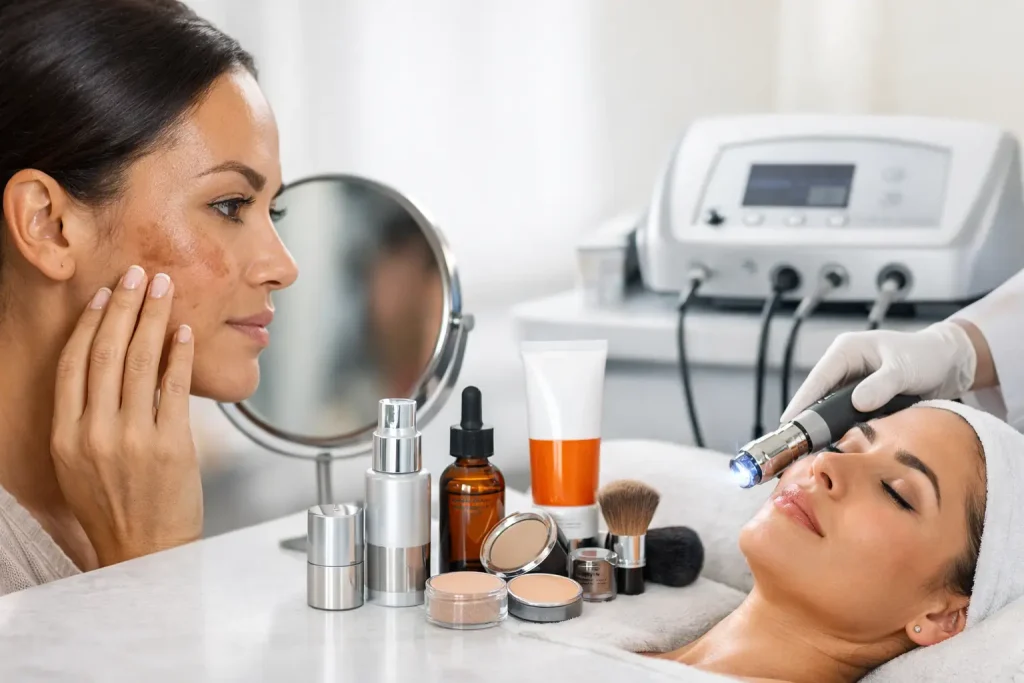
LED light therapy is not usually used as a standalone solution for established pigmentation, but it can be a valuable support within a wider programme. Specific wavelengths can help calm inflammation, support recovery and improve the skin’s overall resilience. This is useful when marks are linked to acne or when the skin needs a gentler route between more active treatments.
Its value is cumulative. A course of LED sessions, combined with professional skincare and the right clinic protocols, can help create a healthier environment for pigment correction. It is a progressive treatment, and that is often precisely what compromised skin needs.
Bespoke active facials and skin-conditioning treatments
Pigmentation management is not solely about resurfacing. Skin that is dehydrated, inflamed or poorly functioning will struggle to tolerate corrective ingredients and procedures. Bespoke facial treatments using high-potency, professionally chosen actives can improve hydration, antioxidant support and barrier function while targeting uneven tone gradually.
At GRB Skin Clinic, pigmentation programmes are built around this principle: strengthen the skin first, then introduce corrective treatments at a level the skin can manage. This is more biologically intelligent than repeatedly challenging already stressed skin. It also makes your results more sustainable.
Your home prescription determines how well clinic results hold
Clinic treatments can begin the correction process, but daily habits determine whether pigment is encouraged to return. Consistent broad-spectrum sun protection is essential, even on overcast Greater Manchester days and when sitting near windows. Reapplication, hats and shade are practical parts of pigmentation management, not optional extras.
Your prescribed skincare should also be purposeful. Antioxidants can help reduce oxidative stress, while vitamin A, pigment-regulating ingredients and carefully selected exfoliants may be introduced according to tolerance. The correct routine differs for someone managing melasma, acne marks or diffuse photodamage. More products do not necessarily mean better results.
Avoid changing everything at once. If the skin becomes red, dry or sore, it may produce more pigment in response. A therapist-led programme gives you the reassurance of knowing what to use, when to progress and when to pause.
What results should you expect?
Pigmentation fades gradually because the skin needs time to renew and clear treated pigment. Some clients notice a fresher, more even appearance after the first few appointments. More established discolouration usually requires a course of treatments over several months, followed by maintenance.
The realistic goal is clearer, more even-looking skin with reduced contrast between darker areas and your natural skin tone. Complete removal is not always possible, particularly with melasma, which can be recurrent. However, a well-managed plan can make a substantial visible difference while reducing the risk of repeated flare-ups.
Your treatment plan should be reviewed as your skin changes. Seasonal exposure, hormones, travel, stress, acne activity and new medication can all affect pigmentation. Progress is not always perfectly linear, but it should be measured, supported and guided by someone who understands your skin.
If brown marks, uneven tone or post-acne pigmentation are affecting your confidence, begin with a proper consultation rather than another guess. The right plan respects your skin’s biology, works at a sensible pace and gives you a clear route towards calmer, brighter, healthier-looking skin.