
Share This Post
If you have been told that blue light is the answer for breakouts, but another practitioner recommends full LED therapy instead, the question becomes less about trends and more about skin biology. LED therapy for acne versus blue light is not really a battle between two opposing treatments. Blue light is one part of LED therapy, and whether it is enough on its own depends on the type of acne, the level of inflammation, the condition of your skin barrier, and what is driving your flare-ups in the first place.
That distinction matters. Acne is rarely just one problem. Some clients are dealing with blocked pores and excess oil, others with angry papules and pustules, and many with a combination of congestion, redness, dehydration and post-inflammatory marking. A single wavelength can be helpful, but a specialist acne programme usually needs a broader strategy.
What is the difference between LED therapy and blue light?
LED therapy is an umbrella term for light-based treatment using different wavelengths to influence skin behaviour. Blue light is one of those wavelengths. It is often used in acne protocols because it targets the acne-causing bacteria involved in inflammatory breakouts.
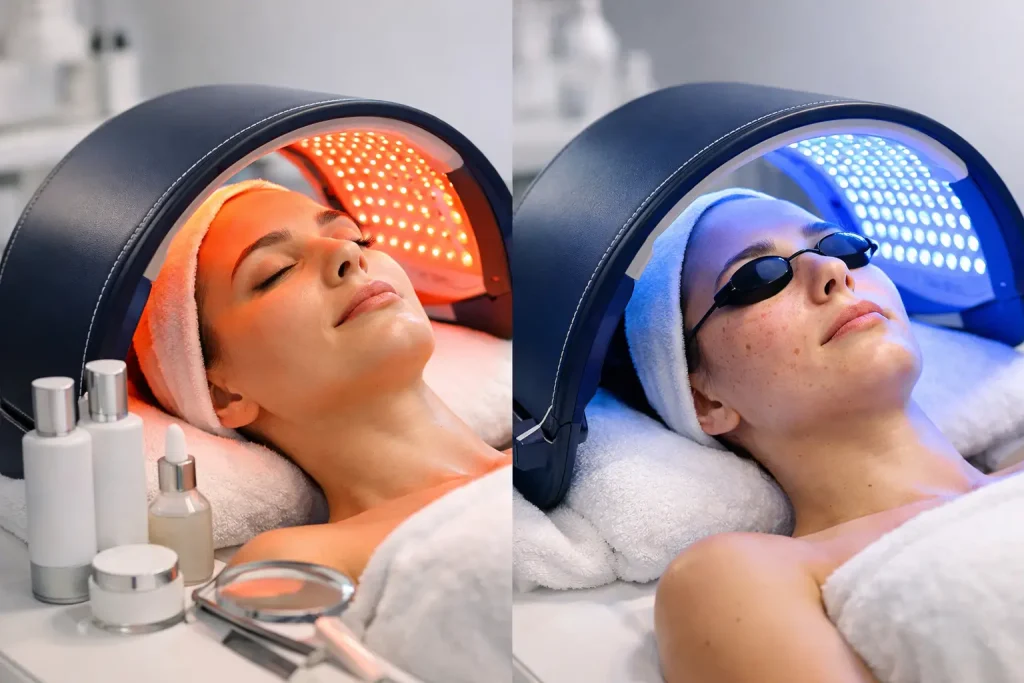
When people compare LED therapy for acne versus blue light, they are often comparing a broader, customised treatment plan with a more narrow bacterial approach. Blue light works at a superficial level and is useful for reducing Cutibacterium acnes activity on the skin. Full LED therapy may also include red light, and sometimes near-infrared, depending on the device and treatment goals.
Red light is typically brought in to calm inflammation, support healing, and help the skin recover more efficiently. That can be especially valuable when acne is not only active but also leaving lingering redness or when the skin feels reactive from overuse of harsh products. In practice, this is why blue light alone can feel too limited for many adult acne clients.
How blue light helps acne
Blue light has a clear role in acne care. It interacts with compounds produced by acne-related bacteria, creating a reaction that helps reduce bacterial load. For clients with oily skin, recurrent inflamed spots, and relatively resilient skin, that can make a visible difference over a course of sessions.
It tends to be most effective for mild to moderate inflammatory acne rather than deep cystic lesions or acne driven heavily by hormones. It can also be a useful addition when you want to support results without introducing unnecessary irritation.
That said, blue light is not a complete acne treatment by itself. It does not unclog pores in the same way that active skincare can. It does not regulate hormones. It does not correct every trigger behind chronic breakouts. If your acne is tied to barrier impairment, stress, internal inflammation, unsuitable products, or long-standing congestion, blue light may help one part of the picture while leaving others untouched.
Why full LED therapy often goes further
The reason therapist-led clinics often favour broader LED protocols is simple – acne-prone skin usually needs more than bacterial control. It needs inflammation management, healing support, and careful recovery if the skin has been pushed too hard.
Red light is valuable here because it supports repair pathways within the skin. It can help reduce visible redness, encourage a calmer healing response, and make treatment plans more tolerable for clients whose skin is both spot-prone and sensitive. For those dealing with post-breakout marks, irritated skin, or a damaged barrier, this matters.
This is where a more clinical view makes the difference. Rather than asking which light is stronger, the better question is which combination your skin actually needs. In many cases, blue light is useful at the beginning of an acne programme, while red light becomes increasingly important as inflammation settles and the focus shifts towards skin health, resilience and prevention of marking.
LED therapy for acne versus blue light in real treatment planning
In clinic, treatment choice should follow consultation, not marketing. Two people can both say they have acne and need completely different plans.
A teenager with oily skin, widespread congestion and frequent pustules may respond well to a protocol where blue light plays a prominent role. An adult with persistent lower-face breakouts, sensitivity, dehydration and post-inflammatory redness may benefit far more from a combined LED approach supported by ingredient-led homecare.
This is why a one-size-fits-all answer can be misleading. If your skin is inflamed and fragile, aggressive treatment can prolong the problem. If your breakouts are largely bacterial and superficial, a more targeted approach may be perfectly appropriate. The treatment itself is only one part of the outcome. Timing, consistency, frequency and what you are using on the skin between appointments all influence results.
What results can you realistically expect?
LED treatment is not a quick fix, and good clinics should say that plainly. It works best as a course, not as a single appointment. Most clients need repeated sessions, and the pace of improvement depends on acne severity, skin reactivity, and adherence to a prescribed routine.
Blue light can help reduce active inflammatory lesions over time. Combined LED therapy can also improve the look of redness and support a steadier recovery process. For some clients, this means fewer angry breakouts and less visible irritation. For others, it means the skin becomes better able to tolerate professional actives and homecare, which then allows the whole programme to move forward more effectively.
What LED will not do is erase severe acne instantly or resolve underlying medical causes on its own. Deep, hormonal, cystic or scarring acne often needs a broader plan that may include professional skincare, regular extractions where appropriate, barrier repair, lifestyle review, and in some cases referral for medical support.
Who is a good candidate for blue light alone?
Blue light on its own may suit clients with mild to moderate inflammatory acne, oiliness, and relatively robust skin. It can be a sensible option when the main issue is recurrent pustules rather than widespread sensitivity or impaired barrier function.
It may also appeal to clients who want a non-invasive treatment with no recovery time. Sessions are comfortable, straightforward, and easy to fit around work and daily life. That makes blue light useful as part of a maintenance plan once acne is under better control.
Even then, the best outcomes usually come when treatment is paired with the right skincare prescription. Acne management is cumulative. If the routine at home is clogging pores, stripping the barrier, or failing to address cell turnover, the light treatment has more work to do.
Who usually benefits more from a full LED approach?
Clients with inflamed acne, adult acne, post-inflammatory redness, or skin that is easily irritated often do better with a broader LED strategy. This is particularly true when breakouts exist alongside sensitivity, dryness, pigmentation, or signs of over-treatment.
In those cases, using only blue light can be too narrow. A more complete LED protocol allows the therapist to support healing while still addressing breakout activity. That is often the difference between chasing symptoms and building long-term skin improvement.
For many adults, the real goal is not only fewer spots. It is calmer skin, better texture, less marking, and a routine they can actually sustain. That requires a structured plan rather than an isolated device session.
Why consultation matters more than the device name
The skincare industry likes simple answers, but acne rarely cooperates with them. The better question is not whether LED therapy is better than blue light in the abstract. It is whether your acne has been properly assessed.
A thorough consultation should look at lesion type, oil flow, hydration, sensitivity, pigmentation risk, lifestyle factors, current products, and treatment history. It should also set expectations around how many sessions may be needed and what support is required at home.
At a specialist clinic, light therapy is usually one tool inside a wider programme. That programme may include targeted facials, prescribed active ingredients, skin barrier support and regular review. This is where personalised care outperforms generic advice. It respects the fact that acne is a condition to be managed intelligently, not covered up or attacked at random.
For clients across Sale and South Manchester who are tired of cycling through short-term fixes, this more structured approach is often where visible change begins.
So which is better?
If the comparison is LED therapy for acne versus blue light, the most accurate answer is that blue light can be effective, but broader LED therapy is often more versatile. Blue light addresses acne bacteria. Full LED treatment can address bacteria, inflammation and recovery at the same time.
That does not mean more wavelengths are always better. It means treatment should match the skin in front of you. Some clients need targeted bacterial control. Others need a protocol that calms, strengthens and corrects without provoking further imbalance.
Healthy acne treatment is progressive. It should move your skin forward, not simply suppress one symptom for a few days. When the plan is built around proper analysis, consistent sessions and the right homecare, light therapy becomes far more than a trend. It becomes part of a disciplined route to clearer, stronger skin.
If you are weighing up your options, look past the device label and focus on whether the treatment plan is tailored, clinically led and realistic about results. That is usually where confidence in your skin starts to return.