
Share This Post
A treatment can only be as effective as the information behind it. How skin analysis improves treatment results comes down to this: it replaces guesswork with a clear understanding of what your skin is doing now, why it may be behaving that way, and what it needs next.
For acne, pigmentation, dehydration, lines, loss of firmness and persistent congestion, two people can appear to have the same concern while needing very different treatment plans. The visible issue is only one part of the picture. A structured analysis helps your therapist assess the condition of the skin, its resilience, lifestyle influences and current routine before recommending a course of action.
At GRB Skin Clinic, this consultation-first approach is the starting point for progressive, results-driven skin health. It allows us to create a plan that respects your skin’s biology while moving it steadily towards stronger, clearer and healthier-looking skin.
Skin type is not the same as skin condition
Many people have been told they have oily, dry or combination skin and assume that is the full diagnosis. Skin type is useful, but it is only one piece of information. It describes your natural tendency, whereas skin condition describes what is happening at a particular point in time.
For example, an oily skin can still be dehydrated, sensitised and inflamed. A dry skin may also be congested. Someone experiencing adult breakouts may have surface oiliness alongside a compromised barrier, while another person with similar-looking blemishes may be dealing with deeper inflammation and slower healing.
This distinction changes treatment choices. Treating every breakout with the same approach may strip the skin, increase discomfort or interrupt the repair process. In the same way, adding intensive active ingredients to skin that is already reactive can delay progress. Analysis gives your therapist the context to choose the right pace, rather than simply choosing the strongest option.
How skin analysis improves treatment results
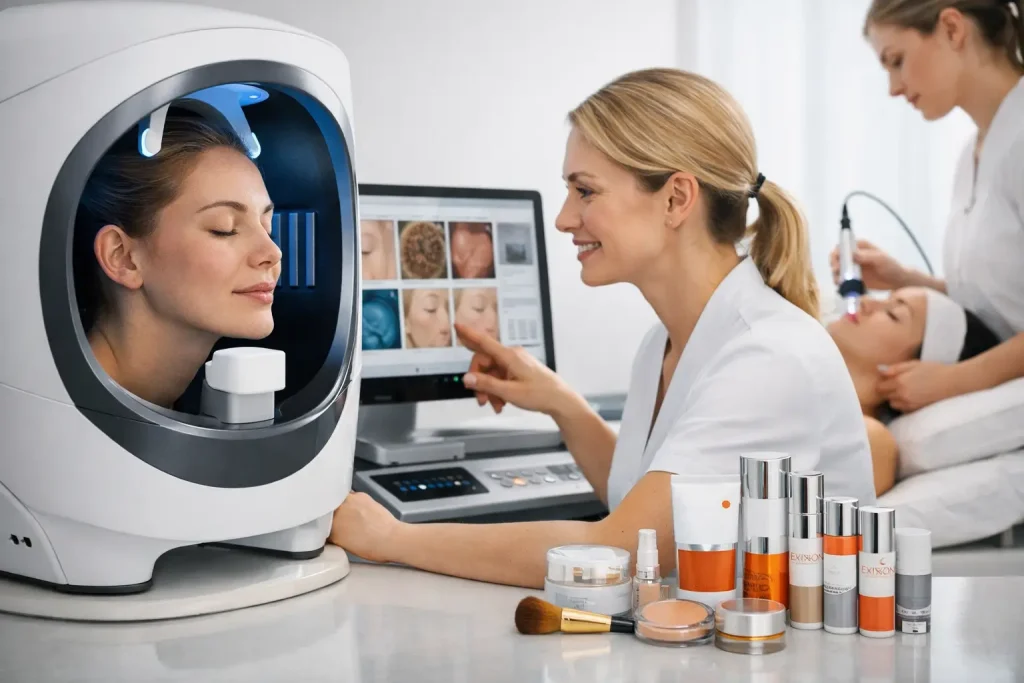
A thorough skin analysis identifies patterns that are easy to miss in a mirror. Your therapist will consider visible concerns such as congestion, active blemishes, uneven tone, rough texture, redness, fine lines and photodamage. They will also look at how the skin feels and responds, including sensitivity, dehydration, barrier function and recovery after previous treatments.
The consultation should include questions as well. Current products, medication, stress, hormonal changes, work environment, sun exposure and previous skin treatments can all influence how the skin presents and how it is likely to respond. This is not unnecessary form-filling. It is how a treatment plan becomes personal rather than generic.
With this information, your therapist can make informed decisions about three essential areas: which professional treatment is appropriate, which ingredients should support it at home, and how frequently your skin should be reviewed. That combination is where meaningful change happens.
It prevents the wrong treatment at the wrong time
Not every skin needs intensive exfoliation, a stimulating facial or a device-led protocol immediately. Sometimes the most productive first step is to calm inflammation, improve hydration and establish a consistent home routine. This can feel slower than jumping straight into a more dramatic treatment, but it often creates the stable foundation required for better results later.
The same principle applies to ageing and pigmentation concerns. When skin is dry, irritated or poorly supported, it may not respond predictably to high-performance treatments. Addressing resilience first helps the skin tolerate a progressive programme and makes it easier to assess what is genuinely improving.
It makes treatment courses more precise
Most lasting concerns do not resolve in one appointment. Acne, scarring, pigmentation and visible signs of ageing often need a sequence of treatments, with each appointment building on the last. Skin analysis helps set the starting point and gives the programme direction.
Rather than booking the same facial repeatedly, your therapist can adapt the treatment as your skin changes. Early appointments may focus on restoring comfort and reducing congestion. Later sessions may introduce more targeted work for texture, tone or firmness. Progression matters, but so does timing. A plan should challenge the skin appropriately without pushing it beyond what it can recover from.
A consultation turns products into a regimen
Professional skincare is not effective simply because it contains active ingredients. The ingredients must be suited to your condition, used in the right combination and introduced at the right stage. A prescribed regimen supports what happens in the treatment room every day between appointments.
For a client with acne, this may mean focusing on controlled cleansing, hydration, skin-calming support and ingredients selected to help normalise the appearance of congestion over time. For someone concerned with photodamage or ageing, the plan may prioritise vitamin-based nourishment, antioxidant support and gradual stimulation of healthier skin function. The exact recommendation depends on the analysis, not on a one-size-fits-all category.
Consistency is more valuable than constantly changing products. When a routine is clear and manageable, your therapist can monitor the response and make purposeful adjustments. If too many new products are introduced at once, it becomes difficult to identify what is helping, what is irritating the skin and where the plan needs refining.
Education creates better decisions at home
A good consultation should leave you understanding your own skin more clearly. You should know what your main priorities are, why each recommended product or treatment has been selected, and what kind of timeline is realistic.
This is particularly valuable for clients who have spent years reacting to every new blemish, patch of dryness or change in texture. Skin can fluctuate, and not every temporary change means a plan has failed. Your therapist can explain which responses are expected, which need attention and when it is sensible to alter the programme.
That knowledge removes much of the frustration from skin improvement. Instead of chasing an instant fix, you have a structured route forward and professional guidance when your skin needs a different level of support.
Analysis helps set honest expectations
Visible skin change takes time because the skin has to repair and reorganise itself. The timeline depends on the concern, the severity, your skin’s starting condition, your consistency at home and how well you follow the recommended appointment schedule.
Acne may improve in stages rather than in a perfectly straight line. Pigmentation can require patience and careful ongoing management. Fine lines and loss of vitality respond best to regular stimulation and long-term skin nutrition, not isolated appointments before a special occasion. A detailed analysis gives you a realistic baseline from which to measure change.
It also helps define success properly. For one person, the priority may be fewer inflamed breakouts and faster recovery. For another, it may be a more even-looking complexion, smoother texture or skin that feels comfortable throughout the day. Clear goals ensure the treatment plan is working towards the outcome that matters to you.
Review appointments are part of the result
Skin analysis is not a single event completed at the first consultation. The skin changes with the seasons, stress levels, hormonal shifts, travel, product use and treatment progress. Regular review allows your therapist to respond to those changes before they become setbacks.
Photographs and consistent observations can be especially useful where changes are gradual. Clients often notice what is still bothering them, while overlooking improvements in clarity, inflammation, texture or overall skin quality. Reviewing the starting point alongside current skin helps make progress visible and supports sensible next steps.
There is a balance to maintain. Changing a programme too quickly can make it hard to judge results, but holding rigidly to a plan when the skin is clearly asking for something different is not personalised care. Clinical judgement is knowing when to stay consistent and when to adapt.
The right plan gives your skin a better chance to respond
Skin analysis does not promise that every concern will disappear overnight. What it does provide is a more intelligent route to improvement: appropriate treatment selection, purposeful product prescription, realistic timings and regular professional review.
If your skin feels unpredictable, congested, dull, reactive or simply stuck, begin with a proper consultation rather than another random appointment. The most useful next step is to understand your skin as it is now, then give it the consistent, expert-led support it needs to change.