
Share This Post
Melasma rarely responds well to guesswork. If you are searching for a guide to treating melasma safely, the first thing to understand is that this is not simply a surface-level pigment issue. It is a chronic, reactive skin condition influenced by light exposure, heat, hormones, inflammation and, in many cases, irritation from the very products people hope will clear it.
That is why safe treatment matters so much. Melasma can improve significantly, but aggressive approaches often backfire. Skin that is over-treated becomes inflamed, and inflamed skin is more likely to produce further pigmentation. The real goal is not to force the pigment out quickly. It is to calm the triggers, strengthen the skin, and reduce excess pigment in a controlled, consistent way.
Why melasma needs a careful plan
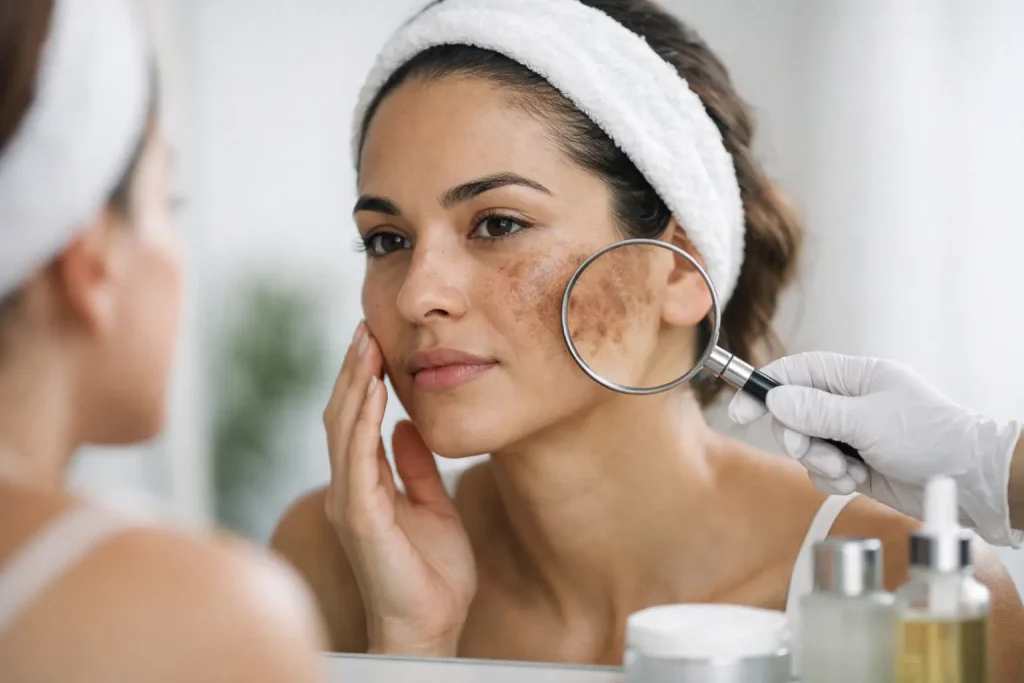
Melasma usually appears as symmetrical brown, grey-brown or shadowy patches, most often on the cheeks, forehead, upper lip and jawline. It can look similar to post-inflammatory pigmentation or sun damage, but it behaves differently. Melasma is notoriously sensitive to UV, visible light, hormonal fluctuation and heat, which is why some clients see it worsen in summer, during pregnancy, while taking certain medications, or even after a period of skin barrier disruption.
This is also why one person’s successful treatment cannot simply be copied by another. A brightening serum that suits resilient skin may be too stimulating for someone with underlying sensitivity. A peel that improves superficial pigmentation may flare melasma if the skin is already inflamed. Safe treatment starts with accurate assessment, not assumptions.
A guide to treating melasma safely starts with diagnosis
Before choosing products or booking procedures, it helps to confirm what you are actually treating. Melasma can overlap with other forms of pigmentation, and mixed cases are common. Sun spots, post-acne marks and general photodamage may all sit alongside melasma, which means the treatment plan needs to be balanced carefully.
A professional consultation should look at your skin history, previous reactions, hormonal influences, medication, sun exposure, heat exposure and current routine. This matters because melasma management is rarely about one hero product. It is about identifying what is driving the condition and deciding how much the skin can tolerate without provoking rebound pigmentation.
For many clients, this is the turning point. Once the condition is properly identified, treatment becomes more strategic and far less reactive.
The safest first step is controlling light exposure
No pigment programme works properly if the skin remains unprotected from light. With melasma, this goes beyond avoiding obvious sunburn. Even regular day-to-day exposure can maintain the cycle of pigmentation, and visible light can also contribute, particularly in deeper skin tones.
Daily sunscreen is non-negotiable, but not all use is equal. The right product has to be broad spectrum, comfortable enough to wear every day, and applied generously. Reapplication matters when you are outdoors, near windows for long periods, driving frequently, or spending time in warmer conditions. Hats, shade and practical exposure management are not excessive. They are part of treatment.
This is often the least exciting part of the plan, but it is one of the most effective. Without it, even advanced treatment work can stall.
Treat the pigment, but protect the barrier
One of the biggest mistakes in melasma management is chasing fast exfoliation. Strong acids, too many active ingredients, frequent scrubbing or poorly timed treatments can weaken the barrier and create the exact inflammatory environment melasma thrives in.
A safer approach is usually progressive. That may include professionally prescribed tyrosinase inhibitors and other pigment-regulating ingredients introduced at the right strength for your skin. Depending on the client, ingredients such as vitamin A, vitamin C, azelaic acid, tranexamic acid or carefully selected brightening complexes may all have a place. The decision depends on your skin tolerance, pigmentation pattern and whether there is concurrent sensitivity, redness, acne or dehydration.
What matters most is pacing. Healthy skin responds better than distressed skin. If your face feels tight, hot, flaky or persistently irritated, the plan may need adjusting. Progress is often steadier when the barrier is supported rather than challenged.
When clinic treatments help – and when caution is needed
Professional treatment can be valuable in a guide to treating melasma safely, but only when chosen with care. Melasma is not a condition to attack with the most aggressive option available. Device-led and exfoliative treatments must match the client’s skin behaviour, not just the depth of pigment.
For some clients, a carefully managed course of clinical treatments can accelerate results by improving cell turnover, reducing visible pigment and supporting overall skin function. Gentle, progressive peels may be appropriate in selected cases. LED light therapy can be useful as part of a broader skin-calming strategy, particularly where inflammation needs to be reduced. Professional facials focused on barrier support and ingredient delivery may also play a role.
However, not every treatment suits melasma. Excessive heat, poorly selected lasers, overly strong peels or repeated irritation can all make pigmentation darker or more diffuse. This is why treatment should never be chosen from a menu alone. It should follow assessment, skin preparation and clear expectation setting.
At a specialist clinic, the strongest treatment is not always the best treatment. Often, the best treatment is the one your skin can recover from cleanly.
Hormones, heat and inflammation all matter
Melasma is often described as a pigmentation issue, but biologically it is more complex than that. Hormonal influence is common, whether linked to pregnancy, contraception, perimenopause or broader endocrine changes. Heat can also be a trigger, which is why some people notice worsening despite being careful with sun exposure. Exercise in hot conditions, steam, saunas and prolonged warmth on the face may all contribute in susceptible skin.
Inflammation is another major factor. If you also deal with rosacea tendencies, acne, over-exfoliation or chronic sensitivity, these need addressing alongside the pigment. Treating melasma while ignoring ongoing inflammation usually leads to frustration. The skin may brighten briefly, then darken again.
This is where a structured treatment plan becomes far more powerful than a collection of random products. When the plan accounts for your triggers, your results tend to become more reliable.
What realistic results look like
Melasma can improve beautifully, but it usually needs management rather than a one-off cure. Some clients see visible changes within a few weeks, especially once proper sun protection and a suitable prescription routine are in place. For others, progress is slower and more layered, particularly if the pigmentation is longstanding or hormonally active.
Realistic treatment focuses on softening patches, reducing contrast, improving overall clarity and preventing worsening. Complete eradication is not always possible, and promising that would be irresponsible. What is possible, with the right guidance, is meaningful improvement and greater control over the condition.
The clients who do best are often the ones who accept consistency over intensity. They follow a plan, allow time for adjustment, and avoid the temptation to switch approach every few weeks.
How to choose the right support
If you have been trying to manage melasma alone and it keeps returning, that does not mean your skin is difficult or that nothing works. More often, it means the condition has not been approached in a sufficiently individual way. You need a practitioner who understands pigmentation patterns, skin barrier health, treatment timing and the difference between temporary brightening and long-term control.
A consultation-first clinic approach is especially valuable here. It allows for proper skin analysis, ingredient education and a treatment pathway that blends homecare with in-clinic support. That combination is often where the best outcomes happen – not because it is more complicated, but because it is more precise.
For clients in South Manchester and Sale who want expert-led pigmentation care, this kind of structured support can save months of trial and error. Safe melasma treatment is not about doing more. It is about doing what is right for your skin, at the right time, in the right order.
Melasma responds best when the skin is respected. Once you stop fighting it aggressively and start managing it intelligently, clearer, calmer, more even-looking skin becomes a far more realistic goal.