
Share This Post
Uneven skin tone is rarely just a surface concern. The brown marks left after breakouts, patches of sun-related pigmentation, persistent redness and dull, irregular-looking skin can have different causes – and they do not respond to one generic facial or a random collection of products. The best treatment plans for uneven skin tone begin by identifying what is changing the skin’s colour, how reactive the skin is and what it can tolerate consistently.
At GRB Skin Clinic, treatment is built around skin biology, not quick fixes. A structured plan combines professional assessment, progressive in-clinic care and a prescribed home routine so that every stage supports clearer, healthier-looking skin.
What causes an uneven skin tone?
The first step is separating pigmentation from other concerns that can make the complexion look uneven. Pigmentation is an increase in melanin, the pigment that gives skin its colour. It may appear as sun spots, diffuse brown patches or darker marks following inflammation.
Post-inflammatory hyperpigmentation is particularly common after acne. Once a spot settles, the inflammation can leave a mark that lingers far longer than the breakout itself. Picking, over-exfoliating and using products that disrupt the barrier can prolong this cycle, especially in skin that is already sensitive or congested.
Redness is different. It can be linked to a weakened barrier, irritation, visible capillaries, active acne or inflammatory skin conditions. Dullness can also be mistaken for pigmentation when dehydration, dead cell build-up and slow skin renewal are the real issue. A plan that treats every concern as pigmentation can leave the skin more reactive, not more even.
Sun exposure is another major driver. Even on overcast Manchester days, cumulative exposure can encourage existing pigmentation to deepen and new marks to appear. Daily broad-spectrum sun protection is not an optional extra when treating uneven tone. It is what protects the progress made through professional treatments and active skincare.
Best treatment plans for uneven skin tone start with diagnosis
A successful programme should be individual, because the correct approach depends on your skin history, lifestyle, current routine and primary concern. During a detailed consultation, your therapist should assess whether the unevenness is mainly pigment, acne-related marking, redness, dehydration, textural roughness or a combination of these.
Identify the dominant concern
A client with active acne and dark marks needs a different starting point from someone with stable, sun-related pigmentation and no congestion. In the first case, calming inflammation and improving the acne cycle may be the priority. In the second, a gradual programme that supports controlled skin renewal and pigment regulation may be more suitable.
Skin sensitivity changes the pace, too. Stronger is not automatically better. When the skin barrier is compromised, introducing too many active ingredients too quickly can trigger irritation, which may create further unevenness. The most effective plans are progressive enough to create change without pushing the skin into an inflammatory response.
Build a prescribed home routine
Your products between appointments are where consistency is won or lost. A professional routine commonly focuses on three things: protecting the skin barrier, supporting healthy cell turnover and defending the skin from environmental stress.
High-potency vitamin A is often central to a progressive skin-health programme because it can support normal skin function and improve the look of texture and uneven tone over time. It should be introduced at an appropriate level for your skin, with clear guidance on frequency and adjustment. Antioxidants and vitamin C may also be selected to help defend against environmental damage and support a brighter-looking complexion.
Hydration matters just as much as active ingredients. When skin is dry, sensitised or stripped, it can look duller and more blotchy. A tailored regimen should feel achievable morning and evening. If it is too complicated to follow, it is not the right long-term prescription.
In-clinic treatment should work with the skin, not against it
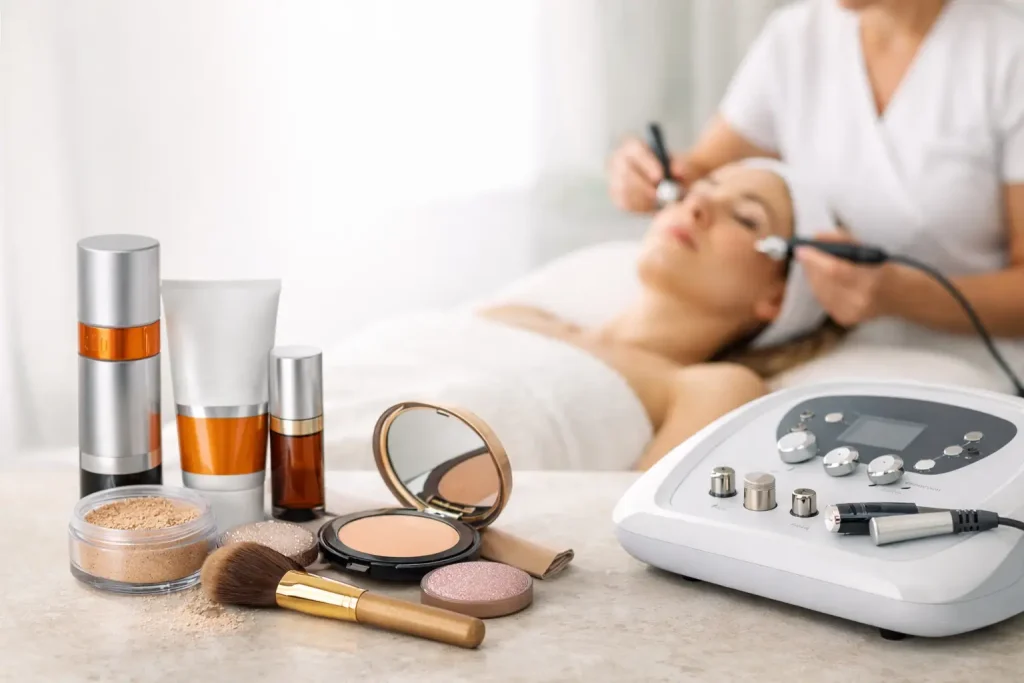
For uneven skin tone, a course of bespoke facials can provide the controlled, professional environment needed to build on your home programme. Environ facial protocols use carefully selected active ingredients to support the skin’s natural repair processes while addressing hydration, texture, congestion and visible signs of photodamage.
Treatment selection should follow the condition of the skin on the day, not a fixed menu. A sensitised complexion may need barrier support and hydration before more intensive corrective work. Skin with persistent congestion may need a plan that addresses blocked pores and inflammation alongside the marks left behind. This is why a consultation-led course is more valuable than booking isolated treatments without a wider strategy.
LED light therapy can also be used as a supportive element where inflammation, acne activity or slow recovery are contributing to an uneven appearance. It is not a replacement for a tailored routine, but it can complement a programme designed to encourage calmer, more resilient skin.
The frequency of appointments depends on the diagnosis and your goals. Some clients benefit from closer appointments during an active correction phase, followed by maintenance sessions as their skin stabilises. Others need a slower introduction because their skin is reactive or they are new to professional active skincare. A responsible clinic will explain the expected number of sessions, the purpose of each stage and when progress should be reviewed.
A realistic timeline for clearer-looking skin
Skin changes gradually. You may notice improved hydration and luminosity first, often within the early weeks of following the correct routine. More established pigmentation and post-acne marks usually require longer, because they are influenced by the skin’s renewal cycle and by ongoing exposure to triggers.
A 12-week review point is often useful. It allows enough time to assess consistency, tolerance and visible change, then refine the programme if necessary. Significant pigmentation concerns can need a longer course and continued maintenance. This is not a failure of the treatment. It is a realistic reflection of how skin heals and responds.
Photographs taken in the same lighting at planned intervals can be more revealing than checking the mirror every day. They help you and your therapist see whether marks are softening, redness is settling and overall clarity is improving.
The habits that can quietly delay results
Uneven tone is often made harder to treat by inconsistency rather than a lack of treatments. Skipping daily sun protection, changing products every week or using too many exfoliating products at once can undermine a carefully designed plan.
Avoid trying to force marks away by scrubbing or repeatedly irritating the skin. Inflammation can stimulate further discolouration, particularly after acne. Equally, do not stop a prescribed routine as soon as the skin begins to look better. Maintenance is how you protect the progress you have made.
Tell your therapist about prescription medicines, pregnancy, recent procedures, skin reactions and any changes in your health. This allows treatment and product choices to remain safe, appropriate and effective.
When to seek medical assessment
Not every change in skin colour should be managed as a cosmetic concern. A new or changing mole, a lesion that bleeds, a rapidly spreading rash, sudden pigmentation changes or persistent irritation should be assessed by a GP or dermatology professional. A skin clinic can support cosmetic skin health, but medical diagnosis comes first when warning signs are present.
If your complexion has become harder to manage, start with a professional skin consultation rather than another guess. For clients in Sale and across South Manchester, a personalised programme can give you a clear route forward: treat the cause, protect the skin every day and allow enough time for genuine, visible change.