
Share This Post
LED light therapy can be a very effective treatment, but only when it is used with a clear purpose. The mistake many people make is treating it like a quick add-on rather than part of a structured skin plan. If you want to know how to use LED light therapy properly, start by matching the light, frequency and treatment course to the skin concern in front of you.
At a clinical level, LED is valued because it supports skin function without heat damage or downtime. That matters for clients managing active acne, post-inflammatory pigmentation, sensitivity, redness, photodamage or early signs of ageing. It is not a miracle treatment on its own, but in the right protocol it can help calm inflammation, support healing and improve overall skin performance.
How to use LED light therapy for the best results
The first step is understanding that LED is not one single treatment. Different wavelengths are used for different goals, and each one behaves differently in the skin. Red light is often chosen for skin rejuvenation, wound healing support and inflammation reduction. Blue light is more commonly used in acne-focused programmes because it targets acne-causing bacteria on the skin. Near-infrared may be used when deeper healing support is needed.
That is why treatment planning matters. If your skin is breaking out, dehydrated, reactive and pigmented at the same time, simply lying under a light without proper assessment may not address the real issue. Good results come from selecting the right wavelength, using the correct treatment timing and combining LED with appropriate home care and, where needed, other clinic treatments.
Consistency is the next piece. LED works cumulatively. One treatment can leave the skin looking calmer and fresher, but visible improvement usually comes with a course. For acne, that may mean regular sessions over several weeks to help reduce inflammation and support clearer skin. For anti-ageing or photodamage, the improvement tends to be progressive, with skin quality, tone and resilience building over time.
What LED light therapy actually does
LED stands for light-emitting diode. In skincare, these devices deliver specific wavelengths of light to the skin to stimulate biological responses. Unlike more aggressive treatments, LED does not rely on creating controlled injury. Instead, it supports natural repair mechanisms.
This makes it particularly useful in modern regenerative aesthetics. When the skin is inflamed, sluggish or struggling to heal efficiently, the right light can help normalise function. Red light is often associated with collagen support and improved circulation. Blue light is used where bacterial control is a priority. Green light may be used in some body-focused or pigmentation-support settings, although suitability always depends on the wider treatment plan.
The key point is that LED should be used intentionally. If a therapist cannot explain why a certain light is being used for your concern, that is a sign the treatment may be too generic.
Before your LED session
Skin should always be assessed first. A proper consultation looks at your skin history, current routine, medication, health conditions and long-term goals. That matters because not every breakout is acne, not every red mark is active inflammation and not every client with pigmentation needs the same protocol.
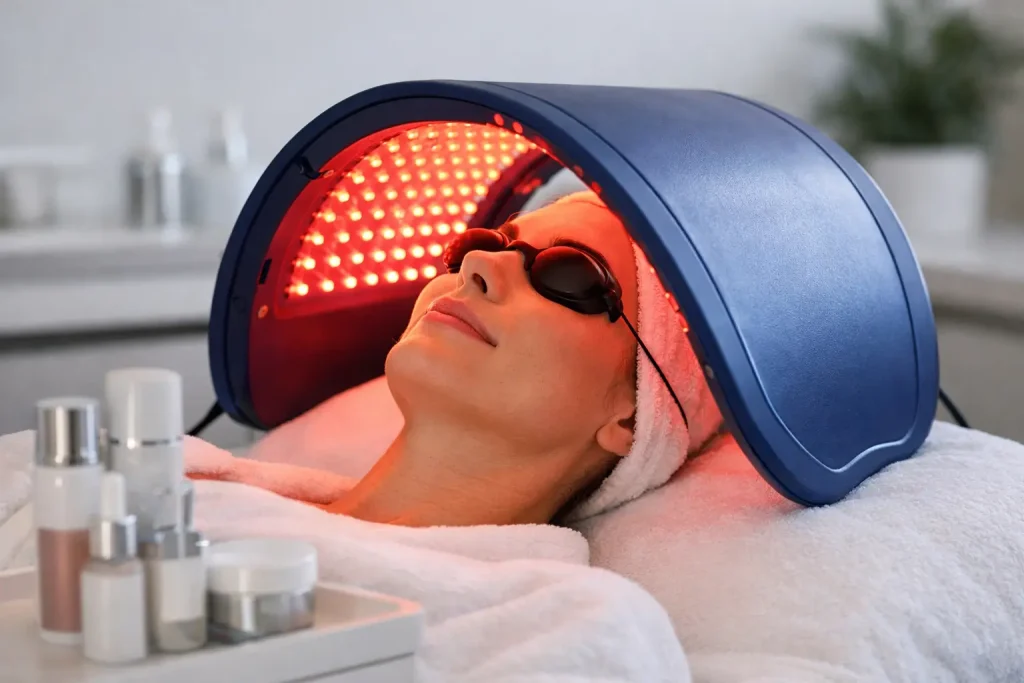
Before treatment, the skin is usually thoroughly cleansed so there is no make-up, SPF or surface debris interfering with light penetration. Eye protection may be used depending on the device and treatment area. The experience itself is usually comfortable. Most clients feel warmth at most, but LED should not feel painful.
This is also where expectations need to be set properly. LED is excellent as part of a plan, but if you have moderate to severe acne, stubborn melasma, deep lines or barrier impairment, one treatment will not resolve the issue. Clinical skin improvement nearly always comes from layering the right treatments with the right products at home.
How often should you use LED light therapy?
This depends on the concern, the device and the overall programme. In a clinic setting, LED is often prescribed as a course rather than a one-off appointment because skin cells respond to repetition. Early-stage treatment may be more frequent, followed by maintenance sessions as the skin stabilises.
For acne, more regular sessions at the start can be useful because inflammation and bacterial activity need steady management. For anti-ageing support, the course may be spaced differently, especially if LED is combined with active facials or other collagen-focused treatments. If the skin is recovering from irritation or a more advanced treatment, LED may be used to support healing.
There is no universal schedule that suits everybody. More is not always better, and poorly timed treatment can leave clients frustrated when they expected dramatic change too quickly. The best approach is one built around your skin response, not a generic timetable.
Using LED light therapy for acne
Acne is one of the areas where LED can be especially helpful, but it still needs context. Blue light can help reduce acne-causing bacteria, while red light may calm inflammation and support recovery from active lesions. That combination can be useful for clients with inflamed breakouts, congestion and post-breakout redness.
What LED will not do is replace a full acne strategy. If the skin barrier is compromised, if pore blockages are persistent or if lifestyle and product triggers are being missed, progress may stall. This is why therapist-led acne programmes tend to perform better than isolated treatments. The skin needs careful product selection, active ingredient guidance and regular review.
For clients dealing with adult acne, recurring chin and jawline breakouts or skin that is both blemish-prone and ageing, LED can be a valuable part of a broader corrective plan. The goal is not simply to dry spots out. It is to improve skin behaviour over time.
Using LED light therapy for ageing and pigmentation
For ageing concerns, red and near-infrared wavelengths are commonly used to support collagen activity and reduce visible inflammation. Skin may look fresher and more rested quite quickly, but firmer, stronger skin develops more gradually. This suits clients who want measurable improvement without harsh downtime.
Pigmentation is more nuanced. LED can support inflammation control and healing, which is helpful when pigmentation is being worsened by ongoing skin stress. However, it is not a standalone answer for every pigmentation condition. If melasma, post-inflammatory hyperpigmentation or sun damage is involved, treatment has to be handled carefully. The wrong assumptions can lead to disappointment.
This is where a consultation-first clinic approach matters. Pigmentation often responds best when LED is paired with targeted skincare, diligent SPF use and, where suitable, other professional treatments introduced at the right stage.
What to do after LED light therapy
Post-treatment care is usually straightforward, but it should still be purposeful. Skin should be supported with the products appropriate to your plan, not overloaded. Hydration, barrier support and daily SPF are often essential, especially when treating inflammation, acne marks or uneven tone.
The bigger point is continuity. If you have a professional treatment and then return to an unsuitable routine at home, results can plateau quickly. LED gives the skin support, but home care helps hold those gains between appointments. This is why prescribed skincare matters so much in a results-driven clinic model.
If your therapist recommends a course, follow the schedule as closely as possible. Stopping and starting tends to slow progress. Skin improvement is usually the outcome of repeated good decisions rather than one impressive appointment.
When LED light therapy may not be the right fit
LED is well tolerated by many clients, but suitability should still be checked properly. Certain medications, light sensitivities, medical conditions or treatment goals may require caution. It may also not be the priority treatment if the skin needs another issue addressed first, such as severe barrier disruption or poorly controlled acne triggers.
There is also the question of expectations. If someone wants instant correction of deeper lines, more significant textural scarring or complex pigmentation, LED alone may not get them there. It can still play an important supporting role, but honest guidance matters. Good skin therapy is not about overselling one treatment. It is about choosing the right sequence.
At GRB Skin Clinic, that is exactly how LED should be used – as part of a clinically led plan designed around your skin, your history and the result you actually want. The right treatment at the right time can change the direction of your skin, and sometimes that starts with something as simple and effective as light.