
Share This Post
Clearer skin rarely arrives as one dramatic overnight change. Meaningful acne treatment results are usually built through a carefully managed process: reducing active inflammation, preventing new breakouts, restoring a healthier skin barrier and addressing the marks acne can leave behind. The aim is not to chase a temporary clear week. It is to create skin that is calmer, stronger and easier to manage long term.
For many people, acne has become a cycle of disappointment. A product appears to help, then congestion returns. A breakout settles, only to leave redness or uneven tone behind. The answer is often not more products or harsher treatment. It is a precise understanding of what your skin is doing, why it is doing it, and what it needs at each stage.
What good acne treatment results actually mean
A successful acne programme should be judged by more than the number of visible spots on a particular day. Acne can fluctuate with hormonal changes, stress, illness, travel and changes in routine. Progress is better measured over weeks and months.
Early results may look subtle. Skin can feel less sore, oily areas may become more balanced, and inflamed lesions may settle more quickly. You may notice fewer deep breakouts, less persistent congestion and shorter recovery times after a flare-up. These are valuable signs that the skin is beginning to respond.
Over time, the focus expands. Once active acne is more controlled, treatment can address lingering redness, post-inflammatory pigmentation, textural irregularities and early scarring. This staged approach matters because treating every concern aggressively at once can overwhelm already compromised skin.
At GRB Skin Clinic, acne treatment is approached as a structured skin-health programme rather than a one-off facial. The work begins with understanding your skin, your breakout pattern, your current routine and the factors that may be prolonging inflammation. From there, your therapist can prescribe a plan that combines professional treatment with consistent homecare.
A realistic timeline for acne treatment results
Everyone’s starting point is different. Comedonal acne, inflammatory acne, adult hormonal breakouts and acne with significant marking do not respond on identical schedules. Consistency also matters: clinic treatments can accelerate progress, but the products and habits followed between appointments help protect that progress.
The first four weeks: settling the skin
The initial phase is about assessment, skin preparation and reducing unnecessary irritation. Some clients see an early improvement in comfort and visible inflammation. Others may experience a period of adjustment as their prescribed active ingredients begin to normalise the skin’s behaviour.
This is not a reason to abandon the plan. It is, however, a reason to stay in close contact with your skin therapist. A well-managed programme is adjusted according to your skin’s response. Treatment intensity, product frequency and appointment timing should never be based on guesswork.
Weeks six to 12: fewer breakouts and better recovery
This is often when the direction of travel becomes easier to see. New breakouts may be less frequent or less inflamed. Existing blemishes may clear more efficiently, while the overall texture begins to look smoother and more refined.
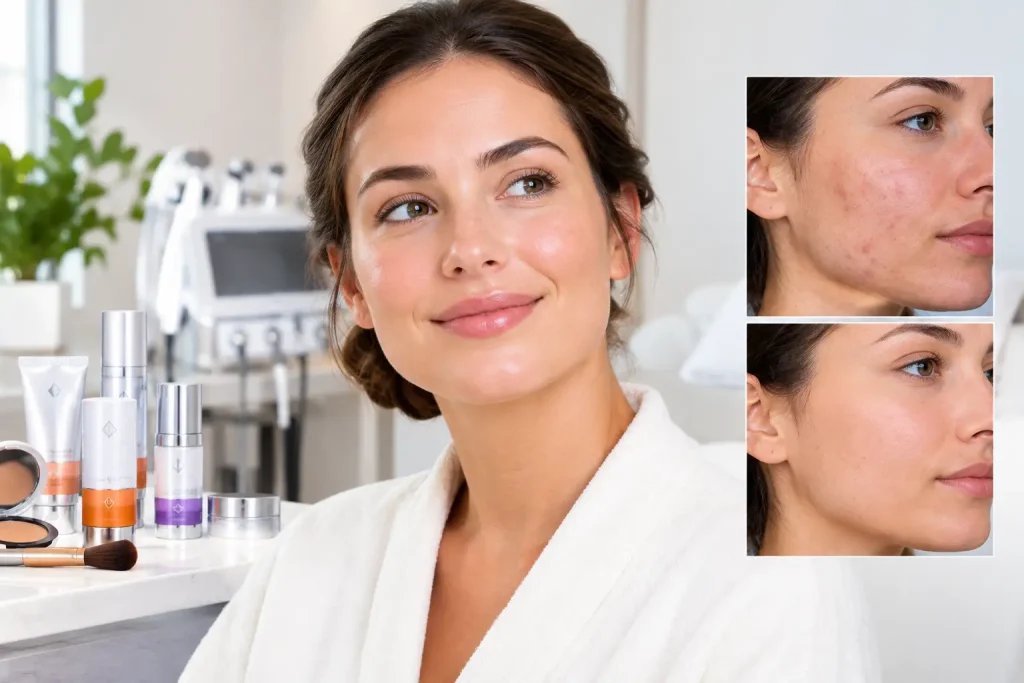
For clients with persistent congestion, progress can be gradual rather than linear. It is common to have the occasional flare while the wider pattern improves. Comparing your skin with photographs taken at the start of treatment is more useful than judging it closely every morning.
Three to six months: treating what acne leaves behind
Once breakout activity is controlled, treatment can move towards restoring clarity and resilience. Professional facials, ingredient-led homecare and LED light therapy may be used within a plan designed around your skin’s tolerance and goals. This is where patience pays off. Post-acne marks and textural concerns generally take longer to improve than active inflammation.
A clinician-led approach also helps prevent the familiar mistake of changing direction too soon. Skin needs enough time with the right protocol before its response can be accurately assessed.
Why personalised treatment produces better outcomes
Acne is not one condition with one solution. Two people can both describe their skin as acne-prone while needing entirely different treatment plans. One may have widespread blocked pores with minimal inflammation. Another may have painful, recurring lesions around the jawline. A third may be primarily concerned with the discolouration left after previous breakouts.
This is why a detailed consultation is not an optional extra. Skin analysis allows your therapist to assess visible congestion, inflammation, barrier health, oil flow, sensitivity and pigmentation risk. Your routine, lifestyle and previous treatment history also provide important context.
A personalised programme can then bring together the right elements at the right time. High-potency, professional skincare may support cell renewal and skin integrity, while carefully selected in-clinic treatments can help manage congestion and inflammation. LED light therapy can be a valuable supportive option for some clients, particularly where the skin benefits from a non-invasive, calming treatment within a broader protocol.
The trade-off is that a bespoke plan requires commitment. There is no universal treatment that delivers the same result for every skin type in one appointment. But individualisation makes it far more likely that your treatment is targeted, tolerable and sustainable.
The role of homecare between appointments
Your clinic appointments create important momentum, but homecare is where that momentum is maintained. A prescription routine should be purposeful and manageable, not a bathroom shelf full of competing products.
The most effective routine is the one you can follow consistently. Your therapist may introduce active ingredients progressively, particularly if your skin is reactive or has been over-treated in the past. Using too much too quickly can create dryness, sensitivity and inflammation that makes acne harder to manage.
Professional-grade formulations are selected for a reason: ingredient quality, delivery systems and the overall balance of the routine matter. As your skin changes, your prescription may change too. The products that support a congested, inflamed complexion at the beginning of treatment may not be the same ones needed later, when the priority becomes maintaining clarity and improving uneven tone.
How to tell whether your plan is working
Visible improvement matters, but so does how your skin behaves. Look for a reduction in painful or deep lesions, fewer new breakouts in the same areas, faster healing and less irritation. You may also find that make-up sits more evenly and that you feel less compelled to conceal your skin.
Photography at regular intervals offers a more objective view of progress. Acne can affect confidence so deeply that it is easy to overlook improvement while focusing on one new blemish. Consistent images, taken in similar lighting, give you and your therapist a clearer basis for reviewing the plan.
There are also times when a review is needed. If your skin becomes persistently sore, excessively dry, increasingly inflamed or shows no meaningful change after an appropriate treatment period, speak to your therapist. It may be time to alter product frequency, refine the protocol or consider whether a medical assessment should sit alongside your skin programme.
Results need maintenance, not perfection
Clearer skin does not mean your complexion will never produce another spot. Acne-prone skin can remain responsive to hormonal shifts, stress and changes in environment. The goal is to reduce the severity, frequency and duration of flare-ups, while giving you the knowledge and tools to respond calmly when they occur.
Maintenance appointments and an evolving homecare prescription protect the investment you have made in your skin. They also allow early congestion or inflammation to be addressed before it develops into a more disruptive breakout cycle. For adults balancing work, family and confidence concerns, this proactive approach is often far more practical than repeatedly starting from scratch.
If you are frustrated by unpredictable breakouts, start with a professional consultation rather than another quick fix. The right plan gives your skin time, direction and expert support – and each small improvement becomes part of healthier, more confident skin.