
Share This Post
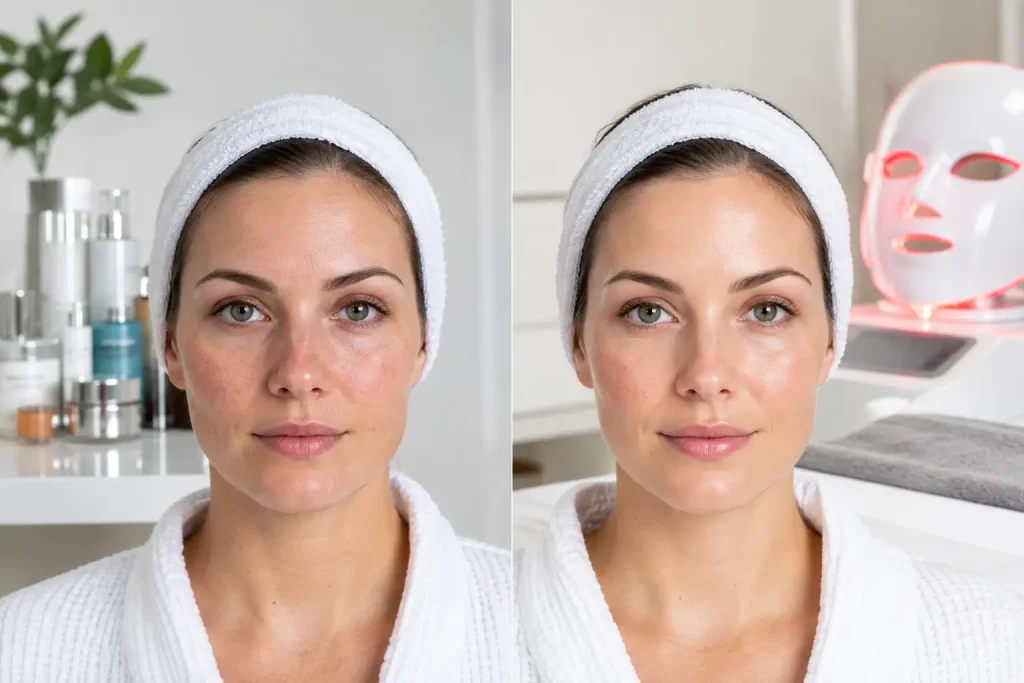
The most revealing LED facial before and after changes are not always a dramatic overnight transformation. Often, the first visible shift is quieter: skin looks less reactive, healing breakouts settle more efficiently, and the complexion begins to hold a healthier, more even-looking glow. Over a course of professionally selected treatments, those early changes can build into clearer, calmer and more resilient skin.
LED light therapy is a progressive treatment, not a quick cosmetic cover-up. At GRB Skin Clinic, it is considered within the wider condition of your skin, your current routine and the result you want to achieve. That matters because a person managing active acne needs a different protocol from someone concerned by dehydration, signs of ageing or the effects of accumulated sun exposure.
LED Facial Before and After: What You Can Expect
An LED facial uses carefully selected wavelengths of light to support the skin’s natural processes. The treatment is non-invasive, comfortable and requires no recovery time, making it a valuable option for clients who want to improve their skin health without disrupting work, family life or social plans.
Before treatment, skin may appear congested, inflamed, dull or slow to recover from blemishes. Some clients notice that their face feels sensitive or that makeup sits unevenly over dry, unsettled areas. After a single session, the skin can look fresher and feel calmer, particularly when LED is combined with a facial planned around its immediate needs.
The more meaningful before and after results tend to develop with consistency. LED works with skin biology, and biology takes time. A structured course gives the skin repeated support while your therapist monitors its response and adjusts your treatment plan where needed.
Why the Timeline Is Different for Every Skin Concern
There is no honest one-size-fits-all answer to how quickly LED results appear. Your starting point, the type of light used, your homecare prescription, lifestyle factors and how regularly you attend all influence the pace of change.
For active acne and congestion, blue light may be incorporated to support a clearer skin environment, while red light is often selected to support skin recovery and calm visible redness. Clients may first notice that individual blemishes appear less angry or resolve more cleanly. New congestion can still occur during the early stages, particularly where there is an established breakout cycle. This does not automatically mean the treatment is failing. It is why professional assessment and review are essential.
For concerns such as dullness, dehydration and early visible ageing, red and near-infrared wavelengths are often used to support collagen-focused skin function and overall vitality. The initial result may be a more rested appearance. Over time, clients can see improved luminosity, smoother-looking texture and skin that feels better able to maintain hydration.
Pigmentation and photodamage also require patience. An uneven complexion rarely develops in a few weeks, so it should not be expected to improve permanently in one appointment. The correct approach is a programme that supports the skin consistently, combined with high-performance prescribed skincare and sensible daily protection.
A single treatment versus a course
One LED session can be an excellent reset before an event or as part of a bespoke facial. It can leave the skin looking refreshed, comfortable and visibly more settled. However, one session is not the same as a corrective programme.
A course is more appropriate when you want to address persistent acne, recurring inflammation, uneven texture or signs of skin ageing. Your therapist will recommend the number and frequency of appointments based on your skin analysis and goals. Once your skin has progressed, maintenance treatments can help protect that investment and keep your routine on track.
What Makes a Good Before and After Result?
A good result is not simply skin that looks brighter under flattering lighting. It is skin that behaves differently between appointments. You may find that breakouts heal with less disruption, your complexion looks more balanced without relying on heavy makeup, or your skin feels stronger when the weather changes.
Clinical progress should also be measured in a practical way. Consistent photographs taken in comparable lighting, regular therapist reviews and honest conversations about your skin help to show what is changing. This avoids the frustration of judging progress day by day, when the more valuable improvement may be developing gradually beneath the surface.
At GRB Skin Clinic, consultation is the foundation of treatment selection. With over 30 years of beauty experience and more than 18 years focused on skin health, the approach is to understand why your skin is behaving as it is before recommending the next step. LED can be powerful, but it delivers its best work as part of an intelligent plan rather than as an isolated appointment.
How to Get More From Your LED Treatment Plan
Your appointments matter, but what happens between them matters too. The skin responds best when it is not being pulled in different directions by unsuitable products, inconsistent use or an overly aggressive routine. A professional product prescription gives you a clear regimen designed for your condition, tolerance and treatment goals.
For acne-prone skin, this may mean prioritising barrier support alongside active ingredients selected for congestion. For mature or sun-affected skin, the focus may be on hydration, vitamin support and ingredients that encourage a healthier-looking surface. The correct products do not replace LED, and LED does not replace a considered routine. Together, they create the conditions for progressive change.
Treatment frequency is equally important. Missing several appointments during an active corrective course can slow the momentum you have started to build. If your diary is demanding, your therapist can help set a realistic schedule rather than an idealised one that is difficult to maintain.
It is also worth being clear about what LED cannot do alone. Deep acne scarring, significant laxity and complex long-standing skin concerns may need a broader programme. That may include targeted facials, professional skincare, device-led treatments and ongoing review. The right recommendation is not always the shortest route, but it should always be explained clearly and linked to your skin’s needs.
Is LED Light Therapy Right for You?
LED is well suited to many adults and teenagers who want a gentle, no-downtime treatment that supports acne management, skin recovery, visible redness, radiance and age-supportive skincare. It is particularly useful for clients who value gradual, measurable improvement rather than an artificial or over-treated appearance.
However, suitability should always be checked in consultation. Your therapist needs to understand your medical history, current medication, skin sensitivity and any conditions that may affect whether treatment is appropriate. This is a key difference between a clinical skin approach and choosing a treatment based only on a photograph or a trend.
A professional consultation also creates space to discuss what is realistically possible. If your goal is clearer skin for a particular date, beginning early gives you the greatest flexibility. If you are frustrated by adult acne that has persisted for years, a structured programme offers a more purposeful way forward than repeatedly changing direction.
The Change Worth Looking For
The most successful LED facial before and after story is one where you feel informed as well as pleased with what you see. Your skin should not be treated as a problem to hide. With the right assessment, treatment frequency and homecare support, it can be guided towards a calmer, healthier and more youthful-looking state.
If you are ready to understand what your skin needs rather than guess, book a consultation and begin with a plan built around your own starting point. Visible progress is more rewarding when you know exactly why it is happening.