
Share This Post
If your breakouts are no longer a teenage phase and are now part of your monthly routine, work stress, or hormonal shifts, an adult acne treatment plan example can help you see what real treatment should look like. Not a random collection of products, and not a quick fix, but a structured plan built around skin analysis, inflammation control, barrier repair and consistent review.
Adult acne is rarely just one thing. For some clients it is persistent congestion along the jawline and chin. For others it is inflamed papules, post-inflammatory pigmentation, sensitivity, and scarring all happening at once. That is why a proper plan has to be progressive. If you treat oil without treating inflammation, skin can become reactive. If you target breakouts too aggressively, you can weaken the barrier and prolong the cycle.
What a proper adult acne treatment plan should include
A good treatment plan starts with diagnosis, not guesswork. Adult acne can be influenced by hormones, stress, occlusive products, medication, shaving or hair removal habits, and skin that has been over-exfoliated in an attempt to clear it. The first step is understanding which of those factors are relevant.
In a clinical setting, we look at lesion type, distribution, inflammation level, hydration, sensitivity, pigmentation, and whether there is textural damage from previous breakouts. We also assess what you are currently using. Many adults arrive with routines that are far too active for already compromised skin.
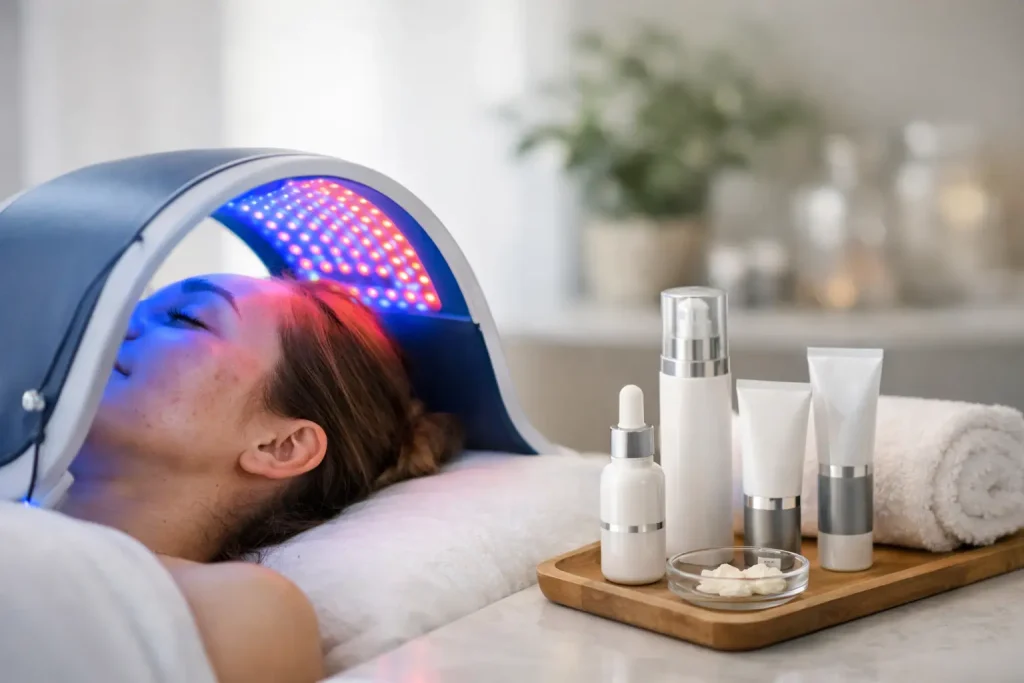
The plan then needs two parts working together. The first is homecare – your cleanser, active ingredients, hydrators and daily SPF. The second is in-clinic treatment – targeted facials, LED light therapy and progressive protocols that support healing rather than simply stripping the skin.
Adult acne treatment plan example: a 12-week structure
This adult acne treatment plan example is not a universal prescription, because skin is individual. It is, however, a realistic framework that reflects how a therapist-led clinic would typically approach mild to moderate adult acne with inflammation, congestion and post-breakout marks.
Weeks 1 to 2: Calm the skin and establish control
The first phase is about reducing noise. That means stopping the habit of switching products, over-cleansing, or using too many acids at once. Skin that is red, tight and flaky can still be acne-prone, and it often responds better when the barrier is respected.
A typical starting routine might include a gentle cleanser morning and evening, a vitamin A or low-irritation active introduced gradually, a non-comedogenic moisturiser, and broad-spectrum SPF every morning. If the skin is particularly inflamed, we may begin more slowly and focus first on calming ingredients and hydration before building up active correction.
In clinic, one treatment during this stage may focus on deep cleansing without trauma, mild exfoliation where appropriate, and LED light therapy to help reduce visible inflammation. If there are many active pustules or the skin is highly sensitised, treatment intensity stays conservative. Pushing too hard in week one often backfires.
Weeks 3 to 6: Treat congestion and inflammation more directly
Once the skin is tolerating its core routine, this is usually the point where active treatment becomes more targeted. Depending on the presentation, that could mean increasing vitamin A frequency, introducing a carefully selected exfoliating acid, or using antibacterial and anti-inflammatory support where needed.
This stage is where clients often expect dramatic overnight improvement. In reality, there can be a settling-in period. Some underlying microcomedones come to the surface before the skin clears more fully. That does not always mean a product is wrong, but it does mean the plan needs professional oversight.
Clinic treatments in this phase are often scheduled every two to three weeks. These may include active facials with professional-grade ingredients, LED sessions, and extraction only where it can be performed hygienically and safely. The goal is to reduce blocked pores, support skin renewal and limit future marks.
If pigmentation is a concern, we have to treat it carefully. Adult acne often comes with post-inflammatory hyperpigmentation, particularly in skin that marks easily. Trying to treat spots and pigmentation aggressively at the same time can irritate the skin. A progressive approach gets better long-term results.
Weeks 7 to 12: Build resilience and address leftover damage
By this point, many clients see fewer inflamed lesions, less oil imbalance and improved skin texture. This is when treatment starts to move beyond simply getting spots down and towards improving the overall health and quality of the skin.
Homecare may be adjusted again based on tolerance and results. Some clients can progress to stronger active use. Others do better maintaining a moderate routine consistently rather than chasing intensity. That depends on how reactive the skin is, whether there is concurrent rosacea-type redness, and how much lifestyle disruption is still driving flare-ups.
In clinic, treatment may continue with advanced facials and LED, with more attention given to textural irregularity, superficial acne marks and maintaining clear pores. If there is established scarring, that usually sits in a later phase once active acne is under better control. Treating scars while breakouts are still flaring tends to be poor timing.
What products are usually part of the plan
The right products depend on skin behaviour, but most structured acne plans include a cleanser, correction step, hydrator and SPF. That sounds simple, but the difference is in the formulation and sequencing.
Cleansers should remove oil, debris and sunscreen without leaving skin squeaky or tight. A compromised barrier will not tolerate active treatment well. Corrective products might include vitamin A, salicylic acid, lactic acid, niacinamide or other breakout-supportive ingredients, but not all at once and not at unnecessarily high strength.
Hydration matters more than many acne sufferers realise. Dehydrated skin can become more reactive, and irritation can make acne look and feel worse. Daily SPF is also non-negotiable, especially if you are treating pigmentation or using active ingredients that increase photosensitivity. If you skip that step, progress is harder to maintain.
Why adult acne needs clinic guidance
Adult acne often sits alongside other priorities. You may want clearer skin, but you may also be dealing with fine lines, pigmentation, sensitivity or the effects of long office days, stress and poor sleep. That is where a clinic-led plan has an advantage. It can treat acne without losing sight of skin function, ageing and long-term resilience.
There is also the practical issue of timing. A professional can tell whether your skin needs more active correction, more healing support, or simply more time. That prevents a common pattern where clients abandon a good plan too early or continue a bad one for too long.
At GRB Skin Clinic, this is exactly why consultation comes first. A treatment plan should reflect your skin, your triggers, your tolerance and your goals, not just your symptoms.
Realistic expectations and common adjustments
Most adults do not clear completely in two weeks, and any plan that implies that should be treated cautiously. A more realistic expectation is early calming in the first few weeks, visible improvement by six to twelve weeks, and continued refinement after that. Deeper congestion, pigmentation and scarring take longer.
Plans also need adjustment. Hormonal acne around the chin may need a different pace from diffuse congestion across the forehead and cheeks. Sensitive skin may need slower active introduction. Clients who wear makeup daily, exercise frequently, or shave regularly may need practical tweaks that make the plan easier to follow consistently.
Consistency usually beats intensity. It is better to use the right routine properly for twelve weeks than to use a harsher routine for ten days and then stop because your skin is overwhelmed.
When your adult acne treatment plan example should change
If breakouts are becoming more painful, more cystic, or leaving persistent marks despite compliance, the plan should be reviewed. The same applies if your skin becomes increasingly dry, stinging or visibly irritated. Good acne treatment is not about forcing the skin into submission. It is about creating conditions where it can function more normally.
Sometimes the issue is not the actives themselves but the order, frequency or combination. Sometimes clinic treatment needs to be increased. Sometimes the skin needs a reset before progressing again. That is not failure. It is intelligent treatment.
The most effective adult acne plans are not built around panic. They are built around observation, adjustment and patience. When treatment is personalised and professionally guided, clearer skin is not a vague hope. It becomes a process you can actually follow with confidence.
If your skin has been stuck in the cycle of flare-up, over-treatment and frustration, the right plan is often less dramatic than expected and far more effective – clear steps, expert review and enough time for the skin to respond properly.