
Share This Post
Sun exposure can leave more than a temporary change in colour. It can disrupt collagen, trigger uneven pigmentation, deepen fine lines and leave skin feeling rough, dehydrated or less resilient. The best facials for sun damaged skin are not the ones that promise a dramatic overnight transformation. They are progressive, skin-led treatments that strengthen the barrier, encourage healthy cell function and support visible improvement over a carefully planned course.
For many clients, photodamage is not one isolated concern. It may sit alongside sensitivity, dehydration, adult acne, congestion or post-breakout marks. This is why a consultation-led facial plan is more valuable than choosing a treatment from a menu based on one symptom alone.
What Sun Damage Actually Changes in the Skin
Sun exposure affects the skin at several levels. In the short term, it can cause redness and dehydration. Over time, it contributes to the breakdown of collagen and elastin, the structures that keep skin looking firm and smooth. Melanin production can also become uneven, which is why freckles, patches of pigmentation and a less uniform complexion may become more noticeable.
A damaged barrier often adds another layer to the problem. When skin is dry, reactive or inflamed, it may struggle to tolerate the very active ingredients needed to improve its condition. Pushing too hard with harsh exfoliation can leave the complexion looking temporarily polished but increasingly compromised beneath the surface.
A considered facial programme works differently. It builds skin health first, then introduces the ingredients and technologies that support repair at a pace your skin can manage.
The Best Facials for Sun Damaged Skin Start With Analysis
There is no single facial that suits every sun-damaged complexion. A client with fine lines and dryness needs a different protocol from someone with visible pigmentation, congestion and sensitivity. Skin analysis allows your therapist to assess hydration, oil flow, texture, active breakouts, reactivity and the extent of visible photodamage before selecting products and treatment steps.
At GRB Skin Clinic, this diagnostic approach guides the treatment rather than treating every face in the same way. It also creates a realistic route forward. Some skin can progress quickly; other skin needs a period of barrier support before higher-performance actives are introduced. That is not a delay in results. It is how you protect the progress you are making.
Vitamin A Facials for Texture and Fine Lines
Vitamin A is one of the most valuable ingredients in a professional plan for photoaged skin. It supports normal cell turnover and helps improve the appearance of rough texture, uneven tone and fine lines over time. In a well-designed Environ facial, vitamin A is introduced with care, alongside supportive ingredients that help the skin remain comfortable and hydrated.
The trade-off is that vitamin A should be progressed gradually. More is not automatically better, particularly if your skin is dry, sensitive or unused to active skincare. A therapist-led programme can build up your tolerance while monitoring how your skin responds between appointments.
Professional facials also create an opportunity to reinforce what happens at home. Results are stronger when the products prescribed for your daily routine complement the treatment rather than work against it. This is where ingredient education matters: you should understand what each product is designed to do and how it fits into your wider skin plan.
Peptide and Antioxidant Facials for Skin Resilience
Peptides and antioxidants are particularly useful when sun damage has left the skin looking less firm, dull or depleted. Antioxidants support the skin in managing environmental stress, while peptide-focused formulations can complement a programme targeting visible signs of ageing.
These facials are often a sensible choice for clients who want high-performance treatment without aggressive disruption. The aim is to replenish, hydrate and support a stronger-looking complexion while encouraging more consistent skin function. They are not a replacement for a progressive vitamin A plan where that is appropriate, but they can be an important part of it.
For a client preparing for an event, a replenishing peptide and antioxidant facial may offer an immediate boost in comfort and radiance. For long-term photodamage, it works best as one stage in an ongoing programme rather than a one-off fix.
Gentle Exfoliation for Dull, Uneven Skin
Sun-damaged skin can develop a surface buildup that makes the complexion look grey, rough or uneven. Carefully selected professional exfoliation can help lift this dullness and improve the way light reflects from the skin. It may also support the absorption of treatment products applied afterwards.
However, exfoliation needs judgement. If you have active sensitivity, a weakened barrier, inflamed acne or visible irritation, a strong resurfacing approach may not be your best first step. The right facial may focus on calming and hydration initially, then add gentle exfoliation once the skin is more stable.
This is why the phrase “deep cleanse” should not be mistaken for “better treatment”. Skin affected by years of sun exposure needs intelligent stimulation, not unnecessary stress.
LED Light Therapy as Part of a Facial Plan
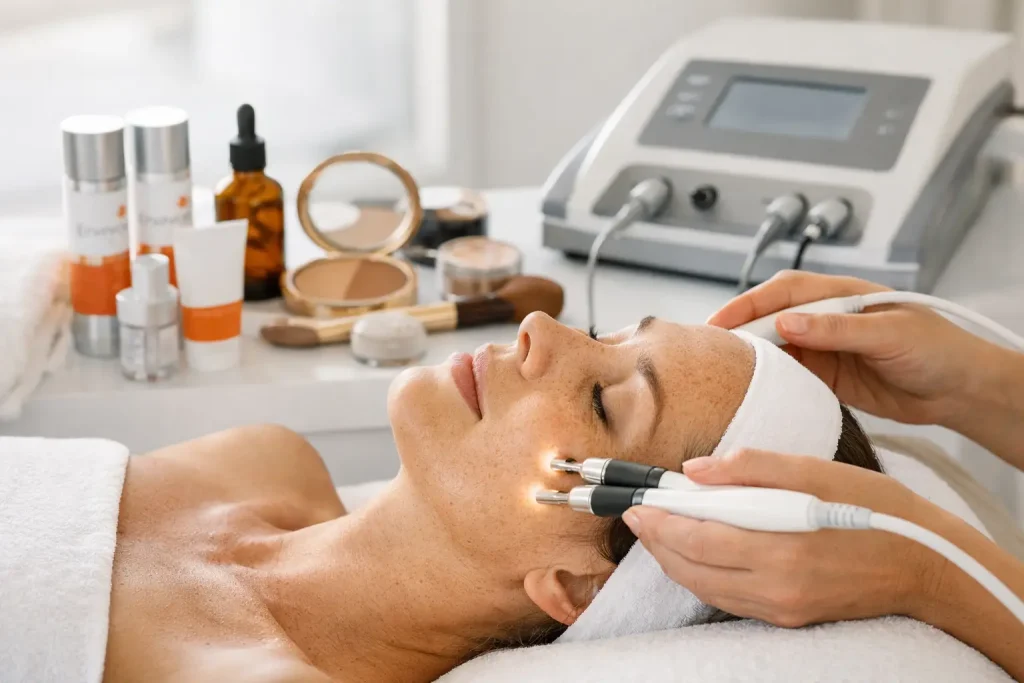
LED light therapy can be an effective addition to a facial programme for skin that needs support with recovery, calm and overall skin vitality. It is non-invasive, comfortable and can be incorporated into a course of treatments where appropriate.
Its value is often cumulative. A single session may leave skin looking fresher, but the more meaningful changes come from consistency and from pairing LED with active skincare, professional facials and a sound home routine. The number and frequency of sessions depend on your starting point, your goals and how your skin behaves between treatments.
For clients whose sun damage is accompanied by sensitivity or persistent redness, LED can be a useful supportive element because it does not rely on abrasive treatment steps. It should still be selected as part of an individual plan, not treated as a universal answer.
What a Results-Driven Facial Course Looks Like
The most effective treatment pathway usually begins with a thorough consultation and a clear plan for home care. Your first facial may focus on hydration, barrier repair and introducing active ingredients safely. Later sessions can become more targeted as your skin becomes stronger and more responsive.
A course also allows your therapist to adjust treatment as your skin changes. Pigmentation may begin to look more even while dehydration becomes the new priority. Congestion may settle, allowing a greater focus on texture and fine lines. Progress is rarely perfectly linear, especially after a summer holiday, a stressful period or changes in routine. Regular assessment keeps the plan relevant.
Most clients notice improvements in hydration, softness and surface radiance before deeper concerns such as uneven tone and fine lines. Those longer-term changes require consistency. Anyone offering instant, permanent correction of sun damage is setting the wrong expectation.
Protecting Your Progress Between Appointments
A professional facial has far more impact when it is supported at home. Your prescribed regimen should focus on cleansing without stripping the skin, replenishing moisture, using targeted actives correctly and applying daily broad-spectrum sun protection. This is not an optional add-on. Ongoing exposure can quickly undermine the work being done in the treatment room.
Avoid changing several products at once, particularly when beginning a vitamin A-based programme. If your skin becomes dry, flaky or reactive, your therapist needs to know so that frequency and product selection can be adjusted. Good skin health is built through observation and consistency, not guesswork.
It is also worth being honest about lifestyle. If you spend significant time outdoors, travel regularly or have a history of tanning, your plan needs to account for that. A clinically informed approach is always more useful when it reflects real life.
When to Book a Consultation
If your skin has become increasingly uneven, rough, dry, lined or pigmented, now is the time for a proper assessment rather than another temporary facial. A skin consultation can establish whether your priority should be repair, hydration, active-ageing support, congestion management or a combination of concerns.
The right facial does not simply make skin look better for a few days. It gives your skin the conditions and support it needs to function better over the months ahead. Begin with a personalised consultation, commit to the process, and let every treatment move your complexion towards stronger, healthier-looking skin.