
Share This Post
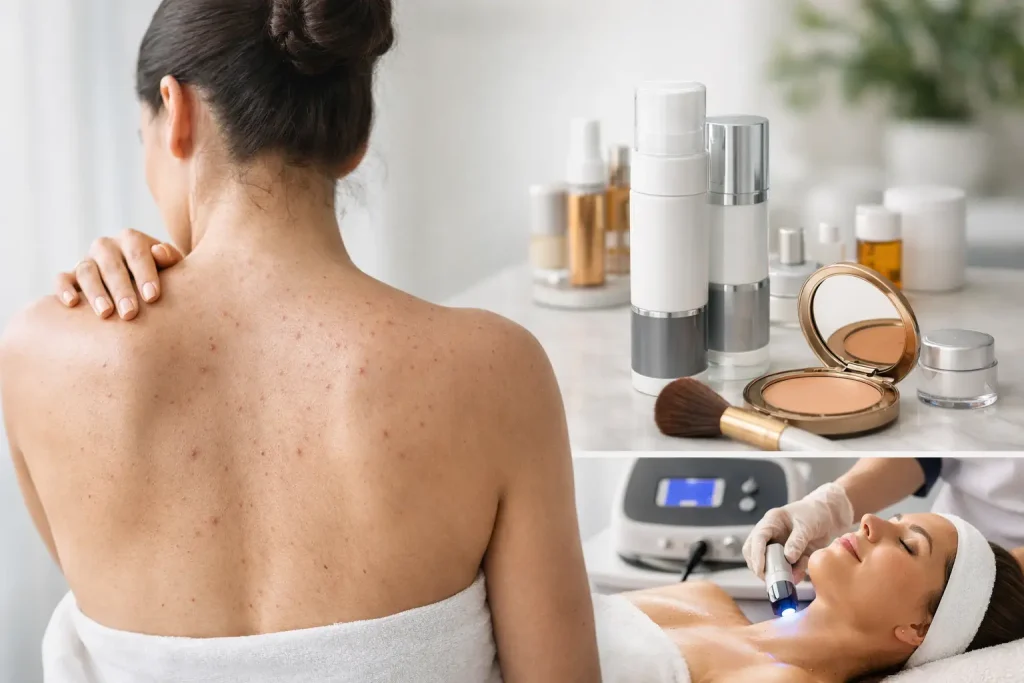
A breakout across the back, chest or shoulders can make getting dressed feel more complicated than it should. You may start avoiding fitted tops, swimwear, gym classes or occasions where your skin is likely to be visible. Body acne is common, but it is not something you simply have to tolerate or cover up.
The most effective approach is not to throw random products at the problem. It is to understand why the skin is breaking out, identify what is keeping the inflammation active, and follow a consistent plan long enough for the skin to respond. Body skin is thicker and often behaves differently from facial skin, so it deserves a considered treatment strategy.
What body acne actually is
Body acne develops when follicles become congested with excess oil, dead skin cells and debris. Bacteria associated with acne can then multiply within the blocked follicle, while inflammation turns small bumps into red, tender spots or deeper lesions.
It commonly affects the upper back, shoulders, chest, upper arms and buttocks. Although these areas are often grouped together, their causes can vary. Breakouts on the chest may flare with heat and sweating, while shoulder and back congestion can be aggravated by hair products, clothing friction or pressure from bags and sports equipment.
Not every spot-like eruption is acne. Folliculitis, for example, is inflammation around the hair follicle and can look very similar, particularly when the bumps are small, itchy and uniform. A clinical skin assessment helps distinguish between acne, folliculitis and other conditions so treatment is selected for what your skin actually needs.
Why body acne keeps returning
Acne is rarely caused by one thing. For most people, it is the result of several influences acting together, including hormone activity, increased oil production, slower shedding of skin cells, inflammation and genetic tendency. The aim is to reduce the factors that can be controlled while treating the skin barrier with respect.
Sweat, friction and trapped heat
Exercise is beneficial for overall health, but prolonged sweat, heat and tight synthetic fabrics can create an environment in which body breakouts thrive. This does not mean you should stop training. It means the skin needs prompt, practical care afterwards.
Change out of damp clothing as soon as possible and avoid sitting around in a sweaty sports bra, vest or gym top after a session. Wash garments, towels and bedding regularly, particularly if you are prone to back or chest acne. Backpack straps, tight uniform collars and close-fitting protective clothing can also create repeated friction in the same areas.
Hair and body products
Conditioners, styling creams and oils can transfer from the hair onto the shoulders and back, where they may contribute to congestion. If breakouts cluster along the upper back or hairline, consider whether product residue could be a factor.
A useful adjustment is to wash and rinse your hair first, then cleanse the body afterwards. This gives you the best chance of removing residue rather than leaving it on the skin. Heavy fragranced products may also irritate already inflamed areas, even if they are not the original cause of acne.
Hormones, stress and life changes
Hormonal fluctuations can increase oil production and make acne more persistent. This is why body breakouts may worsen around menstrual cycles, during periods of high stress, after changes in contraception or at different life stages. Adult acne is not a sign that you have failed at skincare. It can be a reflection of what is happening beneath the surface.
Stress does not create acne from nothing, but it can amplify inflammation and disrupt routines, sleep and recovery. If you notice a predictable pattern, recording when and where breakouts appear can provide useful information during a consultation.
A smarter approach to treating body acne
Consistency matters more than intensity. Aggressively scrubbing, picking spots or constantly switching products can leave the skin irritated and prolong visible marks. A well-designed routine should clear congestion gradually while supporting the skin’s natural protective barrier.
Cleanse without over-cleansing
Use a suitable body cleanser after sweating and at the end of the day, especially on affected areas. The goal is to remove sweat, excess oil and surface debris, not to leave the skin feeling stripped or sore. Very hot water, abrasive mitts and harsh exfoliation can aggravate redness and compromise the barrier.
For some clients, a professionally selected cleanser containing a pore-refining active ingredient is appropriate. The right choice depends on whether the skin is predominantly congested, inflamed, dry, sensitive or marked from previous breakouts. More active is not automatically better.
Use targeted active ingredients carefully
Salicylic acid can be useful for congestion because it works within the pore lining, while vitamin A-based formulations may support healthier cell turnover over time. Ingredients must be introduced appropriately and used at a frequency your skin can tolerate.
If you are pregnant, breastfeeding, have eczema, take prescribed medication or are under medical care for your skin, seek professional guidance before introducing active treatment products. The same applies if your acne is painful, widespread or leaving scars. Skin health is not improved by pushing through significant irritation.
Protect against marks after breakouts
Red, brown or purple marks can remain long after an active spot has settled. These marks are often mistaken for ongoing acne, which can lead people to over-treat the skin. In reality, the skin may need time, inflammation control and a carefully prescribed programme to restore a more even appearance.
Avoid picking or squeezing lesions. This increases inflammation and raises the likelihood of prolonged marks and scarring. If scarring is already developing, early intervention is far more productive than waiting until breakouts have been present for years.
When a clinic-led programme makes sense
A few occasional spots may respond well to a simple, consistent home routine. However, recurring body acne, painful nodules, widespread inflammation, scarring or distress about your appearance all justify a more structured approach.
A professional consultation should look beyond the visible spots. Your therapist needs to assess the type of lesions, distribution, skin sensitivity, current products, lifestyle triggers and history of previous treatments. From there, a tailored plan can combine appropriate professional treatments, progressive homecare and realistic review points.
At GRB Skin Clinic, acne support is built around skin analysis and individualised prescription rather than a generic facial or one-off quick fix. Treatment plans are adjusted as the skin changes, because the needs of active, inflamed acne are not always the same as the needs of skin recovering from marks, dryness or sensitivity.
Results take commitment. The skin needs time to move through its natural renewal cycle, and persistent acne may require several months of consistent care. You should expect clear guidance on what to use, how often to use it, what early changes may occur and when your plan should be reviewed. That clarity prevents the common cycle of abandoning treatment too soon or escalating products without a reason.
Signs you should seek medical advice
Clinical skincare can be a valuable part of acne management, but some situations require medical assessment. Speak to a GP or dermatologist if you have deep, painful cysts, rapidly worsening acne, significant scarring, symptoms that affect your wellbeing, or a sudden change in your skin alongside other health concerns.
Prescription treatment may be appropriate in these cases. A skin clinic can work alongside medical guidance by supporting the skin barrier, helping you establish suitable professional homecare and addressing the visible effects of breakouts where appropriate.
Give your skin a plan, not a punishment
Body acne responds best to a calm, consistent and informed approach. Small changes such as reducing friction, changing out of sweaty clothing and avoiding product residue can make a genuine difference, but persistent acne deserves more than trial and error.
Your skin is not asking for harsher treatment. It is asking for the right treatment, delivered consistently enough to create change. A detailed consultation can turn uncertainty into a clear pathway towards calmer, stronger and more comfortable skin.