
Share This Post
Some skin concerns need a stronger corrective push. Others need skilled support, barrier repair and the right active ingredients delivered in a controlled way. That is why chemical peels versus bespoke facials is not a beauty trend debate – it is a clinical decision based on your skin history, current condition and long-term goals.
If you are dealing with acne, post-inflammatory pigmentation, rough texture, dullness or early signs of ageing, choosing the wrong treatment can slow progress. The right treatment, used at the right stage, can move your skin forward with far less irritation and far better consistency. The key is understanding what each option is designed to do.
Chemical peels versus bespoke facials: what is the real difference?
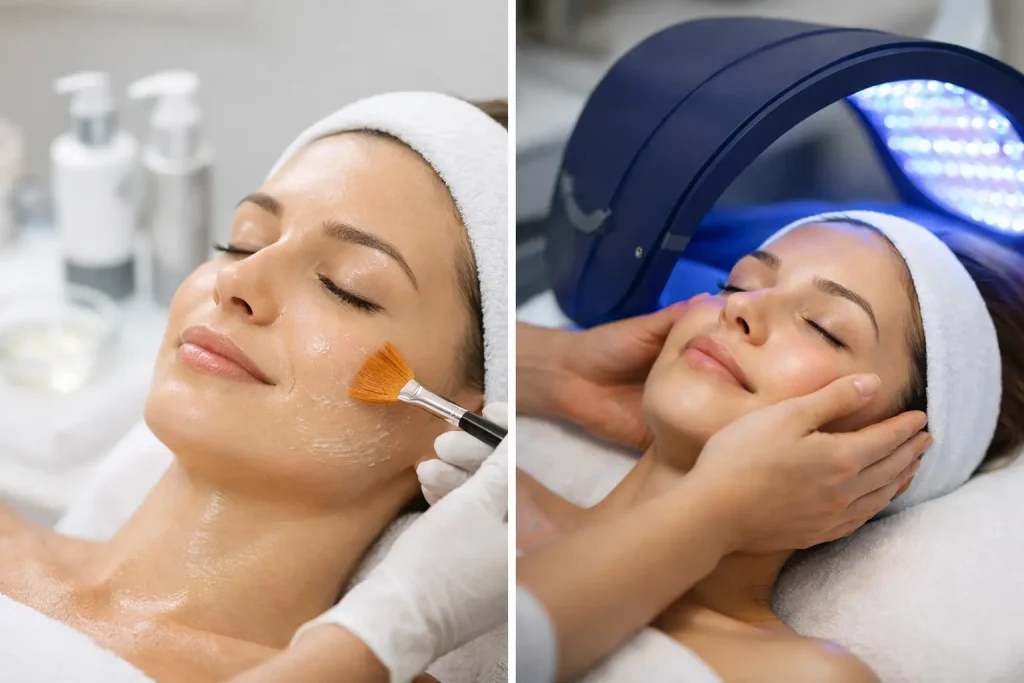
A chemical peel is a controlled resurfacing treatment. It uses carefully selected acids or active solutions to exfoliate the skin, accelerate cell turnover and target concerns such as congestion, pigmentation, photodamage and uneven texture. Depending on the type and strength, a peel may work very superficially or more intensively, but the intention is always correction.
A bespoke facial is broader and more adaptive. Rather than following one fixed protocol, it is tailored to your skin on the day and built around your treatment plan over time. In a clinical setting, that can include deep cleansing, gentle exfoliation, active ingredient infusion, hydrating and calming steps, and supportive technologies such as LED light therapy. The purpose is not simply relaxation. It is to improve skin function, strengthen the barrier and deliver targeted ingredients in a way your skin can tolerate.
So the difference is not that one is serious and the other is superficial. The real distinction is intensity, mechanism and timing. A peel pushes renewal more directly. A bespoke facial gives your skin what it needs to perform better and respond well to future correction.
When a chemical peel is the better choice
Chemical peels tend to suit clients who need visible correction in a focused area of concern. If your skin is thickened, congested, sun-damaged or marked by uneven pigment, a peel can help break through that stagnation. It is often a strong option for oily acne-prone skin, post-blemish marking, roughness, and signs of environmental ageing.
That said, not every peel is appropriate for every skin. A well-chosen professional peel should be matched to your Fitzpatrick type, barrier condition, inflammatory level and homecare routine. If the skin is already irritated, highly reactive or compromised, a peel may need to wait.
This is especially relevant for acne. Many clients assume stronger exfoliation means faster results. In reality, inflamed acne often improves best when oil flow, follicular blockage, bacterial activity and internal triggers are addressed in a structured way. Peels can play an excellent role, but only when they are integrated into a wider programme rather than used as a quick fix.
You might benefit from a peel if your main priority is accelerating change in texture, pigmentation or congestion and your skin can tolerate a more active treatment approach.
When bespoke facials are the smarter investment
Bespoke facials are often underestimated because the word facial has been diluted by the beauty industry. In a specialist clinic, a bespoke facial should be a treatment-led appointment, not a one-size-fits-all pamper session.
For many clients, particularly those with sensitivity, dehydration, chronic inflammation or a damaged barrier, this is the more intelligent place to start. Skin that is red, easily triggered, dry on the surface yet congested underneath, or recovering from previous over-treatment usually needs stability before it needs stronger correction.
A bespoke facial allows your therapist to respond to what your skin is actually doing, not what a menu says it should be doing. One month, the focus may be calming and rebuilding. The next, it may be ingredient penetration, hydration and LED support. Later, when the skin is healthier, the plan may progress toward more active resurfacing.
This approach is also highly effective for anti-ageing support. Not every age-management concern needs peeling. Sometimes the bigger issue is poor barrier function, dehydration, sluggish circulation or inconsistent vitamin A use at home. Bespoke facials can reinforce skin health while improving brightness, firmness and resilience.
The trade-off: faster correction versus better tolerance
The reason clients compare chemical peels versus bespoke facials so often is simple. They want results, but they also want their skin to stay calm, presentable and manageable.
Chemical peels can deliver a more obvious corrective effect in the right candidate. You may see clearer pores, smoother texture and a brighter tone more quickly. The trade-off is that you can also experience temporary dryness, flaking, tightness or a period where the skin feels more reactive. Downtime varies, and expectations need to be realistic.
Bespoke facials are usually gentler, but that does not mean they are less valuable. Their strength lies in consistency and precision. They help condition the skin so that it becomes stronger, more balanced and more responsive. In some cases, that is exactly what produces the best visible improvement over time.
This is why the best treatment is not always the most aggressive one. It is the one your skin can benefit from repeatedly and safely.
Why consultation matters more than the treatment name
A treatment menu cannot diagnose your skin. Two people with breakouts may need entirely different plans. One may need gentle exfoliation and anti-inflammatory support. Another may need a structured peel course alongside active homecare and LED. The treatment name tells you very little without context.
A proper consultation should assess more than the surface. It should consider your skin history, previous reactions, current routine, medication, hormonal influences, lifestyle factors and the timeline you are working to. If you are preparing for an event, for example, a peel may not be the best immediate choice if there is any risk of visible shedding or irritation.
At a clinic level, this is where experience matters. Progressive skin improvement comes from sequencing treatments well, not from chasing intensity. The most effective therapists know when to push, when to pause and when to rebuild.
Can you have both?
In many cases, yes. In fact, that is often where the strongest results come from.
Skin treatment does not need to sit in an either-or category. A bespoke facial may be the right starting point to calm inflammation, increase hydration and prepare the skin. Once the barrier is functioning well and the skin is responding predictably to active ingredients, a peel can be introduced more safely. Equally, between peel sessions, bespoke facials can support healing, maintain clarity and reduce the risk of over-stressing the skin.
This is particularly useful in programmes for acne, pigmentation and age management. Corrective treatments tend to work better when the skin is also being supported, nourished and monitored. The process is more strategic and the outcomes are usually more sustainable.
That is the difference between treatment shopping and treatment planning.
Chemical peels versus bespoke facials for common concerns
For congestion and oily skin, both can work well. Peels may give a stronger clearing effect, while bespoke facials can keep the skin balanced and reduce the cycle of dehydration and rebound oiliness.
For inflamed acne, it depends on severity and sensitivity. A bespoke approach is often the safer foundation, especially if the skin is sore, reactive or compromised. Peels may be added later once inflammation is under better control.
For pigmentation and sun damage, peels are often more directly corrective, but only if melanin activity is being managed carefully. In skins prone to post-inflammatory pigmentation, over-treatment can backfire.
For sensitivity, redness and barrier damage, bespoke facials are usually the clearer choice. The aim is to restore function first.
For dullness and maintenance, either may be appropriate. If your skin is generally healthy and you want a brighter, smoother finish, the decision comes down to your tolerance, goals and schedule.
Choosing well means thinking beyond one appointment
The most useful question is not, Which treatment is best? It is, Which treatment is right for my skin right now, and what should come next?
That shift in thinking changes everything. Instead of chasing one dramatic appointment, you start building skin that behaves better month after month. You become less reactive, less congested, more even in tone and more confident in what your skin can handle.
For clients across Sale and South Manchester who want measurable change, this is where specialist care makes the difference. At GRB Skin Clinic, treatment decisions are led by skin analysis, clinical experience and a plan that respects both results and skin integrity.
If you are choosing between a peel and a bespoke facial, do not choose the trendier name. Choose the treatment that matches your skin biology, your tolerance and your long-term goal – then let that first decision lead into a plan that keeps improving your skin long after the appointment ends.