
Share This Post
Persistent breakouts rarely respond well to guesswork. If you are asking does LED light help acne, the short answer is yes – for the right type of acne, used in the right way, as part of a structured treatment plan. It can reduce active inflammation, calm redness and support clearer skin over time, but it is not a one-session fix and it is not the answer for every acne presentation.
At a clinical level, LED light therapy is valuable because it works with the skin rather than aggressively stripping or traumatising it. That matters for acne-prone skin, which is often inflamed, reactive and already dealing with a compromised barrier from overuse of harsh products. The goal is not simply to dry everything out. The goal is to reduce congestion, settle inflammation and support healthier skin function.
Does LED light help acne in every case?
Not in every case, and that is where proper assessment matters.
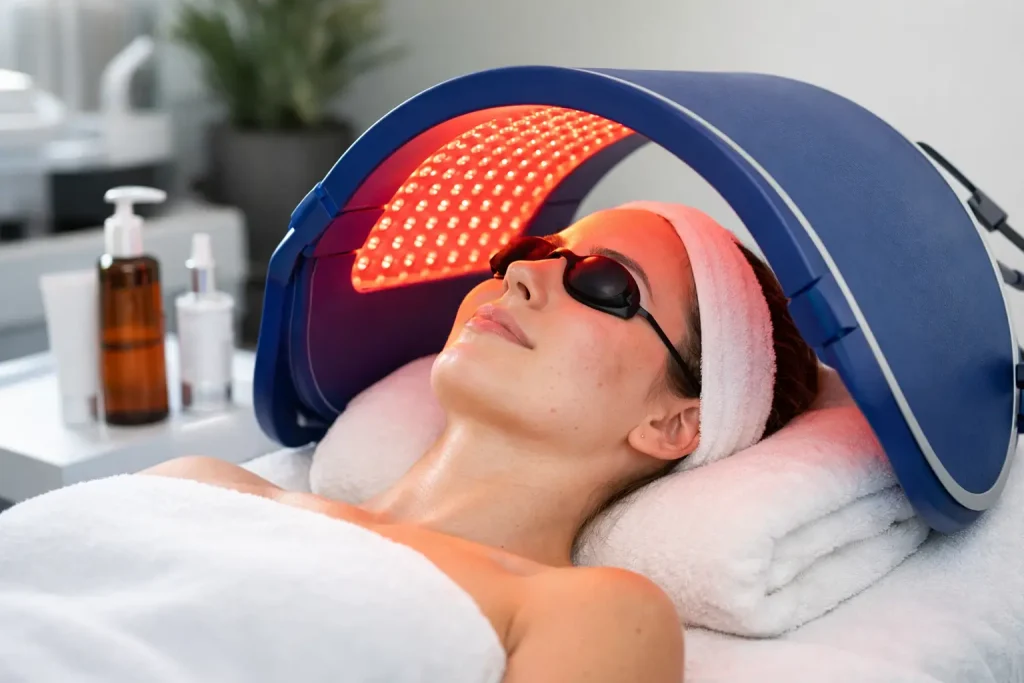
LED light therapy can be very effective for inflammatory acne, especially when there are red papules, pustules and general irritation in the skin. Blue light is commonly used because it targets acne-causing bacteria on the skin, while red light is often included to calm inflammation and support healing. For many clients, this combination helps reduce the intensity and frequency of breakouts.
Where results are more variable is with deeply congested skin, severe cystic acne, hormonally driven acne, or acne that is being worsened by inappropriate skincare, medication changes, stress or internal health factors. In those cases, LED can still be useful, but usually as one part of a wider programme rather than the main event.
That distinction is important. If someone has painful under-the-skin lesions across the jawline every month, LED alone is unlikely to be enough. If someone has milder inflammatory breakouts and post-spot redness, it may become a very useful part of treatment.
How LED light therapy works on acne
LED stands for light-emitting diode. In skin treatments, specific wavelengths of light are used to trigger a response in the tissue. This is not the same as UV exposure, and it is not designed to damage the skin. It is a non-invasive treatment that supports biological processes already taking place in the skin.
Blue light is generally used to help reduce the activity of acne-causing bacteria. These bacteria produce compounds that absorb blue light, and that reaction can help limit their survival on the skin. In practical terms, that can mean fewer inflamed lesions over time.
Red light works differently. It is used to calm inflammation, support circulation and encourage repair. Acne is not just a bacterial issue. It is also an inflammatory skin condition, and the angry, sore look of active breakouts often lingers even when the spot itself is beginning to settle. Red LED can be particularly helpful here.
Some clients also benefit from near-infrared light in a clinic setting, especially where healing support is needed. This can be useful when acne has left the skin stressed, sensitive or slow to recover after breakouts.
What LED can realistically improve
A good acne treatment plan should always be honest about what each tool can and cannot do.
LED light therapy may help reduce active inflammatory spots, lower visible redness, calm irritated skin and support recovery after breakouts. It can also be helpful after certain professional treatments because it is non-invasive and generally very well tolerated.
What it does not do particularly well on its own is clear compacted blocked pores, remove milia, treat severe nodulocystic acne, or correct acne scarring in a meaningful way. It may support the skin while those concerns are being addressed, but it is not a substitute for a full clinical programme.
That is why therapist-led skin analysis matters. Acne is not one condition with one cause. Two people can both say they have acne and need completely different treatment pathways.
Why LED often works best as part of a programme
The clients who tend to see the best acne results are usually the ones following a structured plan rather than dipping in for occasional treatments.
If the skin is congested, inflamed and using the wrong active ingredients at home, LED can help calm things down, but the progress may stall if the daily routine is still working against the skin. Likewise, if there is significant oiliness, dead skin build-up or barrier impairment, those issues need to be addressed alongside light therapy.
In clinic, LED is often combined with targeted facials, ingredient-led homecare and regular review appointments. That combination allows the treatment plan to evolve as the skin changes. Early on, the focus may be calming inflammation. Later, the focus may shift to preventing recurrence, improving marks left behind and strengthening the skin overall.
This is where a clinical approach makes the difference. Acne management is rarely about one impressive treatment. It is about choosing the right sequence.
What a course of treatment usually looks like
One of the most common questions after does LED light help acne is how long it takes.
The answer depends on the severity of the acne, the consistency of treatment and what else is happening in the skin. Most clients need a course rather than a single session. You may notice that the skin looks calmer quite quickly, especially if there is general redness and irritation, but clearer skin usually develops progressively over several weeks.
A course may involve weekly or twice-weekly sessions at the start, followed by maintenance depending on how the skin responds. If acne has been present for a long time, expectation-setting matters. Chronic skin conditions respond best to consistency, not impatience.
This is also why photography and regular reviews are useful. Day to day, progress can feel slow. Over six to twelve weeks, however, changes in inflammation, healing time and overall skin clarity are often much easier to see.
Is LED suitable for sensitive or adult acne-prone skin?
Very often, yes.
One reason LED is so valuable in acne care is that it is gentle compared with many more aggressive treatment approaches. Adults with acne frequently present with a more complicated picture than teenagers. They may have breakouts alongside dehydration, sensitivity, pigmentation or the early signs of skin ageing. That means overly harsh treatment can create a new problem while trying to solve the old one.
LED is often well suited to this group because it supports the skin without relying on friction, heat injury or strong exfoliation. That said, suitability still needs to be checked properly. Skin health history, medication, current products and the pattern of breakouts all matter.
For clients in Greater Manchester seeking a more measured, clinical route for adult acne, this kind of treatment can be an excellent option when it is prescribed rather than self-selected.
When LED is not enough on its own
There are times when LED should be seen as supportive rather than central.
If acne is strongly hormonal, clustered around the lower face, painful, recurrent and linked to internal triggers, the plan usually needs broader management. If there is heavy congestion, blackheads and thickened skin, other treatment methods may be required to clear the pathway first. If there is established scarring, treatment needs to move beyond active acne control into skin remodelling.
This does not make LED less useful. It simply places it where it belongs. In a specialist skin clinic setting, it can help reduce inflammation, improve treatment tolerance and support better healing between sessions. Those are meaningful benefits, especially for clients whose skin has become reactive after trying too much, too fast.
The value of being guided properly
Acne can be emotionally draining because it encourages short-term thinking. People understandably want something that works now. The difficulty is that quick-fix decisions often prolong the problem.
The better question is not simply does LED light help acne, but whether it is the right treatment for your acne, your skin condition and your stage of treatment. That answer comes from consultation, skin analysis and a plan that looks at both clinic treatments and homecare.
At GRB Skin Clinic, that is the standard we believe in. Skin should be assessed properly, treated progressively and supported with a regimen that respects biology rather than fighting against it.
If your acne is inflamed, persistent or no longer responding to what you are using, LED light therapy may be a very smart part of the answer. The real progress happens when that treatment sits inside a plan designed for your skin, not someone else’s.