
Share This Post
Breakouts rarely have one simple cause. They may be driven by excess oil, blocked follicles, inflammation, hormonal shifts, stress, unsuitable products or a disrupted skin barrier. So, does LED therapy help acne? Yes, it can be a valuable part of an acne programme, particularly where active inflamed breakouts and persistent congestion are concerned. But it works best as one element of a planned, therapist-led approach rather than a stand-alone quick fix.
At GRB Skin Clinic, LED is used to support the skin’s natural repair processes while we address the wider factors that keep acne active. The goal is not simply to calm a breakout for a few days. It is to create healthier, more resilient skin and a routine you can follow with confidence.
How LED therapy can help acne
Professional LED treatment exposes the skin to carefully selected wavelengths of visible light. Unlike UV exposure, LED treatment does not tan the skin or use heat to create a result. Each wavelength interacts with the skin differently, which is why an assessment matters before deciding how it fits into your treatment plan.
Blue light is commonly used in acne protocols because it can help reduce the acne-associated bacteria involved in inflammatory spots. By lowering this bacterial activity, it may help reduce the frequency and intensity of new inflamed lesions over a course of treatment.
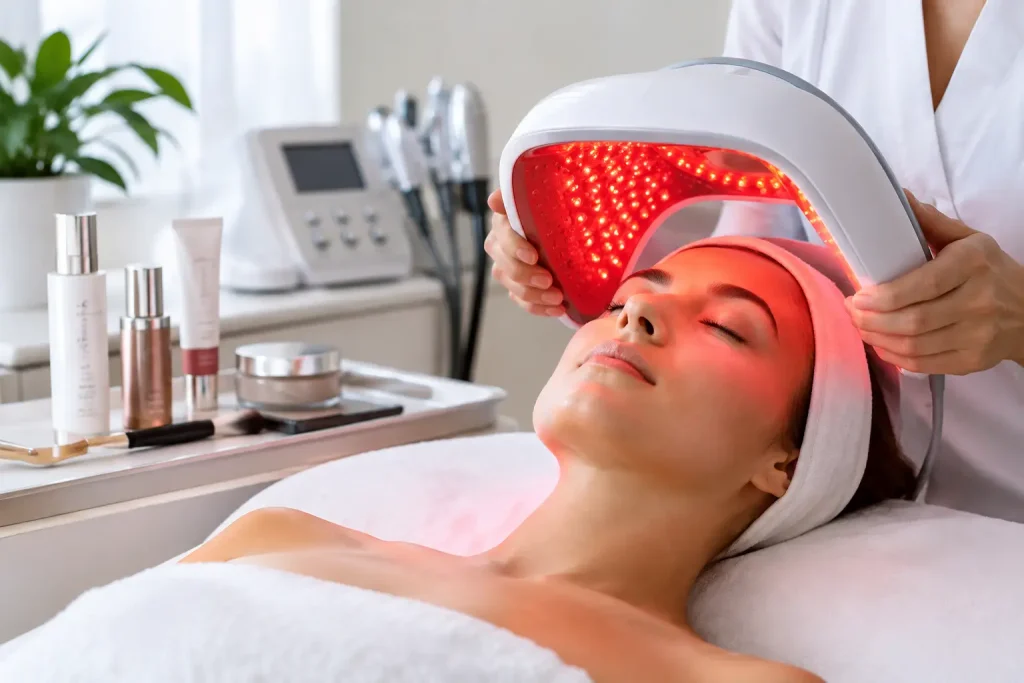
Red light is used for its calming and restorative benefits. It can support the skin’s healing response, help reduce the appearance of redness and encourage a more settled complexion. For someone whose acne feels sore, reactive or slow to recover after a breakout, this supportive effect can be especially useful.
Some clients benefit from a combination of wavelengths. The right choice depends on whether your main concern is active pustules, painful inflammation, recurring congestion, post-breakout marks or a mixture of these concerns. LED is not a one-size-fits-all facial add-on. It should be selected because it suits what your skin is doing now.
Does LED therapy help acne in every case?
LED can help many people with mild to moderate acne, especially when breakouts are inflamed and recurring. It is painless, non-invasive and usually requires no recovery time, making it practical for busy professionals, teenagers and adults who want progressive treatment without disrupting their week.
However, acne has several forms and severity levels. Deep, painful nodules, cystic acne, widespread lesions or acne that is leaving significant scars may need medical assessment alongside professional skin treatment. LED cannot correct every underlying trigger, including hormonal changes or medication-related acne. It also will not clear blocked pores overnight.
The most reliable results come when LED is paired with a carefully prescribed home routine and appropriate in-clinic treatment. If the skin is continually irritated by unsuitable ingredients, stripped by over-cleansing or congested by products that do not suit it, light therapy alone has limited room to work. That is why a thorough consultation is the starting point, not an optional extra.
What a course of treatment looks like
Acne responds to consistency. A single LED session can leave the skin looking calmer, but a meaningful change in breakout behaviour takes time. Most treatment plans involve a course of regular sessions, then a review to assess the skin’s response and decide whether maintenance sessions are appropriate.
During your consultation, your therapist should examine the type and distribution of your acne, ask about your current products, lifestyle and skin history, and establish whether there are signs of barrier disruption or sensitivity. This gives us a baseline. Photographs and progress reviews can be helpful because improvements often happen gradually: fewer active breakouts, less redness, quicker recovery and a more even-looking complexion.
An LED session itself is straightforward. After the skin is cleansed and prepared, you relax beneath the LED panel for a prescribed period. Eye protection is provided where required, and the treatment is designed to be comfortable. Depending on your skin, LED may be included within a bespoke facial programme or used as a focused treatment session.
There is no honest fixed timetable for every client. Some people notice their skin settling within a few sessions; others need several weeks before the pattern of new breakouts starts to change. Acne that has been active for months or years deserves a measured plan, not unrealistic promises.
Why homecare determines so much of the result
Clinic treatments create an opportunity for change, but what happens between appointments strongly influences the outcome. A professional prescription should support acne-prone skin without unnecessarily compromising comfort or hydration. It should be adjusted as the skin improves, because the routine that suits active inflammation may not be the routine needed later for lingering marks and resilience.
The most effective homecare plans are usually simple enough to follow consistently. They focus on cleansing appropriately, maintaining the skin barrier, using targeted professional ingredients at the right pace and avoiding the cycle of constantly changing products when a breakout appears.
It is also worth recognising that acne can affect confidence far beyond the mirror. Many clients arrive feeling they have tried everything, only to find that they have never had a structured analysis of their particular skin. Education is part of treatment. Once you understand why specific products and appointments have been selected, it becomes far easier to stay consistent and judge progress realistically.
Who should take extra care with LED treatment?
LED therapy is generally well tolerated, but professional screening is essential. Tell your therapist if you are pregnant, have a light-sensitive condition, are taking medication that may increase photosensitivity, have a history of seizures triggered by light, or are using prescribed acne medication. Recent procedures, active skin infections and unusual changes in the skin should also be discussed before treatment.
This is not about making treatment complicated. It is about protecting your skin and ensuring that the protocol is appropriate. A clinical skin specialist will know when to proceed, when to adapt the treatment and when to advise a different route first.
Setting realistic expectations for clearer skin
LED is particularly valuable because it supports acne management without adding more physical stress to already inflamed skin. It can calm, support healing and help reduce acne-associated bacterial activity. Yet it cannot replace a personalised strategy for congestion, oil production, inflammation and barrier health.
If your skin is affected by recurring breakouts, the best question is not simply whether LED works. Ask whether it is the right tool for your acne, at this stage, alongside the right homecare and treatment frequency. That conversation turns a promising treatment into a considered skin plan.
For clients in Sale and across South Manchester, a consultation at GRB Skin Clinic provides the clarity to move forward with a programme designed around your skin rather than a generic acne trend. Clearer skin is often built through small, informed decisions repeated consistently, with expert support when your skin needs it most.