
Share This Post
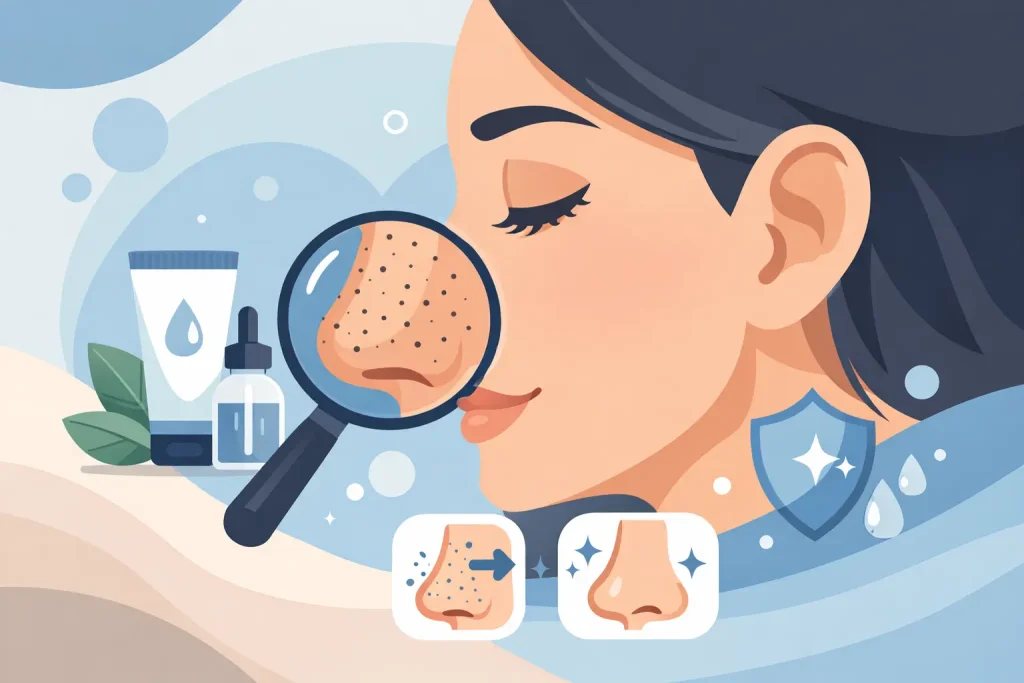
If your nose feels rough by lunchtime, makeup separates around the nostrils, or those tiny dark dots seem to return no matter what you use, you are not imagining it. Learning how to reduce blackheads on nose starts with understanding that this area produces more oil, collects debris more easily, and often gets treated too aggressively. That combination keeps congestion cycling.
Blackheads are not a cleanliness problem. They are open comedones – pores filled with oil, dead skin cells and oxidised debris that darkens at the surface. The nose is especially prone because it has a higher concentration of sebaceous glands. For many adults, especially those balancing work, stress, hormones and inconsistent routines, the issue is not one product missing from the shelf. It is the absence of a structured plan.
Why blackheads on the nose keep coming back
Most people try to solve nose blackheads by scrubbing harder, squeezing more often, or using strong products too frequently. That can make the skin dehydrated and reactive while doing very little to improve how the pore behaves over time.
A blackhead forms when excess sebum mixes with sticky dead skin cells and becomes trapped in the pore opening. Because the pore remains open, the material inside oxidises and appears dark. This is different from inflammatory acne, but the two often overlap. If your skin is also experiencing breakouts on the chin, jawline or forehead, congestion on the nose may be part of a broader acne pattern rather than a standalone concern.
There is also a point worth making here. Not every dark dot on the nose is a blackhead. Many people actually have sebaceous filaments – normal, tiny oil-lined structures that help move sebum through the pore. They can look similar, but they refill naturally even with excellent skincare. If you expect permanently poreless skin, you will likely overtreat and disappoint yourself.
How to reduce blackheads on nose with the right home routine
The best routine is consistent, measured and led by ingredients that change how the pore functions rather than simply stripping the surface.
Start with a proper cleanse, not an aggressive one
Your cleanser should remove sunscreen, makeup, excess oil and urban grime without leaving the skin tight. If the skin feels squeaky after washing, you have probably gone too far. A compromised barrier can trigger more oil imbalance and make congestion management harder.
For some people, especially those wearing makeup or heavier SPF, a gentle double cleanse in the evening is useful. The goal is clean skin, not raw skin. In the morning, one gentle cleanse is often enough.
Use salicylic acid where it counts
If there is one ingredient most consistently useful for blackheads, it is salicylic acid. Because it is oil-soluble, it can work into the pore lining more effectively than many surface exfoliants. Used correctly, it helps loosen compacted debris and reduce the conditions that allow blackheads to form.
This does not mean higher percentages are automatically better. It depends on your skin tolerance, current routine and whether you are also using retinoids, benzoyl peroxide or professional treatments. For some, a leave-on salicylic serum used a few evenings a week is ideal. For others, an overused acid toner becomes another source of irritation.
Introduce a retinoid if your skin can tolerate it
Retinoids help regulate skin cell turnover, which matters because blackheads are partly a problem of cells not shedding normally within the pore. They can be highly effective, especially if your congestion is persistent or sits alongside acne and textural concerns.
The trade-off is tolerance. Retinoids need to be introduced gradually, and they are not appropriate for everyone. If your skin is already sensitised, dry or inflamed, starting too quickly can backfire. This is where a clinician-led plan is valuable, because the strength, frequency and pairing with barrier support all matter.
Moisturise, even if you are oily
A common mistake is skipping moisturiser because the nose already feels greasy. Oily skin can still be dehydrated. When water content is low and the barrier is disrupted, skin can become shiny, tight and congested at the same time.
Choose a moisturiser that supports barrier function without feeling occlusive or heavy. Texture matters, but so does formulation. The aim is to keep the skin calm enough to tolerate active ingredients consistently.
Wear SPF every day
This may not sound directly related to blackheads, but it is part of skin health. If you are using salicylic acid, retinoids or clinic-based exfoliation, sun protection becomes non-negotiable. Post-inflammatory marks, redness and overall skin stress are harder to manage without it. A lightweight, non-comedogenic SPF is usually the best fit for congestion-prone skin.
What not to do if you want longer-term results
The fastest way to stall progress is to keep jumping between trends. Nose strips, harsh scrubs and frequent squeezing can make the area look temporarily clearer, but they do not address why the pore is filling in the first place.
Manual extraction at home is particularly risky. If the contents are not ready to release, pressure can damage the surrounding tissue, increase inflammation and leave the skin more irritated than before. That is especially true if you are already using acids or retinoids.
Heavy, waxy makeup or rich occlusive products around the centre of the face can also contribute in some cases. It depends on the formulation and your skin type, but if your nose remains persistently congested, reviewing everything that touches the area is sensible.
Professional treatment options for stubborn blackheads
If homecare has plateaued, professional treatment can make a significant difference. This is often the turning point for adults who are tired of buying product after product without a clear plan.
Professional exfoliation and extractions
A clinical facial designed for congestion can soften compacted debris, refine the surface and allow for safer, more effective extractions. When carried out properly, this is very different from picking at home. Skin preparation, hygiene and aftercare all influence the result.
LED and inflammation control
If blackheads sit alongside angry breakouts, redness or healing issues, LED light therapy may be included as part of a wider acne programme. It is not a standalone miracle for blackheads, but it can support calmer, more resilient skin while other targeted treatments do the heavier lifting.
Prescription-strength planning
Sometimes the issue is not just blackheads on the nose but a larger pattern of acne, hormonal influence or barrier disruption from years of incorrect skincare. In that case, the solution is rarely one facial. It is a course of treatment paired with the right home regime. At GRB Skin Clinic, this is exactly why consultation comes first. Skin analysis, product prescription and a staged plan produce far better results than quick-fix procedures.
When blackheads are really sebaceous filaments
This matters because expectations shape behaviour. Sebaceous filaments are normal and often most visible on the nose. They can be reduced in appearance, but not permanently removed. If you keep trying to eliminate every dot, you may end up with compromised skin and a nose that looks more inflamed than congested.
The realistic goal is cleaner-looking pores, smoother texture and fewer true blockages. Healthy skin still has visible structure. Clinical skincare is about improvement, not airbrushed fiction.
How long does it take to see improvement?
If you are consistent, some people notice a smoother nose within two to four weeks. More established congestion usually takes longer. A meaningful reduction in recurring blackheads often requires six to twelve weeks of steady use of the right actives, plus treatment adjustments if the skin becomes dry, flaky or reactive.
This is where many routines fail. People stop too soon, use too much too quickly, or switch products before the skin has had a fair chance to respond. Progress in skin health is rarely dramatic overnight. It is cumulative.
A realistic plan for adults with recurring nose congestion
If your blackheads are mild, a gentle cleanse, salicylic acid, moisturiser and daily SPF may be enough. If your skin is also acne-prone, textured or sensitive, the better route is a more personalised programme that may include retinoids, regular in-clinic treatments and stricter product selection.
The important point is to treat the nose as part of your overall skin function, not as a separate problem to attack. Oil flow, cell turnover, barrier health and inflammation are connected. Once your routine starts supporting all four, the skin usually becomes easier to manage.
If you have spent months trying to clear your nose with scrubs, strips and guesswork, the next best step is not another harsh product. It is a proper skin consultation and a routine built around what your skin is actually doing.