
Share This Post
Hormonal acne rarely behaves like ordinary breakouts. It tends to flare in patterns, sit deeper in the skin, feel tender to the touch, and return just when you think things are settling. If you are searching for how to reduce hormonal acne breakouts, the most useful place to start is not with a quick fix, but with a structured plan that respects what your skin is actually doing.
For many adults, especially women, hormonal acne appears around the jawline, chin and lower cheeks, though it can also affect the neck, chest and back. You may notice it worsens before your period, during times of stress, after stopping or changing contraception, or alongside oiliness and congestion that never seems fully under control. That pattern matters because it tells us this is not simply a hygiene issue or a case of using the “wrong face wash”. It is a skin condition influenced by internal shifts and made better or worse by what you do externally.
Why hormonal acne is so persistent
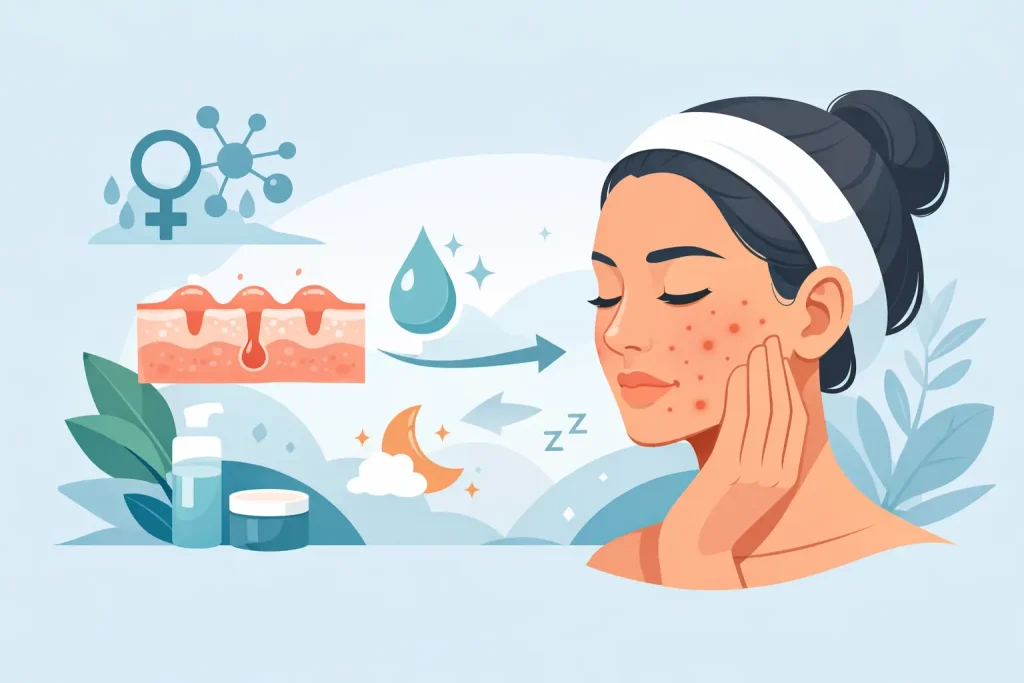
Hormonal acne is driven by a chain reaction. Androgens can increase oil production, dead skin cells can build up more easily inside the pore, and inflammation can escalate quickly once a blockage forms. The result is often a combination of under-the-skin bumps, inflamed spots, blackheads and post-inflammatory marks that linger long after the active breakout has settled.
This is why aggressive scrubbing so often backfires. When the skin barrier is irritated, inflammation rises, healing slows, and the skin can become both dehydrated and oily at the same time. Many clients arrive having tried drying products, harsh exfoliants and trend-led routines that leave the skin reactive but still congested. The goal is not to strip the skin into submission. The goal is to regulate it.
How to reduce hormonal acne breakouts without making skin worse
The first step is to simplify. If your bathroom shelf is full of acids, spot treatments, masks and online recommendations, your skin may be dealing with too much stimulation and not enough direction. A hormonal acne routine should be disciplined rather than dramatic.
Start with a gentle cleanser that removes oil, SPF and makeup properly without leaving the skin tight. Follow with ingredients that address congestion and inflammation in a controlled way. Salicylic acid can help keep pores clearer, vitamin A derivatives can support cell turnover, and niacinamide may help reduce excess oil and calm redness. Not every skin tolerates all three at once, and more is not better. It depends on your barrier strength, current level of inflammation and whether you are already using prescription medication.
Moisturiser is not optional. Acne-prone clients often skip it because they fear more breakouts, but dehydrated skin is typically more reactive and less resilient. A well-formulated, non-comedogenic moisturiser supports barrier repair and helps active ingredients work more predictably.
Daily SPF matters as well, especially if you are dealing with post-acne marks or using active skincare. Unprotected skin is more likely to hold onto pigmentation, and inflammation plus UV exposure is a poor combination if your goal is long-term skin health.
The ingredients that tend to help most
There is no single hero product for hormonal acne, but there are proven categories that can make a real difference when prescribed properly.
Salicylic acid is useful because it is oil-soluble, which means it can work inside the pore where congestion begins. It can be excellent for blackheads, oiliness and recurring blocked areas, but overuse can leave the skin dry and irritated.
Vitamin A is often central in acne programmes because it helps normalise cell turnover and can improve both active breakouts and the marks left behind. This usually requires patience. Early purging or adjustment can happen, and the skin often needs to build tolerance gradually.
Benzoyl peroxide can reduce acne-causing bacteria and inflammation, but it must be used carefully. It can be very effective for some skins and far too harsh for others, especially when layered with multiple actives.
Azelaic acid is often underrated. It can support acne, redness and post-inflammatory pigmentation, making it particularly helpful for adults who break out and also want a more even complexion.
If you are dealing with frequent, painful cystic flare-ups, homecare alone may not be enough. That is not failure. It simply means your skin may need a more clinical approach.
Why treatment plans work better than product hopping
Hormonal acne improves fastest when there is a clear strategy. That includes understanding your triggers, assessing your barrier function, and introducing the right actives at the right pace. Randomly switching products every two weeks usually delays progress because the skin never has time to stabilise.
A proper consultation should look at where you break out, how long lesions last, what your current routine includes, whether you are picking, and whether there are lifestyle or hormonal patterns worth noting. It should also set expectations. Deep inflammatory acne does not clear overnight, and skin that has been sensitised often needs repairing before stronger correction can begin.
This is where professional support can make the difference between temporary improvement and real change. At GRB Skin Clinic, acne treatment is approached as a structured skin health process, not a one-off facial and a hopeful guess. That matters with hormonal acne because consistency is what produces visible results.
In-clinic options for reducing hormonal acne breakouts
When skin is inflamed, congested and leaving marks, clinic treatments can accelerate progress by doing what topical products alone often cannot. The right treatment depends on the severity of the acne, the level of sensitivity, and whether the skin is actively breaking out or dealing more with the aftermath.
Professional facials designed for acne can support safe exfoliation, reduce surface congestion and improve product penetration. The value is not in having a pampering treatment. It is in using active ingredients and protocols with a specific clinical purpose.
LED light therapy is often a strong addition for acne-prone skin because it can help calm inflammation and support healing without creating further trauma. For clients whose skin is reactive or who cannot tolerate aggressive treatments, this can be especially useful.
If post-acne pigmentation and textural scarring are part of the picture, your treatment programme may need to evolve in stages. First calm and control active breakouts, then address residual marks and uneven texture. Trying to treat everything at once can overload the skin.
Lifestyle factors that genuinely influence acne
Skincare matters, but so do the daily patterns that keep the inflammatory cycle going. Stress is a common trigger because it can influence oil production and healing. Poor sleep can have a similar effect. Neither means your acne is “caused by stress” alone, but both can make existing hormonal tendencies more visible.
Diet is more individual than the internet often suggests. Some people notice worsening with high glycaemic foods or certain dairy intake, while others do not. It is rarely helpful to impose a long list of restrictions without a clear pattern. If you suspect a connection, track flare-ups alongside your cycle, stress levels and diet for a few months rather than making dramatic changes based on one bad week.
Hands on the face, inconsistent cleansing after exercise, and picking are still major issues. Picking in particular extends inflammation, increases the risk of scarring and spreads bacteria from spot to spot. If you struggle with this, it is worth addressing directly rather than pretending it is not part of the problem.
When to seek medical advice
Some hormonal acne needs medical management alongside professional skincare. If breakouts are severe, painful, widespread, scarring, or clearly linked to hormonal changes, you may need support from a GP or prescribing clinician. In some cases, medication is appropriate. In others, a combined plan of topical care, in-clinic treatments and medical review gives the best outcome.
This is not about choosing one route over another. It is about matching the level of intervention to the level of the problem.
What realistic progress looks like
One of the biggest frustrations with hormonal acne is the timeline. You can do the right things and still not see immediate clarity. Early signs of progress are often less redness, fewer deep painful lesions, quicker healing and longer gaps between flare-ups. Full improvement usually comes in phases.
The clients who do best are rarely the ones using the most products. They are the ones following a plan, attending review appointments, adjusting when needed, and giving the skin enough time to respond.
If you want clearer skin, think less in terms of a miracle product and more in terms of skin regulation. Hormonal acne can be reduced, but it responds best to calm decisions, clinical guidance and consistency that holds even when the skin is not perfect yet. That is where long-term change begins.