
Share This Post
If your bikini line seems to cycle through shaving, stubble, redness and painful bumps on repeat, you are not imagining it. Laser hair removal for bikini line ingrown hairs is often one of the most effective ways to interrupt that pattern, because it addresses the hair growth itself rather than repeatedly treating the aftermath.
Ingrown hairs in this area are rarely just a cosmetic nuisance. They can become inflamed, sore, darkly pigmented and, in some cases, leave marks that linger long after the bump has settled. For many clients, especially those prone to coarse regrowth or post-inflammatory pigmentation, the issue is not a lack of effort. It is that methods like shaving, waxing and hair removal creams can keep provoking the same response in already reactive skin.
Why the bikini line gets ingrown hairs so easily
The bikini line is one of the most common areas for ingrown hairs because the conditions are almost ideal for them to develop. The hair is often thicker and curlier, the skin experiences friction from clothing and underwear, and hair removal is frequent. When a hair is cut bluntly or pulled out and begins to regrow, it can curve back into the skin or become trapped beneath a build-up of dead skin cells.
That is when you see the familiar pattern – small red bumps, tenderness, itching, pus-filled spots or flat brown marks that remain after the inflammation has gone down. If you are shaving every few days to keep the area smooth, you may be restarting the cycle before the skin has had a chance to recover.
There is also a difference between the occasional ingrown hair and a chronic pattern. If bumps are appearing repeatedly in the same places, or if the area feels persistently irritated, treatment needs to be more strategic. This is where a consultation-led approach matters.
How laser hair removal for bikini line ingrown hairs works
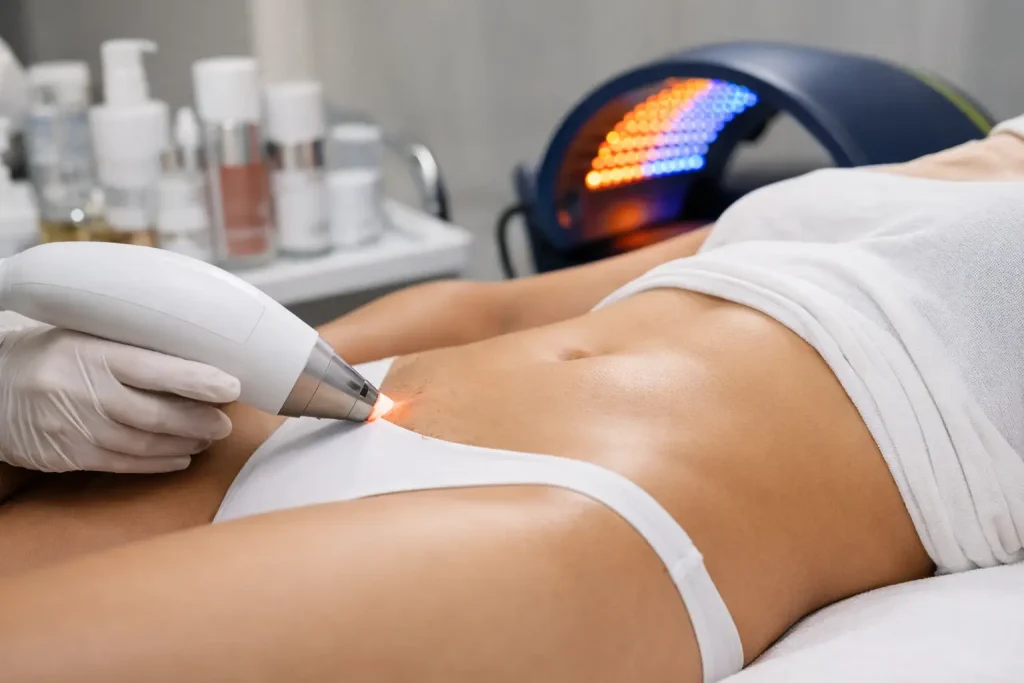
Laser hair removal targets pigment within the hair shaft and delivers heat down into the follicle. The goal is to progressively reduce the hair’s ability to regrow. As the treatment course continues, hair usually becomes sparser, finer and slower to return.
For clients dealing with ingrown hairs, this matters because fewer active hairs means fewer opportunities for hairs to become trapped or curl back into the skin. You are not just removing visible hair at the surface. You are reducing the density and strength of regrowth over time.
This is why laser can be so helpful where temporary methods have failed. Shaving cuts hair at skin level. Waxing removes it, but can still trigger inflammation and abnormal regrowth patterns in sensitive skin. Laser works more progressively and, when done correctly, often leads to calmer skin with fewer bumps and less congestion.
That said, it is not a one-session fix. Hair grows in cycles, and only hairs in the correct growth phase respond well at the time of treatment. A course is needed, followed by maintenance at intervals depending on your hormonal profile, hair type and response.
What results can you realistically expect?
Most clients are not simply asking for less hair. They want the bikini line to look and feel healthier. In practical terms, that can mean fewer painful ingrown hairs, less daily irritation, smoother texture and a reduction in the shadow or dark marks left behind by chronic inflammation.
Results vary, and honest expectation-setting is important. If you have active ingrown hairs now, laser may reduce future flare-ups very effectively, but existing pigmentation and textural change may take longer to improve. If scarring or staining is significant, that may need separate skin-focused support rather than relying on hair removal alone.
Hair colour and skin tone also matter. Laser works best when there is enough pigment in the hair for the device to target. Very fair, grey or red hair may not respond well. Skin tone affects device choice and settings, which is why therapist-led assessment is essential. A safe protocol is never one-size-fits-all.
When laser is a particularly good option
Laser tends to be especially worthwhile if your ingrown hairs are linked to frequent shaving, if waxing leaves the area irritated for days, or if you are constantly dealing with under-skin bumps along the knicker line. It is also useful when the emotional toll is becoming part of the problem – avoiding swimwear, feeling self-conscious during intimacy or adjusting clothing choices to hide marks and flare-ups.
Another strong reason to consider it is pigmentation. Repeated inflammation can leave the bikini line looking uneven even when there are no active bumps. Reducing the trigger helps protect the skin from more post-inflammatory marking.
For many adults, this shifts the conversation from maintenance to long-term management. Instead of continually reacting to symptoms, you begin reducing the cause.
What happens before treatment starts
A proper consultation should come first. This is where your practitioner assesses whether the bumps are likely to be straightforward ingrown hairs, folliculitis, friction-related irritation or a more complex skin concern. That distinction matters because not every lump in the bikini area should be treated in the same way.
Your medical history, medications, skin tone, hair colour, sensitivity level and previous hair removal habits all influence treatment planning. You should also be given clear guidance on preparation, likely treatment intervals and how the skin may behave between sessions.
At a clinical skin practice, this stage is not a formality. It is where safety and results are built. If your skin is already inflamed, timing may need adjusting. If there is significant pigmentation, a broader skin health strategy may be recommended alongside the laser course.
What treatment feels like and what recovery is like
Most clients describe bikini line laser as a quick snapping or warming sensation. The area is sensitive, but sessions are usually brief. The immediate after-effect can include mild redness or heat in the skin for a short period, which usually settles quickly.
You may notice some hairs appearing to grow before they shed. This is normal and can be mistaken for new growth. Over the following sessions, many people find the area becomes easier to manage and less reactive.
Recovery is generally straightforward, but aftercare still matters. Freshly treated skin should be handled gently, and friction, heat and unnecessary irritation should be minimised in the short term. This is another reason why professional guidance is important – good outcomes are not just about the machine, but about protocol.
Common concerns about laser for ingrown hairs
One concern is whether laser can make the area worse before it gets better. Occasionally, if there are already active bumps or inflammation, the skin can feel temporarily reactive. That does not necessarily mean the treatment is wrong, but it does mean your practitioner should be monitoring how your skin responds and adjusting where needed.
Another concern is permanence. Laser hair removal is best understood as long-term hair reduction rather than an absolute guarantee that no hair will ever return. Hormones, genetics and individual biology all play a role. Most clients still consider it worthwhile because even when some regrowth occurs, it is often finer and less likely to become ingrown.
There is also the question of whether waxing should continue between sessions. In general, no. Pulling the hair out from the root interferes with the treatment process. Your practitioner will explain what is appropriate between appointments.
Why a clinical approach makes a difference
Bikini line ingrown hairs sit at the overlap of hair removal and skin health. That is why experience matters. If the focus is only on removing hair as quickly as possible, you can miss the underlying inflammatory pattern, pigmentation risk or signs that the skin barrier is already stressed.
A clinical, progressive approach looks at the whole picture. It considers the hair, the follicle, the skin response and the long-term condition of the area. That is particularly important for clients who have been stuck in the same cycle for years and want a treatment plan, not another temporary fix.
For clients in Sale and South Manchester who want a more structured route forward, working with a practitioner who understands both device-led treatment and skin behaviour can make the process feel far more straightforward. At GRB Skin Clinic, that means starting with assessment, setting realistic expectations and building a plan that respects your skin rather than forcing it through another aggressive routine.
Is laser hair removal for bikini line ingrown hairs worth it?
If ingrown hairs are occasional and mild, you may not feel ready to commit to a course of treatment. But if the problem is persistent, painful or affecting your confidence, laser is often one of the most sensible long-term options available. It reduces the need for constant hair removal, lowers the frequency of flare-ups and gives the skin a better chance to settle.
The key is choosing treatment for the right reason. Not because you are chasing perfection, but because you want healthier skin, less irritation and a routine that stops working against you. Sometimes the most effective aesthetic treatment is the one that also gives the skin room to recover.