
Share This Post
If you are asking about laser hair removal session count, you are usually asking a more practical question underneath it – how long will this take, how much will it cost, and when will I start seeing a real reduction in hair growth? Those are the right questions to ask, because laser hair removal works best as a structured course, not as a one-off appointment.
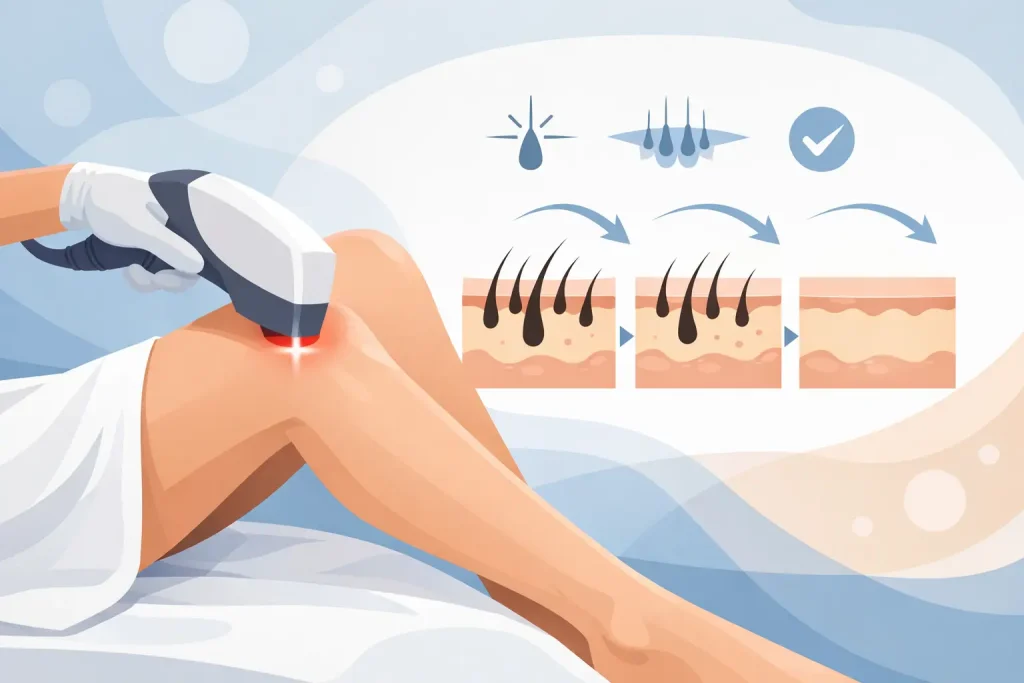
At a clinical skin clinic, we set expectations properly from the start. Hair grows in cycles, and laser can only target follicles effectively when the hair is in the active growth stage. That is why treatment is spaced over time and why session numbers vary from one person to another. The goal is not a quick fix. It is progressive reduction, better skin comfort, and a long-term plan that is realistic for your skin and hair profile.
What is a typical laser hair removal session count?
For most clients, a typical laser hair removal session count is around 6 to 8 sessions for a noticeable, significant reduction. Some people respond well within that range. Others need closer to 10 sessions, particularly if the hair is dense, hormonally influenced, or located on an area known to be more resistant.
That range is useful, but it should never be treated as a guarantee. Underarms, bikini and lower legs often respond well because the hair tends to be darker and coarser. Facial areas can be less predictable, especially in women dealing with hormonal shifts, PCOS, or recurring stimulation of fine facial hair. In those cases, you may see improvement early on but still require more sessions and occasional maintenance.
This is why a consultation matters. The right practitioner will assess skin tone, hair density, hair colour, medical history and the area being treated before giving you a plan. Clinical laser hair removal should be tailored in the same way a skin treatment plan is tailored – based on biology, not guesswork.
Why session count is never the same for everyone
Laser hair removal is not simply a numbers game. The outcome depends on the quality of the device, the skill of the therapist, and how your hair behaves biologically.
Hair colour makes a major difference. Dark, coarse hair usually responds best because it contains more pigment for the laser to target. Blonde, red, grey or very fine hair is more difficult to treat effectively. Skin tone also affects settings, treatment choice and how aggressively sessions can be progressed while keeping the skin safe.
Hormones are another key factor. If you have excess hair growth on the chin, neck, jawline, stomach or breasts, the session count may be higher because these areas are often driven by internal hormonal activity. Laser can reduce the hair, but if the body continues to stimulate new growth, maintenance becomes part of the plan.
Then there is consistency. Missing appointments or leaving long gaps between sessions can slow progress. Laser works with the hair cycle, so timing matters. Too soon and there may not be enough active hair to target. Too late and you lose treatment momentum.
Laser hair removal session count by treatment area
Some treatment areas are naturally more responsive than others. This is one reason two clients can have very different experiences even when they both book a course of six.
Underarms and bikini
These areas often respond well within 6 to 8 sessions. The hair is usually coarse and pigmented, which makes it a strong target for laser energy. Many clients notice that regrowth becomes patchier, softer and slower after the first few appointments.
Legs
Lower legs can respond very well, but full leg treatment may require patience because there is simply more surface area and not every follicle is active at once. A course of 6 to 8 sessions is common, with maintenance depending on your baseline hair growth.
Face
Facial laser hair removal often needs more careful expectation setting. Upper lip, chin and jawline hair can improve beautifully, but the session count may be higher – often 8 to 10 sessions or more. Fine facial hair can also be less responsive than thicker terminal hair.
Back, chest and shoulders
These areas can need extended courses, particularly in male clients or in cases of dense growth. Good reduction is achievable, but larger body areas and strong hormonal influence can increase the total number of sessions.
When you should expect to see results
Most clients begin to notice change after 2 to 3 sessions. This usually looks like slower regrowth, finer texture and areas where the hair does not return as densely. That early progress is encouraging, but it is not the endpoint.
A proper course builds gradually. By the halfway stage, many people find shaving becomes less frequent and irritation from ingrown hairs starts to settle. By the end of the initial course, the aim is a substantial reduction rather than complete, permanent removal of every hair forever.
That wording matters. Honest clinics talk about hair reduction because that is the clinically accurate expectation. You can achieve a dramatic improvement, but hormones, age, ethnicity, medication and genetics can all affect long-term regrowth.
Maintenance sessions: are they normal?
Yes, and they should not be viewed as a sign that treatment has failed. Maintenance is a normal part of long-term laser hair removal for many clients.
After your initial course, you may need occasional top-up sessions every 6 to 12 months. Some clients go longer. Others, especially those treating hormonal facial hair, may benefit from more regular maintenance. The key is that these sessions are usually far less frequent than your original treatment schedule.
Good planning means understanding this before you start. A clinic-led approach should give you a clear sense of both the initial commitment and the likely upkeep, so you can make an informed decision.
What can increase your session count?
There are a few common reasons why someone may need more sessions than expected. One is treating hair that is too light or too fine. Another is inconsistent attendance. Hormonal imbalance can also prolong treatment, particularly on the face.
Device quality matters too. Not all laser systems perform equally, and not all practitioners are equally skilled at adjusting settings correctly over the course of treatment. If energy levels are too cautious without good reason, progress can be slower. If settings are not matched properly to skin and hair type, treatment can be ineffective or unsafe.
Shaving habits also play a role. The area should usually be shaved before treatment, but methods that remove the root, such as waxing, threading or plucking, can interfere with results because the laser needs a follicle to target. Following aftercare and pre-treatment guidance protects both safety and efficacy.
Why consultation-first clinics get better outcomes
The right laser plan starts before the first pulse of energy is delivered. A thorough consultation should assess contraindications, recent sun exposure, medication use, skin sensitivity, hair pattern and likely response. Test patching may also be appropriate depending on the skin type and treatment area.
This is where specialist clinics stand apart from quick-turnover beauty settings. Laser hair removal is not only about removing hair. It is also about protecting the skin barrier, reducing inflammation, and working with the body safely over time. For clients prone to pigmentation, sensitivity or ingrown hairs, that clinical oversight matters.
At GRB Skin Clinic, the approach is always structured and individualised. That means realistic timelines, therapist-led guidance and a plan based on what your skin and hair actually need rather than a generic package sold on promise alone.
How to think about value, not just session numbers
It is tempting to focus only on price per session, but laser hair removal session count is only one part of value. If a lower-cost provider uses weaker technology, poor timing or rushed consultations, you may end up needing more sessions and seeing less reduction.
A better question is whether the treatment plan is likely to get you to a meaningful result safely. For many clients, the real value is not just less hair. It is less shaving, fewer ingrown hairs, calmer skin, and more confidence in everyday life. That is especially true if you have spent years managing irritation, dark marks, or persistent regrowth.
If you are considering laser hair removal, start with a proper consultation and ask direct questions. How many sessions are likely for your area? What results are realistic for your hair type? Will you need maintenance? What should you do between appointments? Clear answers at the beginning usually lead to better outcomes at the end.
The most useful mindset is this: laser works best when you treat it as a course of care, not a one-off beauty purchase. Give it the right timeline, the right practitioner and the right expectations, and the results are often well worth the patience.