
Share This Post
A treatment menu can make skin decisions look deceptively simple. Book an LED session for breakouts, choose a facial for dryness, then expect your concerns to disappear. In reality, LED therapy versus facial treatments is not a contest with one universal winner. They work through different mechanisms, address different priorities and often produce their strongest results when prescribed together as part of a progressive plan.
For clients managing adult acne, persistent congestion, sensitivity, photodamage or early signs of ageing, the right question is not, “Which treatment is better?” It is, “What does my skin need to do next?” A professional skin assessment gives that question a useful answer, rather than relying on a one-size-fits-all treatment.
LED Therapy Versus Facial Treatments: The Key Difference
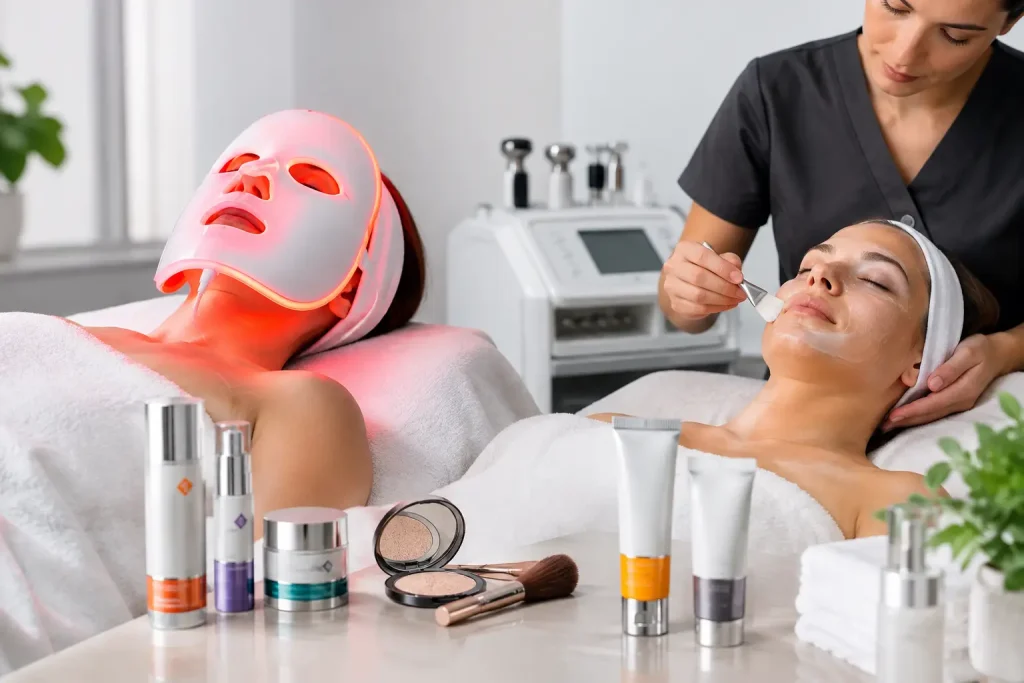
LED light therapy is a device-led treatment designed to support cellular activity in the skin. Specific wavelengths of visible light are selected for a defined skin objective. Blue light is commonly used within acne-focused programmes, while red and near-infrared light are often chosen to support skin repair, calm visible inflammation and encourage a healthier-looking collagen response over time.
The treatment itself is non-invasive and does not involve exfoliation, extraction or massage. You rest beneath the LED panel while the skin receives a measured dose of light. There is usually little to no downtime, which makes LED particularly valuable when the skin is reactive, compromised or not ready for more intensive corrective work.
A bespoke facial is different. It is a hands-on, ingredient-led treatment that can be adapted at each appointment. At GRB Skin Clinic, this may involve professional cleansing, careful exfoliation where appropriate, targeted product application and treatment techniques selected around your skin analysis. With high-potency Environ formulations, a facial can address hydration, barrier function, congestion, uneven tone, fine lines and the effects of environmental exposure.
In simple terms, LED supports biological processes beneath the surface, while facials work more directly on the skin’s immediate condition and product needs. Both have a place. The best choice depends on your concern, tolerance and long-term objective.
When LED Light Therapy Makes Sense
LED therapy is often a strong starting point for skin that needs calm, consistency and support rather than aggressive intervention. Acne-prone skin can become caught in a cycle of inflammation, blemishes and post-breakout marks. Regular blue LED sessions can be incorporated into a structured acne programme to support clearer skin alongside a carefully prescribed home routine.
Red and near-infrared LED can be particularly useful for clients concerned by redness, sensitivity, dullness and the gradual loss of firmness that comes with age and photodamage. It is not a substitute for medical treatment where this is required, and it will not transform deep lines in a single appointment. Its value lies in cumulative progress. A course of sessions gives the skin repeated, controlled support, then maintenance sessions help protect that investment.
LED can also be helpful when you have an important event approaching but do not want recovery time. Since it is gentle and non-ablative, it may suit clients who want their skin to look calmer and more rested without the temporary flaking or sensitivity that can follow certain active treatments.
That said, LED is not an instant deep-clean facial. If congestion, surface dryness or product build-up is the main issue, light therapy alone may feel underwhelming. It can support the skin, but it does not replace the manual and topical elements of a treatment designed to refine the surface.
What results from LED usually look like
The early changes are often subtle: skin may appear calmer, more comfortable and less reactive. With consistent appointments, acne clients may notice fewer inflammatory breakouts, while ageing and pigmentation clients may see improved luminosity and a more even-looking complexion. Timelines vary because hormones, stress, skin condition, homecare and attendance all influence progress.
A skilled therapist will set out a realistic course recommendation rather than promising an overnight cure. For many concerns, regularity matters more than intensity.
When a Bespoke Facial Is the Better Choice
A facial is especially valuable when your skin needs a detailed reset. Perhaps it feels rough and dehydrated despite using good products, looks congested through the T-zone, or has lost its healthy brightness. A therapist-led facial allows the treatment to respond to what is visible on the day, while still following the direction of your wider programme.
For acne, this could mean supporting the barrier while managing congestion with care. Over-treating irritated skin can make it more uncomfortable and can disrupt consistency, so the approach must be measured. For ageing concerns, a facial may focus on improving hydration, delivering active ingredients and progressively supporting the appearance of firmer, smoother skin.
Facials are also an important opportunity to review your prescribed routine. Skin changes with the seasons, stress levels, medication, travel and hormonal shifts. A product plan that suited you three months ago may need adjusting now. This is where a clinic differs from a quick cosmetic appointment: treatment and homecare are considered together, with clear reasons for every recommendation.
Not every facial should include the same level of exfoliation or extraction. Skin that is sensitised, inflamed or actively breaking out needs an approach that respects its current limits. The goal is always healthier function, not simply a short-lived glow.
Is Combining LED and Facials More Effective?
Often, yes. A combined protocol can be more effective because it addresses both the skin’s immediate presentation and the processes that influence its behaviour over time. For example, an acne programme may pair an appropriate facial with LED sessions to help manage congestion, support calmer-looking skin and maintain treatment momentum between reviews.
For clients focused on anti-ageing and photodamage, a bespoke facial can deliver professional active ingredients and hydration, while LED provides a gentle, cumulative addition to the plan. The combination is not automatically necessary at every visit. Some weeks, the skin may benefit most from LED alone. At other times, it may be ready for a more active facial treatment.
This is why a consultation-led programme matters. Layering treatments without assessing the skin can lead to unnecessary irritation, expense and disappointment. A progressive plan gives your skin time to respond, allows your therapist to track changes and makes every appointment purposeful.
A practical way to choose
If your skin is inflamed, sensitive, frequently breaking out or recovering from a flare-up, LED may be the gentler first step. If it is congested, dehydrated, rough or lacking radiance, a bespoke facial may provide more immediate visible improvement. If you have several concerns at once, particularly acne with post-breakout marks or ageing with uneven tone, a combination course is often worth discussing.
Your availability matters too. LED usually works best as a series of regular appointments, while facials may be scheduled around skin cycles, events and treatment goals. There is no benefit in committing to an ambitious course that cannot be maintained. A realistic plan followed consistently will always outperform sporadic appointments.
What a Skin Consultation Should Clarify
Before choosing LED or a facial, your therapist should look beyond the concern you can see in the mirror. A thorough consultation considers your skin history, current products, sensitivity, breakouts, lifestyle factors and the results you want to achieve. It should also establish whether your skin needs correction, repair, maintenance or a combination of all three.
You should leave knowing what treatment has been recommended, why it is suitable, how many sessions may be needed and what you can do between appointments to support results. That education is not an extra. It is central to long-term skin change.
At GRB Skin Clinic, treatment plans are built around the individual rather than a standard facial menu. Whether your priority is clearer acne-prone skin, improved confidence in ageing skin or a more consistent, healthy complexion, the process begins with understanding what your skin is communicating.
The most useful next step is not to choose the treatment with the most impressive name. Book a professional skin consultation and let your plan be guided by analysis, realistic timescales and the skin you want to live in long after the appointment has ended.