
Share This Post
A breakout that will not settle, pigmentation that seems more visible after summer, or a complexion that has lost its smoothness can make one question feel urgent: should you choose LED therapy versus peels? The right answer is rarely about which treatment is ‘stronger’. It is about what your skin is doing now, how resilient its barrier is, and what outcome will move it forward without creating unnecessary inflammation.
At GRB Skin Clinic, we look beyond a single concern and build treatment plans around the biology of your skin. LED and professional peels can both be highly effective, but they work through very different pathways. In many cases, they are not competing options at all. They are carefully timed parts of a progressive programme.
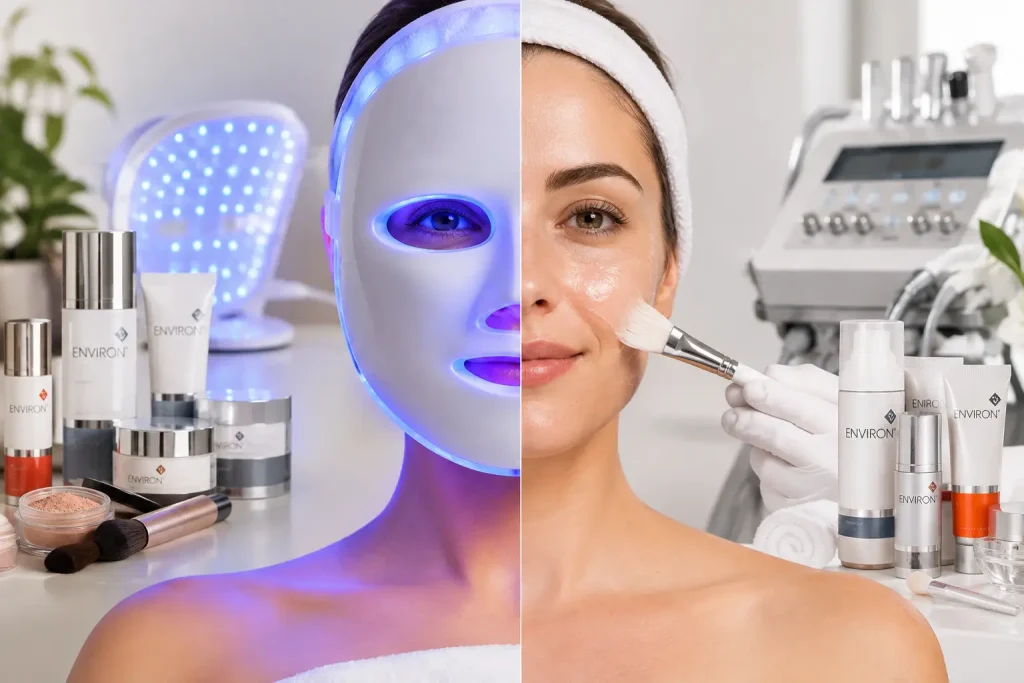
LED Therapy Versus Peels: The Core Difference
LED light therapy uses carefully selected wavelengths of light to support natural cellular processes in the skin. It is non-invasive, comfortable and requires no surface exfoliation. Depending on the protocol selected, LED can help calm visible redness, support repair, encourage a clearer-looking complexion and promote collagen activity over time.
A professional peel works at the surface and, depending on its formulation and strength, within the upper layers of the skin. It uses clinically selected acids and active ingredients to accelerate exfoliation, improve the way dead cells shed and create a more refined skin texture. Peels can be particularly valuable when dullness, congestion, uneven tone or early signs of photodamage are the dominant concerns.
The practical distinction is simple. LED is generally about supporting and regulating the skin, while peels are more focused on renewal and correction. Both need professional judgement. The same peel that gives one person a clearer, brighter result may be inappropriate for skin that is reactive, dehydrated or already inflamed.
When LED Therapy Is the Better Starting Point
LED is often an excellent first choice for clients whose skin needs calming before it needs stimulating. This includes active acne with visible inflammation, sensitised skin, persistent redness, post-treatment recovery and skin that feels tight or unpredictable. Rather than forcing a rapid surface change, the treatment supports the conditions in which the skin can function more effectively.
For acne, this matters. Congestion is not always a sign that the skin needs more exfoliation immediately. If spots are sore, the skin is irritated, or the barrier has become compromised through overuse of active products, a peel may need to wait. LED can form part of a more measured phase that reduces visible inflammation while a therapist reviews homecare, triggers and treatment frequency.
LED is also valuable for clients who want anti-ageing support with no downtime. Results are cumulative, not dramatic after one appointment. A course of treatments and consistent professional homecare give the skin time to respond. This makes LED well suited to maintenance plans, pre-event skin preparation and clients who want a comfortable treatment that fits around work and family life.
What LED will not do overnight
LED is not a resurfacing treatment. It will not instantly lift heavy congestion, erase deeper textural scarring or replace a targeted correction plan for significant pigmentation. Its strength lies in consistency. Think of it as creating a healthier treatment environment, particularly when the skin is inflamed, depleted or prone to setbacks.
When a Professional Peel May Be More Appropriate
A peel may be the more direct choice when the main issue is a build-up of dull, uneven surface cells. Skin can appear rough, lack radiance or feel congested even when there is little active inflammation. With the right formulation and preparation, a peel can improve smoothness, clarity and the way professional skincare products perform on the skin.
Peels are frequently included in plans for comedonal acne, superficial congestion, uneven texture, visible signs of sun exposure and certain types of discolouration. They can also be useful where ageing skin needs a more active renewal signal. However, professional does not mean aggressive. A well-designed programme may begin with gentle, progressive peels before advancing treatment intensity as the skin demonstrates that it can tolerate it.
Some clients expect visible peeling after every appointment. That is not the measure of success. Flaking can occur with some protocols, but a treatment can still be effective without obvious shedding. The aim is controlled improvement, not provoking the skin into a dramatic reaction.
Downtime, preparation and aftercare
Peels require more planning than LED. Your therapist will assess current products, recent treatments, sensitivity, active breakouts and any relevant health information before recommending a peel. You may be advised to pause certain active ingredients beforehand and to follow a specific recovery routine afterwards.
Following a peel, the skin can feel dry, tight or temporarily more sensitive. It needs gentle handling, prescribed hydration and diligent daily sun protection. Picking at flakes, introducing new products or booking treatments too close together can interfere with recovery and compromise the result.
Can You Combine LED and Peels?
Often, yes. The most effective choice may not be LED therapy versus peels, but LED therapy alongside appropriately timed peels. A therapist may use LED before or after a peel protocol where suitable, or alternate treatments across several weeks. This can help balance correction with recovery rather than repeatedly challenging the skin.
For example, someone with adult acne may start with LED-focused appointments to settle visible inflammation and establish an appropriate homecare routine. Once the skin is calmer and the active breakout pattern is better controlled, carefully selected peels may address lingering congestion and uneven texture. LED can then remain part of the programme to support recovery and maintain skin resilience.
For photoaged or uneven skin, a progressive peel course may sit alongside LED sessions that support collagen activity and overall skin quality. The sequence, intervals and products matter. This is why a consultation is more valuable than selecting a treatment from a menu based solely on a single concern.
Choosing by Skin Concern
If active, inflamed acne or sensitivity is your immediate concern, LED will commonly be the gentler entry point. If your skin is stable but congested, rough or dull, a peel may offer a more visible surface-level change. If your priority is long-term ageing support, both treatments may have a place, with LED providing consistent regenerative support and peels addressing texture and radiance.
Pigmentation requires particular care. Not every discolouration has the same cause, and treating it too aggressively can make an uneven tone harder to manage. A therapist-led plan considers your skin type, degree of sensitivity, previous reactions, lifestyle and homecare before selecting the pace of treatment. Patience is a clinical advantage here.
It is also worth considering your diary. LED usually has no downtime, while a peel may require you to plan around temporary dryness or flaking. Neither route should be judged by a single appointment. Meaningful skin change is built through the right treatment frequency, a prescribed routine and regular reassessment.
Why Skin Analysis Comes First
Two people can both describe their skin as ‘spotty’ or ‘pigmented’ and need completely different approaches. One may have an impaired barrier and inflammation. Another may have stable skin with persistent congestion. One may benefit from a course of LED treatments; another may be ready for progressive resurfacing. Applying the same solution to both would not be clinical skincare.
A proper consultation examines what you can see and what may be contributing beneath the surface. It also creates realistic expectations. Acne, scarring, ageing and pigmentation do not usually resolve in one session, but a structured plan gives you a clear route forward and measurable milestones to work towards.
If you are unsure whether your skin needs calming support, active renewal or a combination of both, book a consultation with a qualified skin therapist. The best treatment is the one your skin is ready for now – and the one that keeps moving you towards healthier, stronger skin over time.