
Share This Post
Pigmentation rarely appears without a story behind it. It may follow summer exposure, hormonal shifts, inflammation from acne, or years of cumulative photodamage. A pigmentation improvement journey with Environ is not about chasing an overnight change. It is a structured process of strengthening the skin, improving its resilience and steadily encouraging a clearer, more even-looking complexion.
At GRB Skin Clinic, we begin by looking beyond the visible marks. The depth, pattern and likely trigger of pigmentation all influence the plan. Two people may both describe ‘dark patches’, yet require very different treatment pacing, active ingredients and homecare support.
Why pigmentation needs a measured approach
Pigment is produced by melanocytes, the cells responsible for melanin in the skin. Melanin plays a valuable protective role, but its production can become uneven. This can show up as sun spots, post-inflammatory marks after breakouts, diffuse uneven tone or melasma-like patches that are often influenced by hormonal changes and heat.
The challenge is that pigmentation can be reactive. If skin becomes irritated, over-exfoliated or insufficiently protected from daylight, it may respond by producing more pigment. This is why aggressive routines and constantly changing products can make a concern harder to manage.
A clinical plan should balance correction with skin health. The goal is to improve visible discolouration while protecting the barrier, supporting hydration and building the skin’s tolerance to active ingredients at an appropriate rate. Progress is usually gradual, but gradual progress is often more stable progress.
The pigmentation improvement journey with Environ
Environ is built around a progressive approach to vitamin A skincare, supported by antioxidants, peptides and carefully selected ingredients that help improve the quality and appearance of the skin. Vitamin A is a central part of many professional pigmentation programmes because it supports normal skin function and renewal. However, it needs to be introduced thoughtfully.
Rather than assuming that more activity is always better, an Environ prescription is advanced according to your skin’s response. Someone with a healthy, resilient barrier and established active skincare use may progress differently from someone whose skin is dry, inflamed, sensitive or recovering from acne.
Your programme may include a cleanser that removes daily build-up without leaving the skin tight, targeted antioxidant support, moisturising products selected for your skin condition and a progressive vitamin A regimen. Certain Environ formulations may also be chosen to support a more even-looking tone and help reduce the appearance of existing marks.
This is not a one-product solution. Pigmentation responds best when the entire routine works together and is used consistently. Skipping steps, using prescribed products only occasionally or adding unplanned actives can interrupt the progress we are working to create.
Consultation comes before correction
A proper skin consultation is the starting point. We assess where the pigmentation sits, whether it is localised or widespread, the condition of the skin barrier, current congestion or inflammation, and the habits that may be maintaining the concern.
We also discuss your history. Has the pigmentation appeared after acne? Does it become darker in warmer months? Is it linked to pregnancy, hormonal medication or a recent change in skincare? These details matter because pigmentation management is never entirely one-size-fits-all.
Where pigmentation has changed rapidly, looks unusual, is raised, itchy or bleeding, seek advice from a medical professional before beginning a cosmetic treatment programme. A skin clinic can support cosmetic pigmentation concerns, but a new or changing lesion should always be checked appropriately.
What professional treatments add to homecare
Homecare creates the daily foundation, while therapist-led treatments can intensify the programme in a controlled way. Environ facials are designed to deliver high-performance ingredients while respecting the skin’s condition. The treatment itself is tailored, rather than selected from a fixed menu because it sounds appealing.
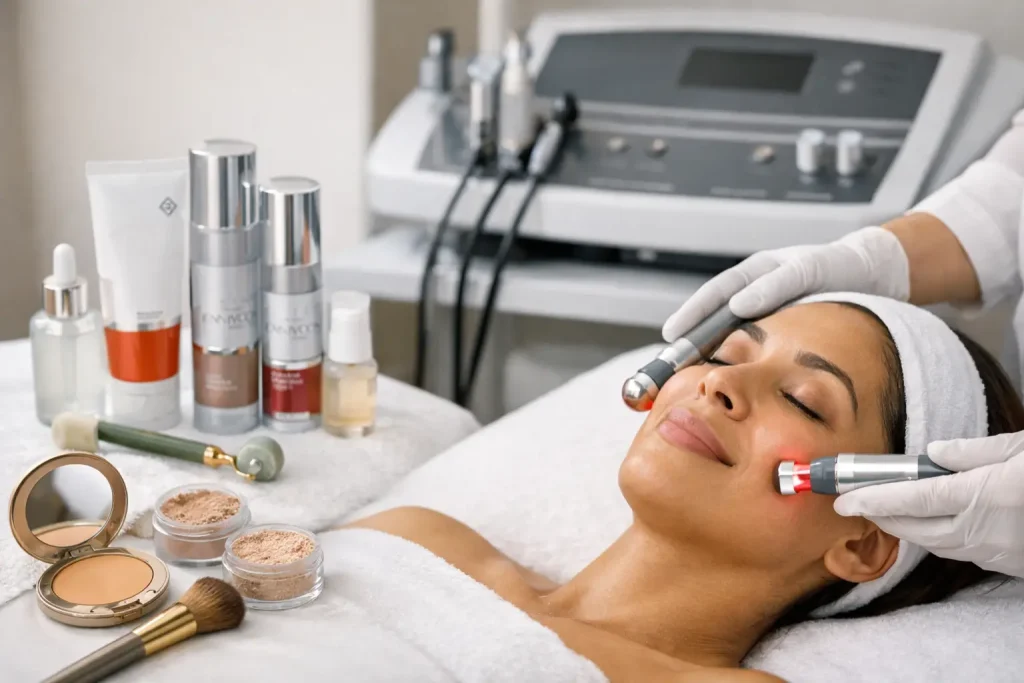
Depending on your assessment, your plan may include a course of bespoke Environ facials and LED light therapy. LED can be a useful supportive treatment for skin health, especially where pigmentation is connected to previous blemishes, inflammation or compromised repair processes. Treatment choice, frequency and intensity should always reflect what your skin needs now, not simply what worked for somebody else.
The course matters. A single facial can leave the skin fresh and hydrated, but pigmentation improvement is usually measured over a series of appointments and consistent months of homecare. We review the skin as it changes and adjust the programme where needed. Sometimes this means progressing your active skincare; sometimes it means holding steady and prioritising barrier recovery.
Protecting your progress every day
Daylight exposure is one of the biggest factors in persistent pigmentation. Even when the sky is overcast, ultraviolet exposure and visible light can contribute to the appearance of uneven tone in susceptible skin. Daily broad-spectrum sun protection is therefore non-negotiable in a pigmentation plan, alongside hats and shade where practical.
This does not mean you need to avoid enjoying life outdoors. It means treating protection as part of your skin prescription, rather than an optional final step. Reapply when needed, particularly during long periods outside, holidays and outdoor exercise.
Heat can also be a consideration for some forms of pigmentation. If you notice that patches become more pronounced after hot holidays, intense workouts or saunas, mention it during your review. The right advice depends on the pattern of your pigmentation and your wider skin history.
Realistic timelines and signs of progress
Most clients first notice improvements in overall skin quality before dark marks visibly fade. The complexion may look more hydrated, smoother and brighter. As the programme continues, the contrast between pigmented areas and surrounding skin can begin to soften.
For many people, meaningful visible change takes several months. Deep, long-standing or hormonally influenced pigmentation may need longer-term maintenance. This is not a failure of the programme. It reflects the biology of pigment production and the fact that the skin is constantly responding to internal and external triggers.
Progress is best tracked through regular photographs taken in similar lighting, as well as professional review. Looking closely in a different mirror every day can make improvement difficult to recognise and can tempt you to overcorrect. We prefer to assess the direction of travel: fewer new marks, a more even overall tone, softer edges and stronger, calmer skin.
Common mistakes that slow improvement
Pigmentation programmes can lose momentum when clients use too many new products at once, stop their routine as soon as the skin looks better, or treat irritation as proof that a product is working. Healthy skin does not need to be constantly challenged to improve.
Another common issue is focusing only on the visible patch while ignoring active acne, dryness or sensitivity elsewhere. Inflammation can trigger further discolouration, so treating the whole skin condition is essential. If breakouts are part of your picture, your pigmentation plan should work alongside a targeted acne strategy rather than compete with it.
Finally, avoid comparing your timeline with someone else’s. Skin tone, pigment depth, lifestyle, hormonal influences and past sun exposure all affect the rate of improvement. Your plan should be judged by your skin’s response, not a before-and-after image from another person.
A programme built for lasting skin health
The most successful pigmentation plans are not based on harsh correction. They are built around intelligent consistency: professional assessment, progressive Environ skincare, carefully selected clinic treatments and daily protection that preserves the gains you make.
If uneven tone, post-acne marks or photodamage are affecting how you feel about your skin, a consultation gives you a clear place to start. With the right pace and a prescription designed around your skin, clearer-looking, more resilient skin becomes a realistic long-term goal – one step, one review and one consistent routine at a time.