
Share This Post
Years of incidental sun exposure can show up long after the holiday tan has faded. Uneven pigmentation, persistent dullness, fine lines and a rougher texture are common signs of photodamage. This sun damage repair treatment example shows what a realistic, skin-health-led plan can look like – not a quick cosmetic cover-up, but a progressive programme designed around how your skin is functioning now.
Why sun damage needs a personalised plan
Photodamage is not one concern. One person may mainly see brown patches across the cheeks and forehead, while another notices laxity, dehydration, deeper lines or a complexion that no longer reflects light evenly. These changes can also sit alongside adult acne, congestion or sensitivity, which is why treating pigment alone is rarely the right first move.
A clinical approach begins by looking beneath the surface appearance. Your therapist considers your skin barrier, oil flow, hydration, inflammation, current products, lifestyle, medical history and the way your skin responds to active ingredients. This analysis determines both what to treat and how quickly to progress.
The goal is to support healthier skin behaviour: stronger barrier function, more even cell turnover, improved hydration and better-quality collagen support. Visible brightness and smoother texture follow when the skin is given the right conditions to repair and defend itself.
A sun damage repair treatment example, step by step
Consider a client in their late forties who has spent years outdoors, has visible pigmentation on the upper cheeks, fine lines around the eyes and mouth, and skin that feels dry yet occasionally congested. They want firmer, clearer-looking skin but are concerned about triggering irritation.
Step 1: Consultation and skin analysis
The first appointment is not simply a facial. It is a consultation that establishes the client’s baseline. The therapist assesses visible pigmentation, texture, dehydration, signs of sensitivity and any breakouts or blocked pores that could complicate a more active programme.
The client is also asked about sun exposure, hormonal changes, medication, previous treatments and their current routine. Pigmentation can be influenced by more than UV exposure, so this context matters. A structured plan is then set out with realistic timings, the recommended treatment frequency and homecare priorities.
For this client, the immediate priority is not to overload the skin. It is to build tolerance, strengthen hydration and introduce corrective ingredients in a controlled way. Starting too aggressively may leave already-stressed skin inflamed, which can make uneven tone appear more pronounced.
Step 2: Prescriptive homecare to prepare the skin
Professional treatments work best when the skin is supported every day between appointments. A prescription may include carefully introduced vitamin A, antioxidants and ingredients selected to improve hydration and resilience. Vitamin A is particularly valuable in photodamage programmes because it supports more normalised skin renewal and can improve the appearance of fine lines, rough texture and uneven tone over time.
The pace matters. Some clients can progress through higher-strength active skincare steadily, while others need a slower introduction because their barrier is compromised or they are prone to sensitivity. More product is not automatically better. Consistency, correct application and appropriate strength are what create meaningful change.
Daily broad-spectrum sun protection is also non-negotiable. It protects the progress you are working hard to make and reduces the ongoing exposure that drives further visible damage. Without that protection, even an excellent treatment programme is working against a continuing trigger.
Step 3: Progressive in-clinic skin treatments
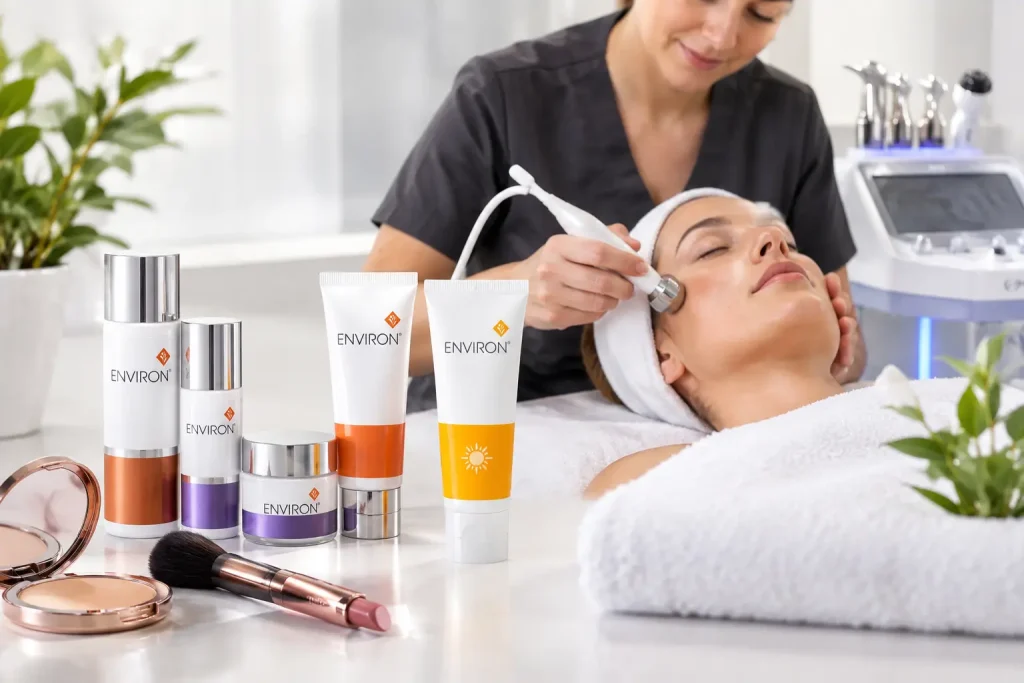
Once the skin is responding well to homecare, professional treatments can be introduced as part of the programme. At GRB Skin Clinic, this may include bespoke Environ facial protocols selected for the client’s current skin condition, with high-potency active ingredients used progressively and professionally.
A course is often more appropriate than a single appointment. The skin does not rebuild its visible quality in one week, particularly when sun damage has accumulated over years. Repeated, well-timed treatments allow your therapist to assess response, adjust intensity and continue moving the skin forward without unnecessarily compromising comfort.
For our example client, appointments may initially focus on hydration, barrier support and vitamin A delivery. As the complexion becomes more settled and resilient, the protocol can be progressed towards concerns such as texture, lines and uneven-looking tone. If congestion is present, the treatment plan must also account for this, rather than treating ageing concerns in isolation.
Step 4: Review, refine and maintain
At review appointments, progress is assessed against the original concern. The client may notice that their skin feels softer and more hydrated before they see a major change in pigmentation. That is still progress. Skin quality often improves in stages: comfort and hydration first, then texture and radiance, followed by more gradual visible changes in clarity and firmness.
The plan may be adjusted according to season, sun exposure, tolerance and lifestyle. A client preparing for an outdoor holiday, for example, may need a more conservative active schedule than someone whose exposure is minimal. The most effective programme is one that can be followed consistently, not one that sounds impressive on paper but is difficult for the skin or client to sustain.
What results can you reasonably expect?
With consistent professional care and correctly prescribed homecare, clients can expect skin that looks more hydrated, smoother and brighter, with a more even overall appearance. Fine lines may look softened as hydration and skin quality improve. Pigmentation may become less noticeable, although complete removal is not a realistic promise and depends on its type, depth and contributing factors.
The timeline varies. Some changes in glow and comfort can be noticed within weeks, while visible improvements in texture, firmness and uneven tone usually need a number of skin cycles. A treatment course and ongoing homecare create the best conditions for measurable progress.
There are trade-offs. Stronger actives may need a slower build-up, especially for reactive skin. A faster approach is not always a better one. Your therapist’s role is to keep the programme effective while respecting the biology of your skin.
When sun damage is not the only issue
It is common for photodamage to overlap with acne, redness, dehydration or hormonal pigmentation. In these cases, a generic anti-ageing routine can be frustrating and sometimes counterproductive. The skin needs a plan that addresses the active concern while steadily improving its long-term quality.
This is why a consultation-first approach is so valuable. Rather than guessing which product or treatment will solve the problem, you receive a prescribed programme based on what your skin needs now and where it needs to go next. Ingredient education is part of that process, so you understand the purpose of each stage rather than simply collecting products.
Start with the skin you have today
Sun damage is cumulative, but improvement is still possible at every stage. The right plan does not chase perfection or rely on a one-off appointment. It creates a clear direction: assess the skin properly, build its resilience, use active ingredients intelligently and progress treatments at the pace your skin can genuinely benefit from.
If uneven tone, dullness or premature ageing is affecting your confidence, book a professional skin consultation. A tailored programme gives you a practical route towards clearer, stronger and more youthful-looking skin – with expert guidance at every step.