
Share This Post
You can usually tell within five minutes whether a “facial” is just a nice hour off, or the start of a genuine skin transformation. One feels pampering but forgettable. The other begins with questions, close-up analysis, and a clear plan for what happens next week, next month, and what you will do at home in between.
That is the difference with therapist led skincare treatments: they are designed to shift skin behaviour, not just improve how your face looks for the rest of the day. If you are dealing with acne, congestion that keeps returning, pigmentation, or early signs of photoageing, that distinction matters. Results are built, not wished for.
What “therapist led skincare treatments” really means
Therapist led skincare treatments are structured, clinician-style services delivered by a trained skin therapist who assesses your skin, selects appropriate actives and devices, and prescribes homecare so the in-clinic work continues between appointments.
The emphasis is on consistency and progressive change. Instead of choosing a facial from a menu based on how you feel that week, the therapist chooses modalities based on what your skin needs biologically: barrier repair, controlled exfoliation, inflammation management, pigment regulation, collagen stimulation, or a combination.
This approach also includes expectation-setting. You are told what is realistic, how long it typically takes, and what could slow progress. If you have ever tried to fix persistent breakouts with random products and “the occasional facial”, you will know why this matters.
Why the consultation is not an add-on
If you are serious about long-term improvement, consultation-first is not a sales tactic. It is basic clinical logic.
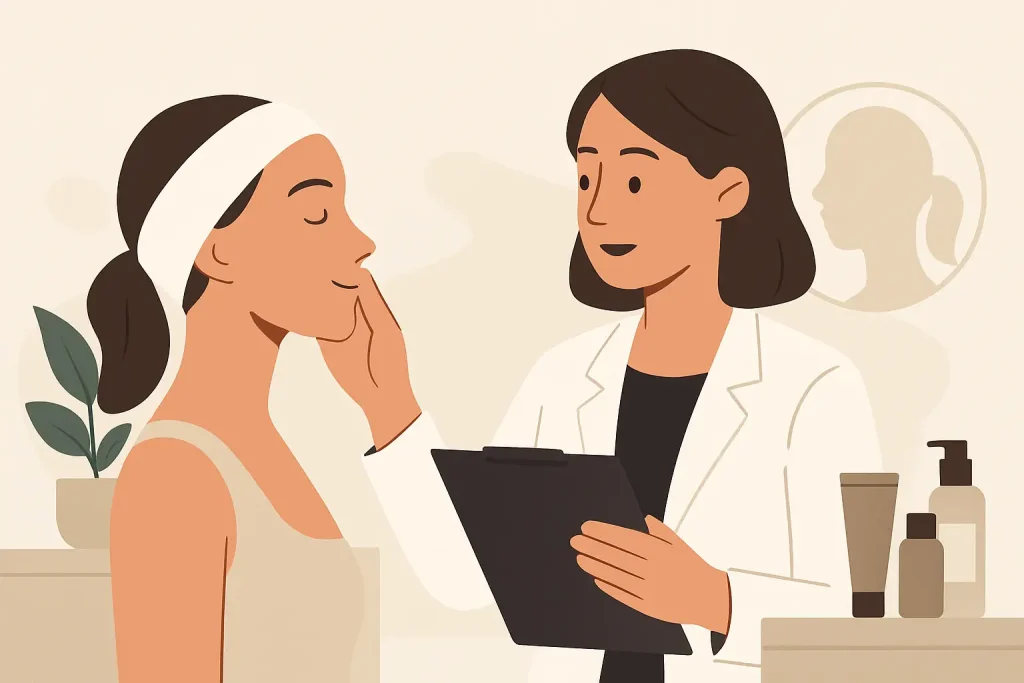
A proper consultation looks at your history (breakouts, sensitivity, sun exposure, medication, hormonal shifts), your current routine, and your lifestyle pressures. It also involves a careful assessment of what is happening on the skin surface and underneath: dehydration, oil flow, barrier disruption, comedones, inflammation, visible vessels, uneven tone.
From there, the plan becomes specific. For example, “pigmentation” can be post-inflammatory marks from acne, sun-induced lentigines, melasma, or a blend. Each behaves differently and responds differently. The right plan avoids the common trap of over-exfoliating and irritating already reactive skin, which can make pigment and redness worse.
The real value: matching ingredients, devices, and timing
Most people can buy “good” skincare. Far fewer people can time it correctly, layer it correctly, and choose actives that match their barrier strength and inflammation level.
Therapist-led care brings three advantages.
First, ingredient precision. High-potency actives are powerful when used with intent, and problematic when used as a scattergun. Retinoids, vitamin C, chemical exfoliants, pigment inhibitors, and barrier lipids can be life-changing, but only when they match your tolerance and are introduced in a sensible sequence.
Second, device-led progression. Certain concerns respond best when you add controlled energy-based support. LED light therapy can calm inflammation and support healing, while other modalities focus on texture refinement or hair reduction. The point is not to do everything at once. It is to pick what moves the needle for your skin, then build.
Third, timing and recovery. Skin improvement is a cycle of stimulation, repair, and consolidation. If you push too hard, too often, you get sensitivity, peeling, redness, and setbacks. A therapist-led plan respects skin physiology and keeps you progressing without constantly “starting again”.
Who benefits most (and who needs extra caution)
Therapist led skincare treatments are most valuable when the skin problem is persistent, multi-factorial, or emotionally draining.
Acne and chronic congestion are obvious candidates, especially when there is a pattern of picking, scarring, or repeated flare-ups that never fully settle. Pigmentation and photodamage also respond well to structured plans because they require consistency, sun discipline, and the right combination of brightening actives and barrier support.
Ageing concerns can be supported too, particularly when the goal is resilient, luminous skin rather than an over-processed look. Think improved texture, hydration, firmness, and a more even tone.
There are also “it depends” situations. If you have rosacea-prone skin, eczema, or a history of reactions, therapist-led care can be ideal, but only if the plan is conservative and barrier-first. If you are pregnant or breastfeeding, some actives and devices may be limited, so your programme needs adjusting. If you are on certain prescriptions (for example, treatments that increase sensitivity), your therapist must know, and your protocol must be tailored accordingly.
What a results-driven programme often includes
A therapist-led programme typically blends three pillars: professional treatments, prescribed homecare, and review points where the plan is refined.
In clinic, bespoke facials can be built around deep cleansing, controlled exfoliation, calming and hydrating support, and targeted active infusion. The intention is not a one-off “deep clean”, but a progressive reduction in congestion and inflammation, with improved barrier function so your skin can tolerate effective actives.
LED light therapy is often used as a supportive treatment because it is non-invasive and can be repeated. It can be especially useful when breakouts are inflamed, when skin is healing post-treatment, or when you need a gentle boost without triggering sensitivity.
For hair reduction, laser hair removal is a different category of outcome, but it fits the same clinical mindset: patch testing when appropriate, careful parameter selection, hygiene and aftercare, and a realistic course length. Hair growth cycles dictate session spacing, and therapist-led practice is about respecting that biology rather than overpromising speed.
Why homecare is non-negotiable
If you only treat your skin once a month, you are effectively asking 60 minutes to correct the other 43,000 minutes.
Homecare is where you protect results and train the skin. It is also where most people accidentally sabotage themselves: over-cleansing, harsh scrubs, random acids, skipping SPF, or mixing too many actives because a social media routine said it was “glowy”.
A therapist-led prescription simplifies the noise. You get a routine designed around your skin’s priorities, usually focusing on consistent cleansing, barrier support, targeted actives, and daily SPF. When professional ecosystems are used properly, you also get continuity between what happens in the treatment room and what happens on your bathroom shelf.
If you want to explore a clinic that takes this structured, regenerative approach, GRB Skin Clinic is built around consultations, progressive protocols, and prescriptive homecare designed to support measurable change.
What to expect: timelines, trade-offs, and real-world results
The most empowering thing a therapist can give you is not a miracle claim, but a realistic timeline.
Acne often improves in stages: fewer inflamed breakouts first, then reduced congestion, then refinement of post-inflammatory marks and texture. Pigmentation typically takes patience because pigment is stubborn and sun exposure can undo progress quickly. Photoageing improvements build gradually through consistent actives, barrier support, and collagen-stimulating strategies.
There are trade-offs. If you want rapid exfoliation and instant smoothness, you may risk irritation, especially if your barrier is already compromised. If you want the calmest, gentlest approach, change may be slower but steadier. Some people need a period of “reset” where the goal is not aggressive correction but rebuilding tolerance so the more powerful work can be introduced safely.
You should also expect plan adjustments. Skin changes with seasons, stress, hormones, travel, and workload. Therapist-led care is not rigid – it is responsive, but always anchored to your long-term goal.
How to choose the right therapist-led clinic
You do not need fancy language. You need signs of seriousness.
Look for structured consultations, clear hygiene standards, and a willingness to educate you about what is being used and why. A good clinic will talk in courses and milestones, not single-session fixes. They will ask about your routine and then refine it, rather than just selling you products.
Be wary of places that promise zero downtime and immediate perfection for every concern. Skin biology does not work like that. Also be cautious if you feel pushed into multiple strong actives at once with no plan for tolerance-building or barrier support.
The best indicator is how you feel after your first proper appointment: informed, not confused; motivated, not overwhelmed; and clear on what happens next.
The mindset shift that changes everything
When you commit to therapist led skincare treatments, you stop chasing random solutions and start following a process. Your skin becomes something you understand and steer, not something you constantly battle.
If you are ready for that kind of relationship with your skin, choose a practitioner who will lead with analysis, build your routine with intention, and keep you accountable to the small daily actions that create big change over time. The most satisfying moment is not the day your skin looks nice after a treatment – it is the day you realise it stays calmer, clearer, and more resilient because you finally gave it a plan it can follow.