
Share This Post
A facial can be a welcome hour of relaxation. But if you are living with persistent acne, congestion, pigmentation, premature ageing or sensitivity, you need more than a pleasant treatment on the day. The question of clinic skincare versus beauty salon care is really about the outcome you want: a temporary refresh, or a structured route towards healthier, stronger-looking skin.
Both settings can have a place in self-care. The difference lies in the depth of assessment, the level of treatment planning and the support you receive between appointments. When skin is unpredictable, treating it as an individual biological system rather than a surface to polish can change the entire experience.
Clinic skincare versus beauty salon: the central difference
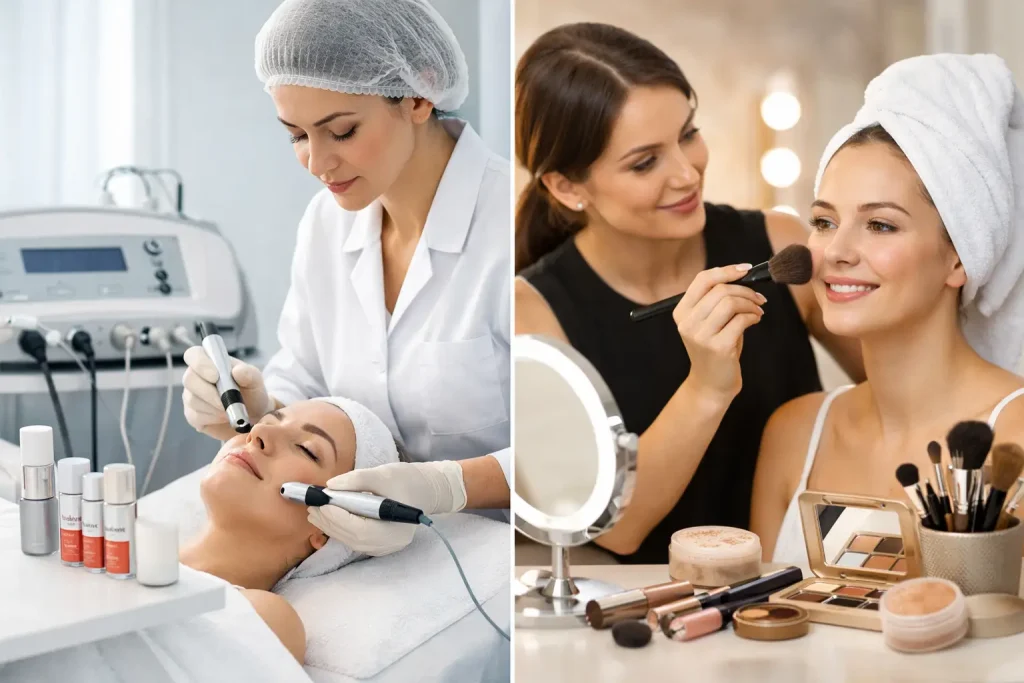
A beauty salon will often focus on maintenance, grooming and immediate cosmetic results. Treatments may be selected from a menu and tailored to provide comfort, radiance or relaxation. There is real value in that, particularly when your skin is settled and your aim is simply to maintain its appearance.
A skin clinic starts from a different point. Rather than asking only which facial you would enjoy, a therapist-led clinic asks what is happening within your skin, what may be contributing to the concern and what progress should realistically look like over the coming weeks and months. The appointment is part of a treatment pathway, not an isolated event.
This distinction matters most when a concern has a pattern. Breakouts that repeatedly return, post-acne marks, uneven tone, dehydration alongside oiliness, or lines caused by long-term photodamage are rarely resolved by changing treatments every month. They require consistency, careful product selection and a progressive approach that respects the skin barrier.
Clinical skincare is not about making skin feel challenged for the sake of it. It is about using professional knowledge, high-performance ingredients and appropriate treatment technologies with a clear reason behind every recommendation. Your programme should have a pace that your skin can tolerate and goals that can be measured.
The consultation changes the quality of care
The strongest clinical programmes begin before the treatment bed. A detailed consultation gives your practitioner the opportunity to assess your skin, discuss your health history, review your current routine and understand how your concern affects daily life. Acne, for example, can affect confidence, social plans and professional life just as much as appearance. That deserves a considered response.
A good skin analysis also prevents generic advice. Two people with visible congestion may need entirely different plans. One may have a sensitised, dehydrated skin barrier; another may need support with excess oil, persistent inflammation or inconsistent product use. Treating both in exactly the same way is unlikely to create reliable progress.
At a clinic, consultation findings guide the treatment frequency, product prescription and review points. You should understand why a product has been chosen, how to introduce it and what changes may be expected. Education is not an extra. It is what allows you to follow the plan confidently at home, where much of your progress is maintained.
A programme is more useful than a one-off promise
Skin renews gradually. Visible improvements in clarity, texture and resilience need time, particularly where acne, scarring, pigmentation or signs of ageing have developed over years. A professional should be honest about this from the outset.
That does not mean you will see no early benefit. Many clients notice that their skin feels more comfortable, balanced or refined before larger changes become visible. Yet meaningful results usually come from the combined effect of regular treatments, prescribed homecare and review appointments. A clinic programme makes this process visible and manageable.
A salon treatment can be ideal before an occasion or as part of a relaxing routine. It is less suited to concerns that need ongoing tracking, carefully increased active ingredients or a response plan when your skin changes. Neither option is automatically better in every circumstance. The right choice depends on whether your priority is maintenance or correction.
Treatments are selected for skin function, not just a finish
Clinical facials are designed around the condition of your skin on that day and the wider objective of your plan. This may include professional exfoliation, targeted hydration, extraction where appropriate, and high-potency vitamin-based skincare selected to support healthier skin function. The purpose is not to leave every client looking exactly the same. It is to move your skin in the right direction safely.
Device-led treatments can also be integrated where they are suitable. LED light therapy, for instance, may support a structured programme for concerns such as active breakouts, inflammation and recovery. It should not be presented as a miracle appointment. Its value lies in correct use, appropriate frequency and its place alongside the rest of your regimen.
The same principle applies to anti-ageing care. A clinic should look beyond a short-lived glow and consider texture, hydration, visible lines, loss of vitality and the cumulative effects of sun exposure. Progressive treatment and professional homecare can help the skin look more resilient and refreshed, without chasing aggressive procedures that do not match its current condition.
For those seeking laser hair removal, clinical standards are equally significant. A thorough consultation, patch testing where required, hygiene protocols and clear guidance on session timing are central to safety and effective planning. Hair growth works in cycles, so expectations need to be based on a course of treatment rather than one appointment.
Product prescription is where clinic care continues
A treatment room can begin the process, but your routine between visits determines how consistently your skin is supported. This is why a clinic usually recommends products as a connected regimen rather than as standalone purchases.
Professional skincare contains active ingredients that need to be selected thoughtfully. The best routine is not necessarily the longest one or the most intensive. It is the one you can follow consistently and that works with your skin’s present needs. Your practitioner should explain application order, frequency and how to adapt the routine if you experience dryness, sensitivity or a temporary change in your skin.
For acne-prone skin, this can mean moving away from the cycle of trying a different product whenever a breakout appears. For ageing and photodamage concerns, it can mean steadily building a regimen that supports collagen health, hydration and more even-looking tone. The goal is not dependence on endless treatments. It is giving you the knowledge and tools to care for your skin with purpose.
Expertise, hygiene and accountability matter
The words “clinical” and “professional” should mean more than a smart-looking treatment room. They should be reflected in therapist training, sanitation standards, consultation processes, product knowledge and the willingness to say when a treatment is not suitable.
A skin specialist monitors more than immediate reactions. They look for progress across appointments, adjust when necessary and avoid pushing the skin faster than it can respond. This accountability is particularly reassuring for clients who have spent years feeling confused by conflicting skincare advice or disappointed by short-term fixes.
Experience also helps a practitioner distinguish between what can be improved in-clinic and what needs further medical input. Responsible care includes recognising those boundaries. A trustworthy clinic will not overpromise, and it will not treat every concern as though it has the same cause or timeline.
When a beauty salon is the right choice
A beauty salon can be an excellent choice for routine waxing, nails, a relaxing massage, occasional grooming or a maintenance facial when your skin is calm and you are not looking to address a persistent concern. The ritual of taking time for yourself has value, and not every appointment needs to be corrective.
Choose a clinic when you want a diagnosis-led plan for acne, recurring congestion, visible ageing, scarring, uneven tone or complex sensitivity. It is also the stronger option if you want professional-grade products selected for your skin and a therapist who can review your results over time.
In South Manchester, GRB Skin Clinic works with this consultation-first model, combining therapist-led treatment plans with ingredient education and homecare prescription. The aim is to replace guesswork with a clear, progressive route towards the skin you want.
Your skin does not need a new trend every few weeks. It needs informed attention, consistency and a plan that can evolve with you. If you are ready for long-term improvement rather than a temporary finish, book a consultation and begin with a proper understanding of what your skin is asking for.