
Share This Post
If your pigmentation keeps returning no matter how many products you have tried, the issue is rarely a lack of effort. Stubborn hyperpigmentation usually means the trigger is still active, the skin barrier is unsettled, or the treatment plan is not strong enough for the depth and type of pigment involved. The best treatments for stubborn hyperpigmentation are rarely a single cream or one-off facial. In clinic, we see the best results when treatment is structured, progressive and matched to the biology of the skin.
Hyperpigmentation is not one condition. It is a visible result of excess melanin production, but the cause can vary significantly. Sun damage, post-inflammatory marks after acne, hormonal pigmentation, friction, heat and even over-treatment can all leave the skin looking uneven. That is why two clients with apparently similar brown patches may need very different plans.
Why stubborn pigmentation needs a different approach
The reason some pigmentation clears quickly while other cases linger for months or years comes down to depth, trigger and skin behaviour. Surface-level pigment often responds well to a disciplined home routine and light professional intervention. Deeper or hormonally driven pigmentation is more complex. It can darken easily, relapse after improvement and become worse if treated too aggressively.
This is where many people get stuck. They either under-treat the skin and see no change, or they throw too many acids, brightening products and harsh procedures at the problem. A compromised skin barrier can increase inflammation, and inflammation is one of the key drivers behind excess pigment. Clinical progress depends on choosing treatments that calm, regulate and gradually remodel the skin rather than forcing it into a cycle of irritation.
Best treatments for stubborn hyperpigmentation in clinic
For persistent pigmentation, clinic treatment gives you something over-the-counter routines cannot – accurate assessment, controlled treatment strength and a plan that can be adjusted as the skin responds.
Professional skin consultation and analysis
A proper consultation is not a formality. It is the foundation of successful pigment correction. Before choosing a treatment, your therapist needs to establish whether the pigmentation is post-inflammatory, sun-induced, hormonal or mixed. They also need to assess skin health, sensitivity, previous treatment history and any habits that may be keeping the pigment active.
This stage matters because pigmentation management is not just about fading visible marks. It is about identifying what is feeding them.
Ingredient-led facial programmes
For many clients, the safest and most effective starting point is a course of professional facials built around active ingredients that encourage healthier cell turnover while supporting barrier function. This is especially useful when the skin is dehydrated, reactive or recovering from acne.
A well-designed facial programme can help reduce uneven tone gradually without provoking rebound pigmentation. This is often the smarter route for skin that is not ready for stronger resurfacing. Progressive treatment tends to outperform aggressive treatment when long-term control is the goal.
Chemical peels
Chemical peels can be highly effective for stubborn hyperpigmentation, but only when they are chosen with precision. Not every peel suits every skin type, and stronger does not automatically mean better. The right peel can help shed pigmented surface cells, improve skin clarity and support a more even tone over a course of treatments.
That said, peels are not a quick fix for every form of pigmentation. Melasma, for example, can be unpredictable and may worsen with excess heat or inflammation. In these cases, a therapist-led peel plan needs to be cautious, timed properly and supported with strict homecare.
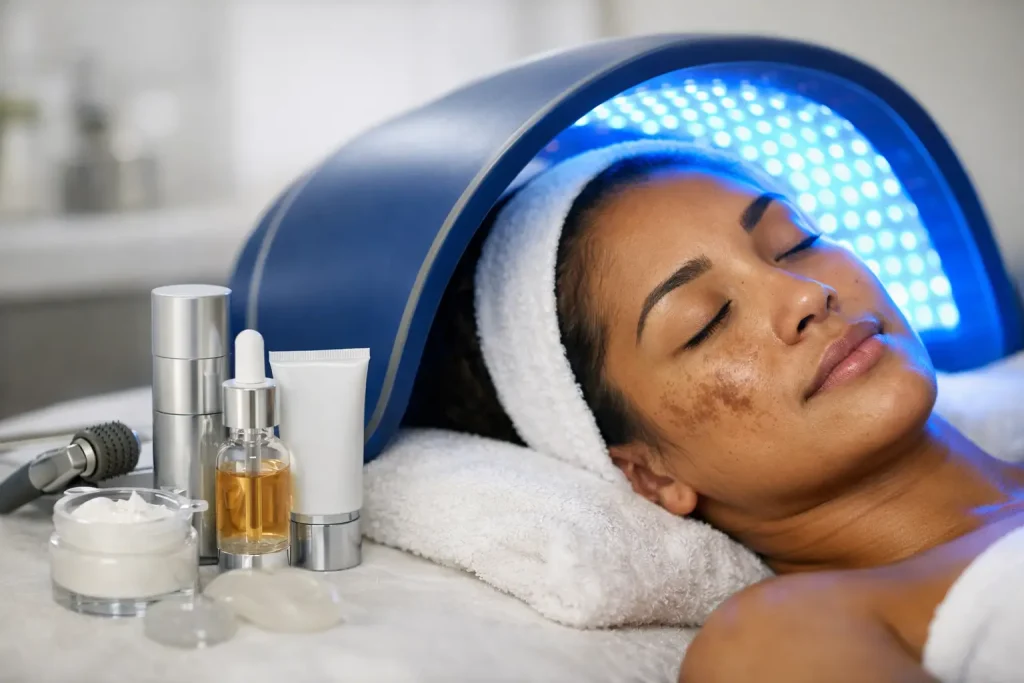
LED light therapy
LED light therapy is often overlooked because it sounds gentle, but that can be exactly why it is so valuable. When pigmentation is linked to inflammation, acne activity or a stressed skin barrier, LED can support recovery and reduce the inflammatory cascade that contributes to lingering marks.
On its own, LED is unlikely to erase established pigmentation. As part of a broader plan, however, it can improve skin resilience and help the skin tolerate active treatment more effectively.
The homecare that actually changes outcomes
If clinic treatment is the engine, homecare is the steering. Clients who improve fastest are usually the ones following a prescribed routine consistently, not the ones constantly switching products.
Vitamin A and pigment regulation
Vitamin A is one of the most valuable ingredients in professional pigment plans because it helps normalise skin behaviour. It supports healthier cell turnover, improves the appearance of photodamage and can make skin function more efficiently over time. This matters because pigmentation-prone skin often needs more than exfoliation – it needs correction at a cellular level.
The key is introducing it properly. Too much too soon can trigger irritation, and irritated skin is not calm skin.
Targeted brightening ingredients
The best at-home plans for stubborn hyperpigmentation often include a combination of brightening and anti-inflammatory ingredients rather than one hero product. Depending on the client, this may involve ingredients that interrupt melanin production, reduce oxidative stress and help fade the visible mark without stripping the skin.
Results tend to come from layering the right actives in the right order, with the right strength, over time. This is why prescription-style guidance matters.
Daily UV protection
No pigmentation plan works if the skin is unprotected in daylight. Even when the sun feels weak, UV exposure can keep melanocytes active and undo progress quietly. This is one of the main reasons pigment returns.
For clients with persistent discolouration, daily broad-spectrum sun protection is not optional. It is part of the treatment.
What works best for different types of pigmentation
Not all dark marks respond in the same way, and managing expectations early prevents frustration later.
Post-inflammatory hyperpigmentation after acne often responds well to a combined plan of inflammation control, resurfacing and pigment-regulating homecare. If breakouts are still active, that must be addressed first. Otherwise new marks will keep replacing old ones.
Sun-induced pigmentation usually benefits from a longer corrective programme focused on skin renewal, antioxidant support and consistent UV management. These cases can improve very well, but relapse is common if protection drops once the skin looks clearer.
Hormonal pigmentation is usually the most stubborn. It often needs a slower, more conservative approach because heat and inflammation can aggravate it. The aim is not just to fade the visible pigment but to keep the skin as stable as possible while reducing the chance of recurrence.
Why patience beats intensity
One of the hardest truths about pigmentation treatment is that dramatic action does not always produce dramatic improvement. In fact, with stubborn hyperpigmentation, the opposite is often true. Skin that is pushed too hard can become inflamed, reactive and darker.
A progressive treatment plan allows the skin to improve without losing stability. That may mean a course of facials before stronger resurfacing, or rebuilding the barrier before introducing more active homecare. It can feel slower at the start, but it is often the route that gives more reliable change.
At GRB Skin Clinic, this is exactly why consultation-led treatment matters. Pigmentation is managed best when your therapist can adjust the plan as your skin changes, rather than relying on a fixed menu approach.
Best treatments for stubborn hyperpigmentation – what to expect
Most clients want to know how long it will take. The honest answer is that it depends on the type of pigmentation, how long it has been present, how reactive the skin is and how consistent you are with homecare. Some post-acne marks can improve visibly within a matter of weeks. Deeper or hormonally influenced pigmentation may need several months of disciplined treatment.
It is also normal for progress to come in stages. The skin may look brighter first, then more even, then clearer in patches. This is still progress. Pigmentation rarely lifts in one perfect, uniform way.
The most effective treatment plans are realistic, not rushed. They respect skin biology, combine clinic procedures with professional homecare and leave room to adapt if the skin becomes dry, reactive or plateaued.
If your pigmentation has become resistant to random products and quick-fix promises, that is not a sign that your skin cannot improve. It is usually a sign that it needs a more intelligent plan. When the right diagnosis, professional treatment and home prescription work together, stubborn pigmentation can shift – safely, steadily and with far better odds of staying gone.