
Share This Post
Blackheads can make skin feel persistently congested, even when it is otherwise calm and clear. So, can facials reduce blackheads? Yes – a professionally planned facial can safely clear existing blockages and support a clearer pore environment. But lasting improvement depends on more than one appointment. It requires accurate skin analysis, careful extraction where appropriate, and a home routine prescribed for your skin.
A blackhead is not dirt trapped in the skin. It is an open comedone: a plug of oil, dead skin cells and keratin sitting within the follicle. When the material at the surface is exposed to air, it oxidises and darkens. This is why scrubbing harder or trying to strip the skin often leaves congestion unchanged – or makes it more reactive.
Can facials reduce blackheads?
A clinical facial can reduce visible blackheads by softening compacted material within the pore and removing suitable congestion using hygienic, controlled techniques. The immediate result may be smoother skin, a more refined-looking complexion and less obvious congestion around the nose, chin, forehead or jawline.
The value of a facial is not simply extraction. A therapist should assess whether the bumps are truly blackheads, closed comedones, inflamed acne lesions or sebaceous filaments. These concerns can look similar, but they need different management. Attempting to extract an inflamed spot, for example, can increase irritation and raise the risk of prolonged marks.
A treatment should also address why the pores are blocking. For some clients, the main driver is excess oil production. For others, it is slow skin-cell shedding, dehydration, an unsuitable product texture, hormonal fluctuation or a combination of factors. This is where a consultation-led approach makes a meaningful difference. Rather than treating every congested complexion in the same way, the plan can be progressed according to how the skin responds.
What happens during a blackhead-focused facial?
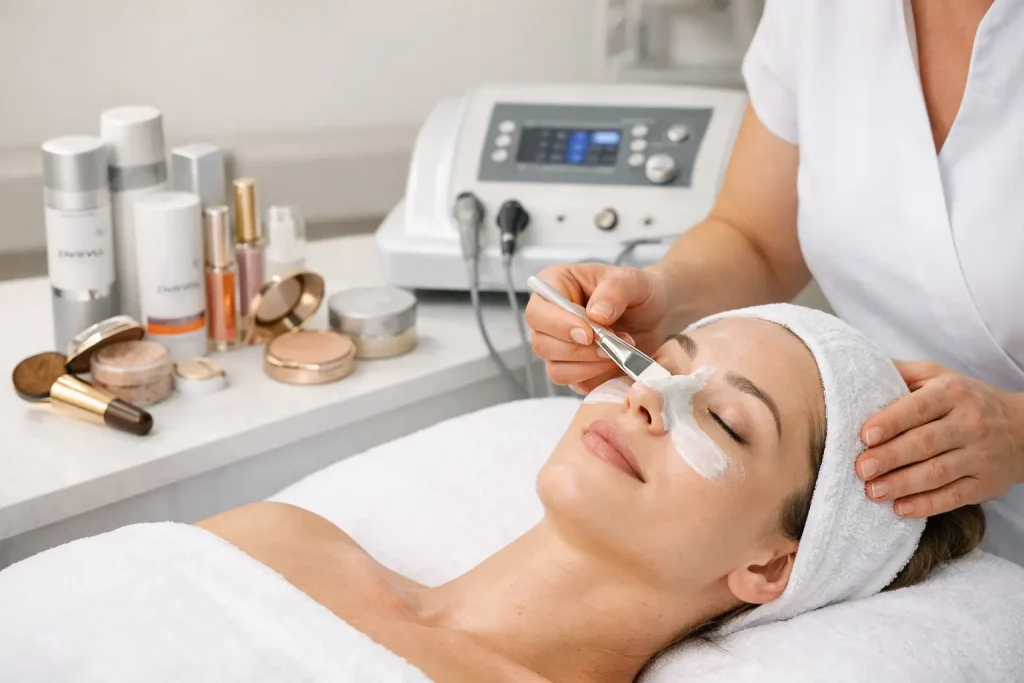
A results-driven facial begins with skin assessment, not assumptions. Your therapist will look at the distribution of congestion, the level of sensitivity, active breakouts, dehydration, redness and signs of barrier disruption. They should also ask about your current products, medication, lifestyle factors and any recent treatments that could affect skin tolerance.
The skin is then cleansed thoroughly and prepared with professional products selected for its condition. Depending on your needs, this may involve controlled exfoliation to help loosen the build-up that contributes to comedones. The purpose is to support skin renewal without causing unnecessary inflammation.
Extraction, when indicated, is performed with clean hands, sterile materials and a measured technique. Not every blocked pore should be extracted in the same session. A skilled therapist knows when a lesion is ready to release and when pressure would be counterproductive. This is particularly relevant for clients prone to post-inflammatory pigmentation, scarring or sensitivity.
The treatment is finished with calming, hydrating and corrective products to support the skin barrier. At GRB Skin Clinic, bespoke facials are planned around the skin’s current requirements rather than a fixed menu of steps. That matters because congested skin is not always oily, and oily skin is not always strong enough for intensive exfoliation.
Why blackheads can return after a facial
A facial clears what is present at the time of treatment, but it does not permanently stop the biological processes that create congestion. Sebum production continues, skin cells continue to shed and follicles can begin to refill over the following weeks. This is why one facial can be an excellent reset, yet may not be a complete solution for recurring blackheads.
It is also worth distinguishing blackheads from sebaceous filaments. Sebaceous filaments are normal structures that help move oil through the pore. They are often most noticeable on the nose and may return quickly after extraction. They can be managed so they appear less prominent, but they are not something to eliminate permanently.
If blackheads repeatedly return in the same areas, it may signal that the current routine is too rich, too aggressive or simply not targeted to the mechanisms causing your congestion. Harsh cleansing, frequent abrasive exfoliation and over-drying products can leave the skin barrier compromised. In response, the skin may become irritated, dehydrated and increasingly difficult to manage.
The role of prescribed active skincare
Professional treatments work best when they are supported by a consistent, intelligently selected routine at home. A therapist may prescribe ingredients that encourage healthy cell turnover, help keep pores clearer and support the skin barrier. The exact choices, strengths and frequency should reflect your sensitivity, acne activity, pigmentation risk and previous use of active products.
High-potency vitamin A-based skincare is often introduced progressively in professional skin programmes because it can support normalisation of the skin’s behaviour over time. However, more is not automatically better. Starting too strongly or using actives too often can create redness, flaking and discomfort, which makes it harder to maintain the routine. A structured prescription allows the skin to build tolerance at an appropriate pace.
Your daily routine also needs to be realistic. The best plan is one you can follow consistently, not an overly complicated collection of products. Cleansing, targeted corrective care, moisturising support and daily sun protection each have a role in maintaining the results of treatment and protecting the skin from unnecessary stress.
When facials are most effective for blackheads
Facials are particularly helpful when congestion is mild to moderate, when the skin has a mixture of blackheads and closed bumps, or when a client needs help establishing the right treatment direction. They can also be valuable as part of a wider acne programme, where appointments are timed alongside product progression and regular review.
The right interval varies. Some people benefit from an initial course of appointments closer together, followed by maintenance treatments. Others need fewer extractions and more focus on correcting dehydration, inflammation or slow cell turnover. A therapist should give you a clear expectation of timing rather than suggesting that a single session will permanently resolve chronic congestion.
For persistent acne, painful breakouts, significant scarring or sudden changes in the skin, facials may be only one element of the plan. A thorough consultation can identify when treatment should be adapted, when extractions should be avoided and when further medical advice is appropriate.
What not to expect from a facial
A well-performed facial should not leave the skin severely sore, broken or heavily inflamed. Mild temporary redness after extraction can happen, particularly in sensitive areas, but this should settle. If the skin is repeatedly left damaged after treatments, the approach may be too aggressive.
Nor should a facial promise permanently poreless skin. Pore size is influenced by genetics, oil activity and skin structure. Treatment can reduce the appearance of congestion and help pores look cleaner and more refined, but it cannot erase their natural function.
Results also take time when blackheads occur alongside acne, hormonal changes or long-standing congestion. The aim is progressive improvement: fewer blockages, calmer skin, more even texture and a routine you understand well enough to maintain.
A clearer-skin plan starts with assessment
If blackheads are a regular concern, choose a clinic that looks beyond the surface. The most effective facial is one that is matched to your skin condition on the day, performed with disciplined hygiene and followed by a practical prescription for the weeks ahead.
For clients in Sale and across South Manchester, a professional skin consultation provides the clarity to stop guessing. Clearer pores are rarely the result of one dramatic treatment; they are built through precise care, patient progress and a plan that respects the biology of your skin.