
Share This Post
A skin tag can feel like a very small concern until it catches on a necklace, rubs under a bra strap or bleeds after shaving. That irritation can make removal feel urgent. If you are asking how to remove skin tags safely, the first step is not choosing a method – it is making sure the lesion is genuinely a skin tag and that removal is appropriate for your skin.
Skin tags are common, harmless growths, but not every raised or changing mark is one. A clinical assessment protects you from treating the wrong lesion, creating unnecessary trauma or leaving a scar in an area that is already prone to friction and pigmentation.
What a skin tag usually looks and feels like
A skin tag, medically known as an acrochordon, is a small, soft growth that often sits on a narrow stalk. They are usually flesh-coloured, although they can become darker when twisted or irritated. They tend to develop where skin rubs against skin or clothing, including the neck, underarms, eyelids, groin and beneath the breasts.
They are particularly common with age, weight changes, pregnancy, insulin resistance and repeated friction. Their appearance does not mean you have done anything wrong with your skincare routine. Skin tags are not contagious, and they are not caused by poor hygiene.
However, appearances can be misleading. Moles, warts, seborrhoeic keratoses and other lesions can resemble a skin tag at first glance. This is why a practitioner should never simply assume that every bump is suitable for cosmetic removal.
How to remove skin tags safely begins with assessment
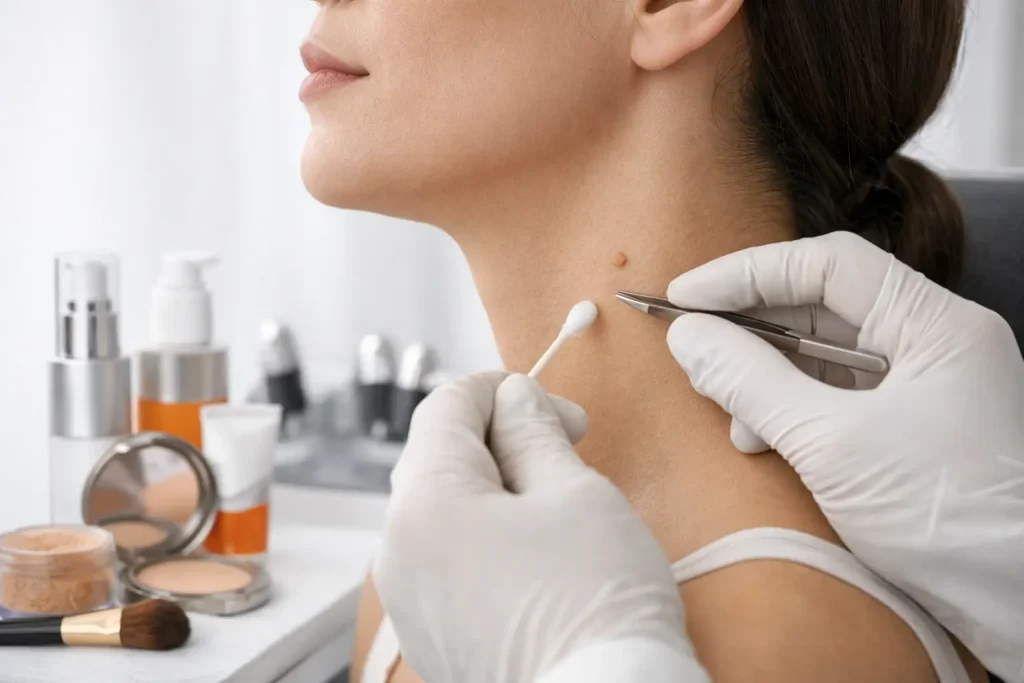
A qualified medical professional should assess a lesion before treatment, especially if it is new, changing or located in a sensitive area. They will consider its shape, colour, size, texture, location and history, as well as your skin type, healing history and any medication that may affect bleeding or recovery.
Arrange a GP or dermatology assessment promptly if a growth bleeds without being caught, grows quickly, changes colour, becomes painful, develops an irregular border or looks markedly different from your other marks. The same applies if you are uncertain whether it is a skin tag. Cosmetic removal should only follow confident identification.
For clients focused on long-term skin health, this assessment-led approach matters. A quick solution may sound appealing, but healthy skin responds best when the cause, the treatment and the recovery plan are considered together.
Why removing a skin tag yourself carries avoidable risks
Skin tags may be benign, but breaking the skin still creates a wound. Cutting, pulling, tying off or attempting to freeze a lesion without professional guidance can lead to bleeding, infection, inflammation and scarring. It can also result in post-inflammatory pigmentation, where the treated area heals darker than the surrounding skin.
The risk is higher on areas such as the neck, chest, underarms and inner thighs, where there is movement, sweat and regular rubbing. Darker skin tones and anyone with a history of raised scars may need particularly careful treatment planning, as even a small wound can leave a longer-lasting mark.
There is also the concern of incomplete removal. If only part of a lesion is traumatised, it can remain sore, crust repeatedly or look more noticeable while healing. If the original growth was not a skin tag, self-treatment can delay the right diagnosis.
Professional removal is not about making a simple issue seem complicated. It is about controlling the variables: correct identification, clean technique, suitable treatment selection and clear aftercare.
Professional options for skin-tag removal
The right procedure depends on the size and position of the skin tag, as well as your medical history and skin characteristics. A doctor or suitably qualified clinician may use one of several established methods.
Excision or snip removal
For a small skin tag on a narrow stalk, a clinician may remove it with sterile instruments. This is often a precise option and may be carried out using a local anaesthetic where appropriate. There can be a small pinpoint wound afterwards, so aftercare is important to support clean healing.
Electrocautery
Electrocautery uses controlled heat to remove or treat the base of a skin tag. It can be effective for carefully selected lesions, but technique matters. The clinician must balance complete removal with minimising heat-related injury to surrounding skin, particularly in areas susceptible to pigmentation changes.
Cryotherapy
Cryotherapy uses controlled cold to destroy targeted tissue. It is sometimes used for skin tags, although it may not be the preferred option for every lesion or every skin tone. Swelling, blistering, crusting and temporary colour change can occur, so realistic expectations and aftercare are essential.
Ligation
Some skin tags can be treated by interrupting their blood supply, causing them to dry up and detach over time. This is only suitable for certain stalked tags and should be selected by a professional. It is not a shortcut for lesions that have not been assessed.
No method is universally best. A small tag in the underarm may need a different approach from one near the eyelid, on the face or in an area with frequent friction. The safest choice is the one that fits the lesion and gives your skin the best chance of healing well.
What to expect after professional removal
Most people experience mild redness, tenderness or a small scab after removal. Depending on the method used, there may also be temporary swelling or blistering. This is part of the normal healing response, but it should be monitored rather than ignored.
Keep the area clean and avoid picking, scratching or rubbing it. Friction from jewellery, tight clothing or shaving can reopen a healing site, extending recovery and increasing the risk of a mark. Your clinician will advise when you can return to your normal routine and whether a dressing is needed.
Protecting healing skin from daylight is also important, particularly if you are prone to pigmentation. Freshly healed skin can respond to ultraviolet exposure by becoming darker, which can make a tiny treated area more visible than the original skin tag. Follow the aftercare advice given for your individual skin and the treated location.
Contact the treating clinician or seek medical advice if you develop increasing pain, spreading redness, warmth, pus, persistent bleeding, fever or a wound that does not appear to be healing. These are not symptoms to simply wait out.
Will a skin tag grow back?
A fully removed skin tag does not usually grow back in exactly the same spot. However, new skin tags can form elsewhere if you are prone to them. Friction, genetics, hormonal changes and metabolic factors can all play a role, so removal does not prevent future tags.
If skin tags are appearing suddenly in large numbers, it is sensible to discuss this with your GP. While they are often harmless, a broader health review can be worthwhile, particularly where there are other symptoms or known concerns around blood sugar regulation.
For isolated tags that catch or feel cosmetically bothersome, the goal is not to chase every imperfection. It is to choose treatment thoughtfully, avoid unnecessary skin injury and preserve the quality of the surrounding skin.
When a clinic consultation can help
A skin-health consultation can be useful when repeated friction, sensitivity, pigmentation concerns or previous scarring influence your treatment choices. At GRB Skin Clinic, skin is approached as living tissue with its own healing pattern, not as a surface to be hurried into a quick fix.
Where a lesion requires medical diagnosis or removal, you should be directed to the appropriate medical professional. Once your skin is healed, a tailored plan can help support barrier function, manage uneven tone and maintain the surrounding skin with professional guidance.
The safest next step is simple: do not treat an uncertain growth at home. Have it properly assessed, choose an appropriate professional method if removal is indicated, and give your skin the time and care it needs to heal cleanly.