
Share This Post
You wake up to a deep, sore spot along the jawline that was not there last night. It is not a “teenage” whitehead you can ignore. It sits under the skin, lingers for weeks, and seems to show up right when you have a meeting, an event, or simply no patience left.
That pattern is exactly why adult hormonal acne needs a different conversation. It is not about scrubbing harder or swapping cleansers every fortnight. It is about calming inflammatory triggers, supporting the skin barrier, and choosing treatments that work with your biology, not against it.
What adult hormonal acne actually is (and why it keeps returning)
Adult hormonal acne is typically driven by shifts in androgens (hormones that can increase oil production), inflammatory signalling, and how your follicles shed dead skin cells. You do not need “abnormal” hormone levels for it to happen. Many adults have acne because their skin is simply more sensitive to normal hormonal fluctuations.
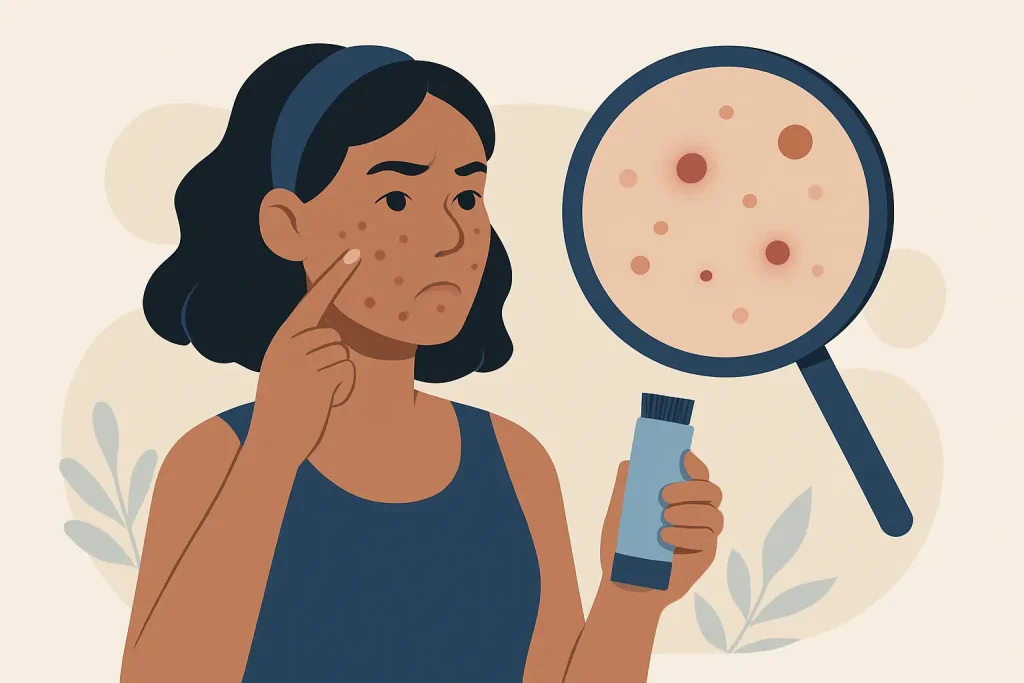
Clinically, it often presents as tender, inflamed papules and cystic breakouts around the chin, jawline, neck, and sometimes the lower cheeks. It can flare around menstrual cycles, stress, poor sleep, certain supplements, or after stopping hormonal contraception. The lesions tend to be deeper and slower to resolve, which increases the risk of post-inflammatory pigmentation and lingering redness.
There is also a trap adults fall into: the moment breakouts return, they reach for harsh, drying products to “strip the oil”. That compromises the barrier, drives more inflammation, and can make the cycle more stubborn.
The first step: confirm it is hormonal acne (not a lookalike)
If you are treating diligently and seeing little change, it is worth checking the diagnosis. Perioral dermatitis, folliculitis (including fungal), rosacea, and irritation from overuse of actives can mimic acne but respond to very different protocols.
A few clues point towards hormonal acne: recurring flares in the same lower-face zones, lesions that feel deep or painful, and a pattern linked to cycles or stress. A professional skin consultation should also review comedones (blackheads and congestion), barrier health, and whether your routine is causing micro-irritation that looks like “breakouts”. This matters because how to treat adult hormonal acne depends on the full picture, not just the spots you can see.
Build the non-negotiables: barrier first, then targeted actives
Adult acne responds best to a structured plan. Not a 12-step routine, but a consistent routine that your skin can tolerate for months.
Start with cleansing. Choose a gentle, non-stripping cleanser used morning and evening. If you wear mineral make-up or SPF daily (you should), a proper evening cleanse is essential, but avoid harsh cleansing brushes or gritty scrubs. If your skin feels tight after cleansing, you have already lost ground.
Hydration and barrier support are not optional for acne. When the barrier is compromised, inflammation rises and your tolerance for acne actives drops. A well-formulated moisturiser that supports barrier lipids can reduce flaking, sensitivity, and the temptation to pick. This also helps you stay consistent with stronger actives that actually treat the root causes.
Then introduce targeted ingredients with purpose.
Retinoids: the long-game hero for adult skin
A retinoid helps regulate cell turnover inside the follicle, reduces congestion, and supports smoother texture over time. It is also one of the best ingredients for post-acne marks because it encourages more even renewal.
The trade-off is irritation if you start too fast. Begin slowly, apply to fully dry skin, and pair with moisturiser if you are prone to sensitivity. Expect an adjustment period. A short-lived increase in breakouts can happen as micro-comedones come to the surface, but ongoing inflammation and burning is a sign to scale back and reassess.
Salicylic acid: congestion control with precision
Salicylic acid is oil-soluble, so it can work inside pores. It is particularly useful if you have blackheads, a “grainy” chin, or makeup that seems to sit unevenly.
Used too often, it can tip skin into dryness and rebound irritation. The goal is clarity, not squeaky-clean. For many adults, a few times a week is enough when the rest of the routine is supportive.
Benzoyl peroxide: effective, but not always elegant
Benzoyl peroxide targets acne-causing bacteria and reduces inflammatory lesions. It can be very effective for active breakouts, but it often causes dryness and can bleach fabrics. Lower strengths used consistently can work well, especially as a targeted treatment rather than an all-over daily layer.
Azelaic acid: a smart choice for redness and pigmentation
If your acne leaves stubborn marks, azelaic acid is an excellent option. It can help with inflammation, uneven tone, and the “after-effects” that make adult acne feel never-ending. Many clients tolerate it better than stronger exfoliants.
SPF: the quiet essential that prevents the long-term damage
If you are treating acne properly, you will likely be using ingredients that increase photosensitivity or accelerate cell turnover. Without daily broad-spectrum SPF, post-acne pigmentation lasts longer and your skin ages faster. Consider SPF as part of acne treatment, not a separate “anti-ageing” step.
When skincare is not enough: the role of clinic-led treatment
Deep, hormonal breakouts often need more than home care. Professional treatment should not be random facials. It should be progressive, hygienic, and structured around your skin’s response.
LED light therapy can be a useful adjunct for inflammatory acne because it supports calmer skin and can help reduce redness and healing time when performed as a course. Professional-strength chemical peels, when chosen correctly, can improve congestion and marks, but they must be paced around barrier tolerance and your lifestyle. Over-peeling an adult with hormonal acne is a common error and can worsen sensitivity and pigmentation.
Extraction has a place, but it must be clinically performed and timed. Aggressive extractions on inflamed lesions increase trauma, prolong redness, and raise the risk of scarring.
A clinic plan should also include education: which ingredients you are using, why they are chosen for your breakout type, and exactly what timeline to expect. This is where a specialist, therapist-led approach makes a difference. At GRB Skin Clinic, that structure is built around consultation, ingredient prescription, and device-led protocols designed to support the skin’s own repair processes.
Hormones, stress, and lifestyle: what matters (and what is overhyped)
Hormonal acne is not caused by being “unclean” or eating one specific food, but certain patterns do influence inflammation and oil production.
Stress is a big one. Cortisol affects inflammatory pathways and can worsen breakouts and delayed healing. This does not mean “relax” is a treatment plan. It means sleep, recovery, and manageable routines are part of the clinical picture.
Diet is individual. Some people flare with high glycaemic diets or excessive dairy, while others see no link. If you suspect a trigger, run a sensible experiment for 6 to 8 weeks rather than cutting everything at once. The goal is information, not restriction.
Supplements can help in specific cases, but more is not better. Some supplements (including high-dose B12 and certain whey-based products) can worsen acne for some. If you are taking multiple supplements and breakouts are escalating, review them with a professional.
Prescription options: when you need medical support
Sometimes, the most effective way to treat adult hormonal acne includes prescription treatment through your GP or dermatologist. This is especially relevant for painful cystic acne, scarring risk, or acne that is affecting confidence and daily life.
Options may include topical antibiotics (usually short-term and paired with other agents to reduce resistance), oral antibiotics (again, time-limited), hormonal therapies, or isotretinoin in severe cases. Each comes with trade-offs. Hormonal options may not be suitable depending on medical history, and isotretinoin requires strict monitoring and is not a casual decision.
A good clinic can work alongside medical care by keeping your barrier strong, managing pigmentation, and supporting your skin through active treatment phases.
Timelines: the expectation that changes everything
Adult acne treatment is not a quick fix, and that is not a sales tactic – it is skin biology.
Most well-chosen topical routines need around 8 to 12 weeks to show meaningful change, and deeper hormonal patterns often need longer to stabilise. In the first month, the biggest win is usually reduced inflammation and better tolerance. By months two and three, you should see fewer new lesions, faster healing, and less congestion. Pigmentation and textural refinement continue beyond that.
If you are switching products every two weeks, you are constantly resetting your progress and irritating the barrier. Consistency is not glamorous, but it is the difference between “I have tried everything” and “my skin is actually changing”.
The two habits that sabotage results (and how to replace them)
Picking is the obvious one. It converts a short-lived lesion into a long-term mark, and it increases scarring risk. If you pick because spots feel “bumpy”, focus on reducing congestion with the right actives and book professional support for safe extractions.
The second is over-treating. Layering multiple acids, using strong actives daily from the start, or cleansing too aggressively often creates persistent redness and “mystery breakouts”. Replace intensity with strategy: one or two proven actives, a supportive moisturiser, and an SPF you will wear every day.
A helpful closing thought: adult hormonal acne responds beautifully to calm, consistent leadership – from you and from a practitioner who can read your skin properly. When you stop chasing quick fixes and start following a structured plan, your skin stops feeling like a constant surprise and starts behaving like something you can genuinely trust.