
Share This Post
Shaving before work, arranging waxing around holidays, dealing with ingrown hairs, then starting again a few days later can become a surprisingly demanding routine. So, is laser hair removal worth it? For the right person, with the right treatment plan and realistic expectations, it can be one of the most worthwhile long-term investments in personal maintenance.
The key is to see laser hair removal as a progressive course, not a one-off appointment. It works with the hair growth cycle, requires consistency and depends on factors such as hair colour, skin tone, treatment area and hormonal influences. A proper consultation turns a broad promise of smooth skin into a plan designed around your skin and your goals.
Is laser hair removal worth it for you?
Laser hair removal can significantly reduce unwanted hair growth by targeting pigment within the hair follicle. The light energy is absorbed by the hair, converting to heat that disrupts the follicle’s ability to produce a new hair. It is most effective when the hair is in its active growth phase, which is why treatments are spaced over a course rather than delivered all at once.
It tends to be particularly rewarding for clients with dark, coarse hair who are tired of frequent shaving, waxing or irritation. Common treatment areas include the underarms, bikini line, legs, face, back and chest. Many clients value not only the reduction in hair but also the time saved, fewer ingrown hairs and the confidence of feeling more comfortable in their skin between appointments.
However, “worth it” is personal. If you want every single hair permanently gone after one treatment, laser is unlikely to meet that expectation. If your aim is a substantial, lasting reduction in growth and a more manageable maintenance routine, it can offer excellent value over time.
Hair and skin characteristics matter
Because the treatment targets pigment in the hair, darker hair generally responds most predictably. Very fair, grey, white and red hairs contain less of the pigment the device needs to recognise, so results may be limited. Skin tone also influences which settings and technology can be used safely.
This is why a therapist-led assessment matters. A specialist should review your skin and hair, discuss your medical history, assess any relevant medication, explain likely outcomes and carry out a patch test where appropriate. This is not a formality. It is the foundation for effective treatment and responsible expectation-setting.
Hormonal hair growth can be more complex. Conditions that affect hormones, as well as changes linked to pregnancy or menopause, may mean hair growth continues to be stimulated in certain areas. Laser can still be a valuable part of managing the concern, but you may need more sessions and occasional maintenance treatments.
What results can you realistically expect?
Most people require a course of sessions because only a proportion of hairs are actively growing at any one time. Treatment intervals vary by area: facial hair often needs closer appointments than body areas, where the cycle is slower. Your clinician will advise on the most appropriate timing rather than applying a generic schedule.
After a session, treated hairs do not disappear immediately. They often shed over the following days or weeks, and regrowth may look finer, slower and less dense as the course progresses. The visible improvement builds gradually. This requires patience, but it also means you can assess how your skin and hair are responding and adjust the plan where needed.
Long-term hair reduction is the sensible expectation. Some follicles may remain active, dormant follicles can become active later, and hormonal changes can influence future growth. A top-up appointment from time to time is normal for many clients. This does not mean the treatment has failed. It reflects the biology of hair growth.
Treatment should feel controlled, not casual
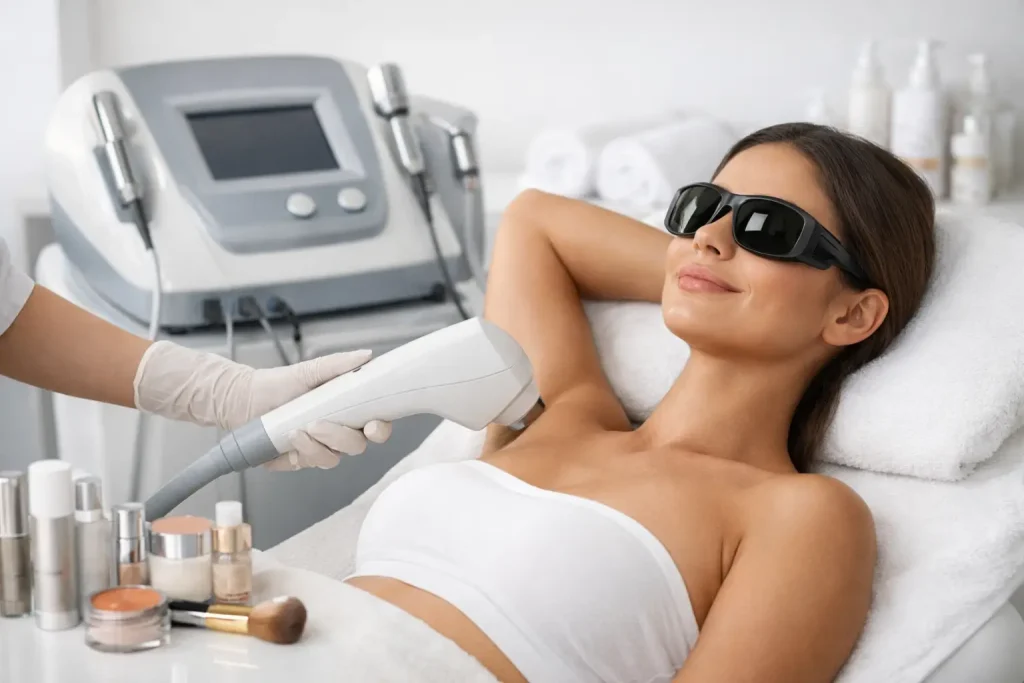
A laser appointment should begin with preparation. The area is normally shaved as instructed, clean and free from products that could interfere with treatment. Your therapist will use appropriate eye protection, select settings based on your assessment and monitor your skin’s response throughout.
Sensations vary. Many clients describe brief warmth or a sharp elastic-band flick as the laser pulses. Modern systems may incorporate cooling to support comfort. The area can look pink or feel warm afterwards, particularly on sensitive zones, but this usually settles quickly. Your practitioner should give clear aftercare guidance tailored to the treated area and your skin.
Avoiding excessive heat and friction immediately after treatment, and protecting exposed skin from strong sun, supports recovery. It is also vital to tell your therapist about changes in medication, health or recent skin treatments before each session. Safe laser work depends on an open, ongoing conversation, not simply turning up for the next appointment.
The cost question: compare the full routine
The upfront cost is often the main hesitation. A course of laser hair removal costs more than a single waxing appointment or a packet of razors. Yet those comparisons can be misleading because they measure one appointment against a treatment designed to reduce years of repetitive maintenance.
Consider what your current routine asks of you: purchases, appointments, time in the bathroom, planning before a trip, and the mental load of keeping on top of it. For someone treating a large area such as legs, or managing frequent facial hair removal, the accumulated cost and time can be considerable. For someone with occasional fine hair in a small area, the financial case may be less compelling.
Value also depends on standards. The cheapest advertised session is not automatically the best value if there is no thorough consultation, no patch testing, unclear device information or no individualised approach. A professionally managed course should give you confidence in hygiene, safety, treatment intervals and honest guidance about whether you are a suitable candidate.
At GRB Skin Clinic, laser hair removal is approached as a structured programme, with professional assessment and a focus on progressive results. For clients in Sale and across South Manchester, that means knowing what is being treated, why the schedule matters and what to expect at each stage.
When laser hair removal may not be worth it
There are situations where waiting or choosing another approach may be more appropriate. If your hair has very little pigment, laser may not produce a meaningful reduction. If you cannot commit to the recommended appointment schedule, you may not see the full benefit of the course. Recent tanning, active skin irritation, certain medicines and some medical circumstances may also mean treatment should be postponed or reviewed carefully.
It may not suit a client looking for an immediate result before one event. Laser is a long-term strategy, and starting several months before a holiday, wedding or major occasion gives the course time to work. It is also not a substitute for a consultation about sudden or significant new hair growth, particularly if it is accompanied by other health changes.
None of these points are reasons to dismiss laser outright. They are reasons to seek a clinician who will assess rather than oversell. The best treatment decision is one made with a clear picture of suitability, investment and likely outcome.
How to decide with confidence
Before committing, ask what technology will be used, how many sessions are likely for your area, what results are realistic for your hair and skin, and whether maintenance may be needed. Ask how the clinic manages patch testing, aftercare and changes to your treatment plan. A confident practitioner will welcome these questions and answer them plainly.
Then consider the practical difference you want laser to make. If reducing regular hair removal would give you more comfort, more time and less irritation, the value can extend well beyond the number of hairs removed. Start with a consultation, set a realistic target and allow the process the time it needs to deliver progressive change.