
Share This Post
Shaving every few days, planning waxing around holidays, and dealing with ingrown hairs can become an exhausting routine. This laser hair removal Sale guide is for people who want to replace short-term maintenance with a considered clinical treatment plan, led by a trained therapist and shaped around their skin, hair and goals.
Laser hair removal is not a one-off beauty appointment. It is a progressive course of treatments that targets hair during its active growth phase. The right approach begins with an in-depth consultation, realistic expectations and a treatment schedule you can commit to. That is how you achieve a meaningful, lasting reduction in unwanted hair.
Laser Hair Removal Sale Guide: Start With a Consultation
A consultation is where safe, effective treatment begins. Before a session is booked, your therapist should assess the treatment area, your natural hair colour and density, skin tone, medical history, current medication and any recent changes in your health. These details are not administrative extras. They influence whether treatment is appropriate, how settings are selected and the results you can reasonably expect.
At GRB Skin Clinic, laser hair removal is approached as a tailored protocol rather than a standard appointment. A therapist-led assessment gives you time to discuss the areas that concern you, whether that is the face, underarms, bikini line, legs, back or chest. It also allows for clear advice on the likely number of sessions, the intervals between them and the care needed before and after treatment.
Be honest during this appointment. Mention any history of sensitivity, cold sores where facial treatment is planned, hormonal changes, previous hair-removal methods and products or treatments that may affect skin response. The goal is not to exclude you unnecessarily. It is to build a plan that respects your skin and protects its condition.
What laser hair removal can achieve
Laser technology directs controlled energy into the pigment within the hair follicle. The heat damages the follicle’s ability to produce new hair while protecting the surrounding skin when appropriate settings and treatment technique are used. Over a course of appointments, hair typically becomes finer, sparser and slower to return.
The word to focus on is reduction, not permanent removal of every single hair forever. Hair growth is influenced by genetics, hormones, age and the area being treated. Some clients see very long-lasting smoothness after their course; others benefit from occasional maintenance sessions, particularly on hormone-responsive areas such as the face, chin and lower abdomen.
Dark, coarse hairs often respond particularly well because they contain more pigment for the laser to recognise. Very pale, grey, white or red hair may be less responsive. This does not make a consultation any less worthwhile. It simply means a responsible practitioner will explain the likely outcome before you invest time and money.
Why a Course Matters More Than a Single Session
Hair does not grow in one uniform cycle. At any one time, only a proportion of follicles are in the active anagen phase, when laser treatment is most effective. This is why a course is required. Each appointment captures a different group of hairs as they enter the right stage of growth.
Most areas need a series of sessions, often spaced several weeks apart. The exact interval depends on the body area and your individual growth pattern. Facial areas can be treated more frequently than the legs or back, where the growth cycle is slower. Your therapist will set out the recommended schedule and adjust it as your response develops.
Consistency matters. Leaving long gaps between appointments can interrupt the rhythm of a course and may extend the time needed to reach your best result. Think of your sessions as part of a planned programme, not something to fit in only when hair becomes visible again.
It is also normal for treated hairs to appear to grow shortly after an appointment. In many cases, they are shedding from the follicle rather than actively regrowing. Avoid the temptation to judge the final outcome in the first week. Visible change becomes clearer as the course progresses.
Preparing properly protects your progress
Preparation is straightforward, but it matters. You will usually be asked to shave the area shortly before your appointment, following the clinic’s specific timing advice. Shaving leaves the follicle in place for the laser while keeping surface hair short enough for comfortable, focused treatment.
Avoid waxing, plucking, threading or epilating between sessions, as these methods remove the hair root that the laser needs to target. You should also avoid excessive sun exposure and tanning in the lead-up to treatment. Skin that has recently changed colour may require an adjusted plan or a delay, because safety always takes priority over speed.
Arrive with clean skin on the treatment area. Skip body oils, fragranced lotions, deodorant on the underarms and make-up where facial areas are being treated unless your therapist has told you otherwise. If you have experienced a rash, irritation or an active skin concern in the area, contact the clinic before attending rather than hoping it will settle during the appointment.
Comfort, Safety and What Happens in the Treatment Room
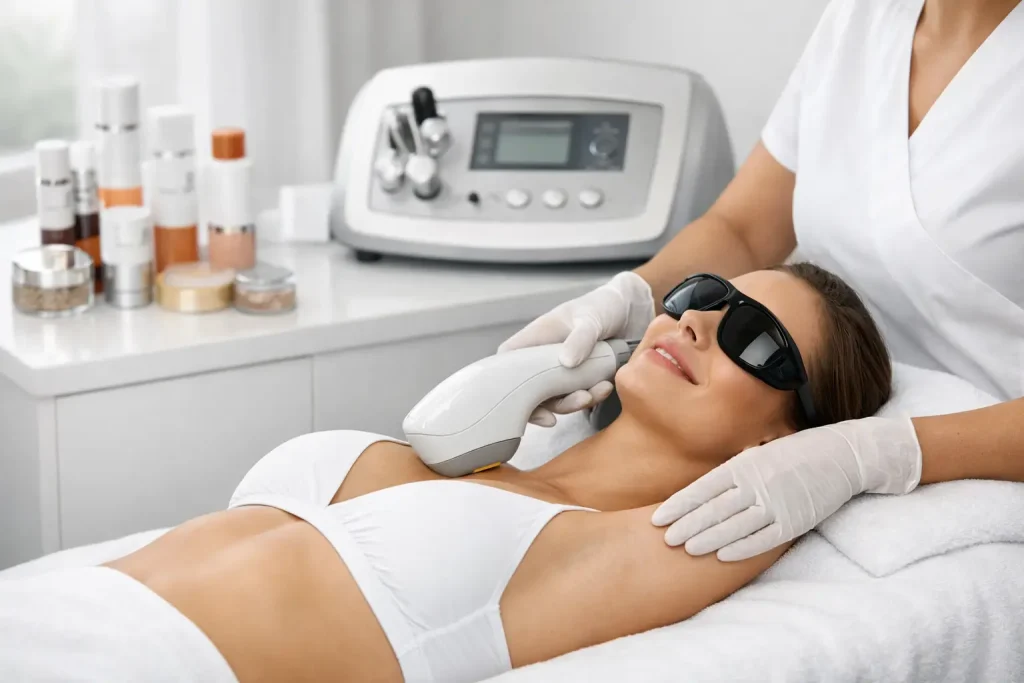
A professional laser treatment should feel controlled from the moment you arrive. Your therapist will confirm your consultation details, review any changes since your last session and inspect the treatment area. Protective eyewear is essential for both client and practitioner during treatment.
Sensations vary by area, hair thickness and personal tolerance. Many people describe a quick warmth or a brief elastic-band flick against the skin. Sensitive areas can feel sharper, while smaller areas are often completed very quickly. A skilled therapist works methodically, checks in with you throughout and uses settings appropriate to your response rather than pushing treatment intensity for its own sake.
Mild redness or warmth can occur afterwards, especially around coarse hair follicles. This normally settles within a short period. Your aftercare advice may include keeping the area cool, avoiding heat-based activities such as saunas and hot baths for a short time, and choosing gentle products while the skin settles. Do not exfoliate or pick at the area if it feels reactive.
Safety is not just about the machine. It is about therapist training, careful record keeping, hygiene, correct treatment intervals and the willingness to postpone a session when your skin is not ready. A clinic that sets boundaries is protecting your result, not making treatment inconvenient.
Choosing the Right Areas and Setting Realistic Priorities
If you are new to laser hair removal, begin with the area that takes up the most time or causes the greatest frustration. Underarms and bikini lines are common choices because they can make a noticeable difference to everyday grooming. Legs may be ideal for those tired of frequent shaving, while facial treatment can be particularly valuable when unwanted hair affects confidence.
Your priorities may change during the course. Some clients begin with a smaller area to understand how their skin responds before progressing to additional zones. Others choose a larger programme because they are ready to reduce several shaving or waxing appointments at once. Neither route is inherently better. The right choice depends on your budget, timetable and commitment to follow the treatment plan.
Be cautious of offers that make laser hair removal sound instant or identical for everyone. A low headline price is only useful if it includes a proper assessment, a suitable device, professional oversight and enough sessions to create a visible change. Ask what is included, how your progress will be reviewed and what happens if your treatment schedule needs adapting.
Results continue between appointments
The most satisfying part of a course is often the gradual change in your routine. Hair starts to return more slowly. Patches may become less dense. Shaving becomes easier, then less necessary. Photographing the area before you begin can help you notice progress that may otherwise be easy to overlook from week to week.
Continue to follow your therapist’s guidance even once hair reduction is well established. Maintenance is not a failure of the treatment. It can be a sensible way to manage new growth influenced by normal hormonal shifts and preserve the smooth, comfortable result you have worked towards.
Your skin deserves more than a rushed appointment and a vague promise. Book a consultation, ask direct questions and choose a laser hair removal plan that is designed around your biology, your lifestyle and the result you want to maintain.