
Share This Post
That angry, swollen spot that seems to appear overnight is rarely just a surface issue. If you are searching for how to calm inflamed acne fast, the priority is not to strip your skin or throw every active at it. Inflamed acne is a sign that the skin barrier and the follicle are under pressure, so the fastest route to improvement is usually controlled reduction of heat, swelling and irritation – while avoiding the common mistakes that keep the breakout active for longer.
At clinic level, we look at inflamed acne as a process, not a random event. Excess oil, trapped dead skin cells, bacteria, friction, hormones and product overload can all contribute, but once a blemish becomes red, sore and raised, the goal changes. You are no longer trying to aggressively “dry it out”. You are trying to calm the inflammatory response without causing more trauma.
How to calm inflamed acne fast at home
The first step is to stop touching it. Picking, squeezing and repeatedly checking the spot in the mirror all increase inflammation and can push material deeper into the follicle wall. That is how a manageable breakout becomes a lingering mark or scar.
Next, cleanse gently. Use a mild, non-stripping cleanser and lukewarm water. Hot water can worsen redness, and harsh foaming products can leave the skin tight and reactive. If your skin already feels tender, the wrong cleanser can make the area look more inflamed within minutes.
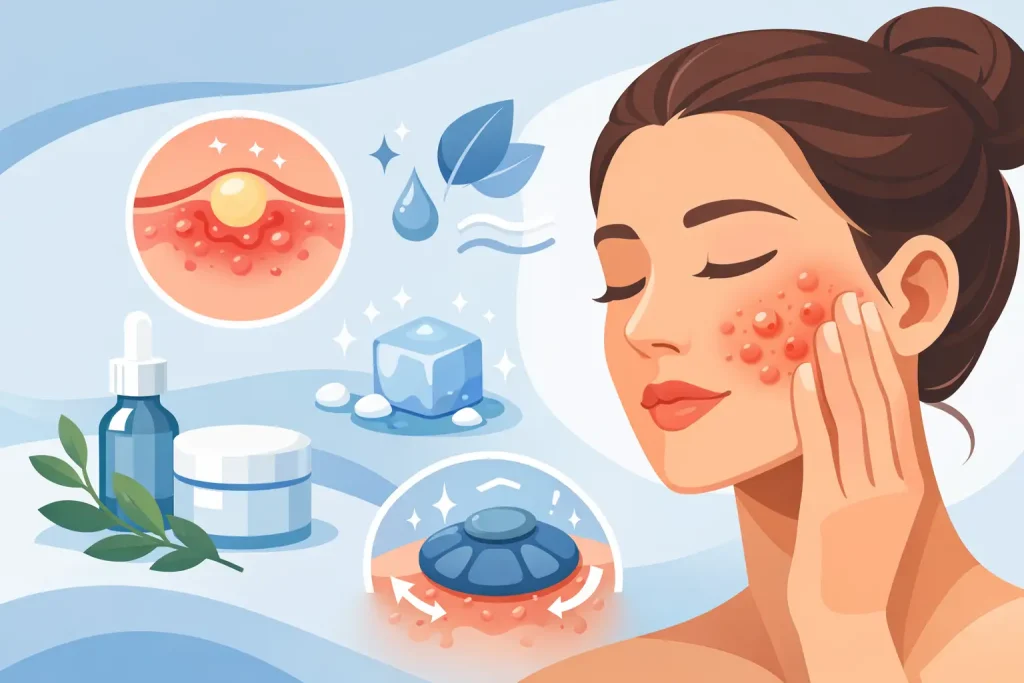
After cleansing, a cold compress can make a visible difference. Wrap ice or a chilled gel pack in a clean cloth and hold it against the inflamed area for short intervals, around one to two minutes at a time. This helps constrict superficial blood vessels and may reduce swelling temporarily. It is a simple step, but when used correctly it can take the edge off a painful cystic lesion.
Then keep the rest of your routine minimal. A lightweight, non-comedogenic moisturiser helps support barrier repair, which matters more than many people realise. Skin that is dehydrated and irritated tends to overreact. If you are using multiple acids, retinoids, scrubs and drying lotions at once, the skin can become inflamed beyond the actual acne itself.
What ingredients can reduce redness quickly?
It depends on the type of blemish and how resilient your skin is. Salicylic acid can help if the lesion is part of a congested, oily skin pattern because it works within the pore and can reduce blockage. Benzoyl peroxide can also be useful, particularly for inflamed papules and pustules, because it targets acne-causing bacteria and helps reduce the inflammatory load.
However, faster is not always better if the dose is too aggressive. A high-strength product used on already irritated skin can leave you with more redness, flaking and post-inflammatory marks. For many adults, especially those juggling acne with sensitivity, a lower-strength, targeted application is more effective than coating the whole face in potent actives.
Niacinamide is often overlooked because it sounds less dramatic, but it can be very helpful in an inflamed routine. It supports the barrier, helps regulate oil and can reduce the appearance of redness over time. Azelaic acid is another excellent option for clients who break out and mark easily, as it can help with inflammation and uneven pigmentation.
Sulphur-based treatments can work well on some inflamed spots too, especially when the skin is oily but not overly sensitised. The trade-off is that sulphur can be drying and is not always comfortable for compromised skin.
What not to do when acne is inflamed
The most common mistake is over-treatment. Clients often feel they need to attack a breakout from every angle, so they cleanse twice, exfoliate, apply a spot treatment, cover it with toothpaste or a DIY mask, and then wonder why the skin is bright red and throbbing by evening.
Do not use physical scrubs on inflamed acne. The friction can rupture spots, spread bacteria and worsen post-inflammatory pigmentation. Avoid strong alcohol-based products that sting on contact. That sensation is not proof that something is working. Often it is simply a sign that the barrier is being damaged.
You should also be careful with heavy occlusive products if you are prone to congestion. Slugging may help some dry skin conditions, but on acne-prone skin it can trap heat and oil if used in the wrong context. Likewise, thick camouflage makeup applied over an open or picked blemish can delay recovery if the skin is not properly cleansed afterwards.
When a spot needs more than a spot treatment
Not all inflamed acne responds quickly to home care. Deep, painful nodules and cystic lesions often sit much lower in the skin and may not come to a head at all. In these cases, repeated squeezing is almost guaranteed to make things worse.
This is where professional assessment matters. A therapist-led acne plan looks at lesion type, skin barrier status, homecare history and triggers such as shaving, hormones, workout sweat, hair products or comedogenic makeup. The answer is rarely one hero product. It is usually the right combination of calming care, controlled correction and consistency.
LED light therapy can be particularly useful for inflamed acne because it supports the skin’s healing response while helping to reduce breakout activity without mechanical trauma. For clients with recurrent flare-ups, bespoke facials and structured treatment courses can also help settle the cycle of congestion, inflammation and marking. At GRB Skin Clinic, this kind of work is approached through skin analysis and a progressive plan, not a one-off quick fix.
How to calm inflamed acne fast without causing marks
If you are prone to post-inflammatory hyperpigmentation, the way you manage a breakout matters almost as much as the breakout itself. Every time you pick, over-exfoliate or burn the skin with harsh products, you increase the risk of a lingering brown, red or purple mark.
Sun exposure is another issue. Even in the UK, UV can deepen post-acne pigmentation and slow visible recovery. A broad-spectrum SPF should be part of your daily routine, especially if you are using exfoliating acids or retinoids. This is not just about prevention of future ageing. It is a practical step in reducing how long acne aftermath stays visible.
Keep your routine boring while the skin is inflamed. Gentle cleanse, targeted treatment if appropriate, moisturiser, SPF in the morning. That restraint often gets better results than the frantic cycle of trying something new every night.
When should you seek professional help?
If your acne is painful, widespread, repeatedly inflamed in the same areas, or leaving marks and scars, it is time for proper guidance. Adult acne in particular can be stubborn because there is often a mix of concerns at play – congestion, sensitivity, dehydration, hormonal shifts and pigmentation. A supermarket routine may not be enough.
You should also seek help if your skin burns with most products, if breakouts are affecting your confidence, or if you have spent months trying online advice with little improvement. There is value in having someone assess what is actually happening in your skin rather than guessing from trend-led content.
A professional can help you distinguish between inflamed acne, folliculitis, rosacea-related bumps or irritation from overuse of actives. Those conditions can look similar at first glance but require different management. Treating the wrong problem is one of the fastest ways to prolong it.
Fast relief is possible, but skin still needs a plan
If you want to know how to calm inflamed acne fast, think less about punishment and more about stabilisation. Cool the area, reduce irritation, use targeted actives with care, and stop doing the things that make inflammation louder. Fast improvement is possible, but truly clear skin usually comes from a structured plan rather than panic treatment.
The skin responds best when it feels supported. Give it calm, give it consistency, and if your breakouts keep returning, let that be the point where you stop experimenting and start treating the cause properly.